
Nashik Kumbh 2027: Inside Maharashtra's ₹34,732-Crore Plan to Transform Two Sacred Cities
12 Crore Pilgrims, One Mega Development Mission.
 IN
Sat, Oct 31, 2026 | 06:11 PM IST


What happens when two sacred cities prepare to welcome 12 crore pilgrim visits? Roads get wider, railway stations undergo upgrades, the river needs cleaning and thousands of cameras are planned to keep crowds under control. But there is much more to this massive exercise than managing a religious gathering.
Nashik Kumbh 2027 is turning into one of Maharashtra's biggest infrastructure and development projects. With an estimated ₹34,732-crore outlay, the state is preparing Nashik and Trimbakeshwar for millions of devotees, saints and sadhus expected to arrive during the Simhastha period.
The interesting part?
Nearly 85% of the reported investment is earmarked for permanent infrastructure. This means the roads, bridges, transport facilities and civic improvements being planned today could benefit local residents long after the pilgrims return home.
So, what exactly is Maharashtra planning, and what challenges lie ahead?
The formal commencement of the Simhastha period took place on 31 October 2026, with the traditional Dhwajarohan (flag-hoisting) ceremony. President Droupadi Murmu performed the ceremony at Ramkund in Nashik, while Maharashtra Chief Minister Devendra Fadnavis hoisted the flag at Trimbakeshwar.
According to the President's Secretariat, the President's visit included the Dhwaj Stambh Pujan, Dhwaja Pujan and Dhwajarohan ceremonies.
The Nashik Kumbh Mela 2027 is expected to attract around 12 crore pilgrim visits throughout the festival period. For perspective, approximately 2.5 crore devotees attended the previous edition in 2015.
Here are the three major Amrit Snan dates:
| Important bathing occasion | Date |
| First Amrit Snan | 2 August 2027 |
| Second Amrit Snan | 31 August 2027 |
| Third Amrit Snan at Nashik | 11 September 2027 |
| Third Amrit Snan at Trimbakeshwar | 12 September 2027 |
The Simhastha period will continue until 24 July 2028, when the ceremonial flags are scheduled to be lowered. The Nashik Kumbh Mela Authority's interim plan provides further details about the proposed arrangements.
Unlike other major Kumbh gatherings, the Nashik-Trimbakeshwar celebration has two separate bathing centres.
Ramkund Nashik is situated along the Godavari River and is associated with Lord Rama's exile. It is the traditional bathing location for the Vaishnav Akhadas.
Meanwhile, Trimbakeshwar is home to one of the 12 Jyotirlingas of Lord Shiva. Its sacred Kushavarta Tirtha serves as the bathing centre for the Shaiva Akhadas.
Interestingly, this arrangement has a history dating back to 1790. A reported clash between Shaiva and Vaishnav ascetics over bathing precedence led the Peshwas to assign separate bathing locations to the two traditions. The practice continues today.
This distinctive arrangement is an important feature of the Trimbakeshwar Kumbh Mela, making the gathering different from those held at other Kumbh locations.
The biggest focus of the preparations is infrastructure. According to Kumbh Mela Authority commissioner Shekhar Singh, nearly 85% of the reported ₹34,732-crore outlay will go towards permanent assets, while the remaining amount will support temporary facilities and event arrangements.
Here are some major projects to watch.
One of the most significant projects is the proposed 65.60-km outer ring road. It will connect two national highways, two state highways and the city's internal road network.
The project requires around 393 hectares of land across 25 villages. Construction has reportedly started on seven stretches.
The objective is to divert through-traffic away from congested areas and make travel easier for pilgrims and residents.
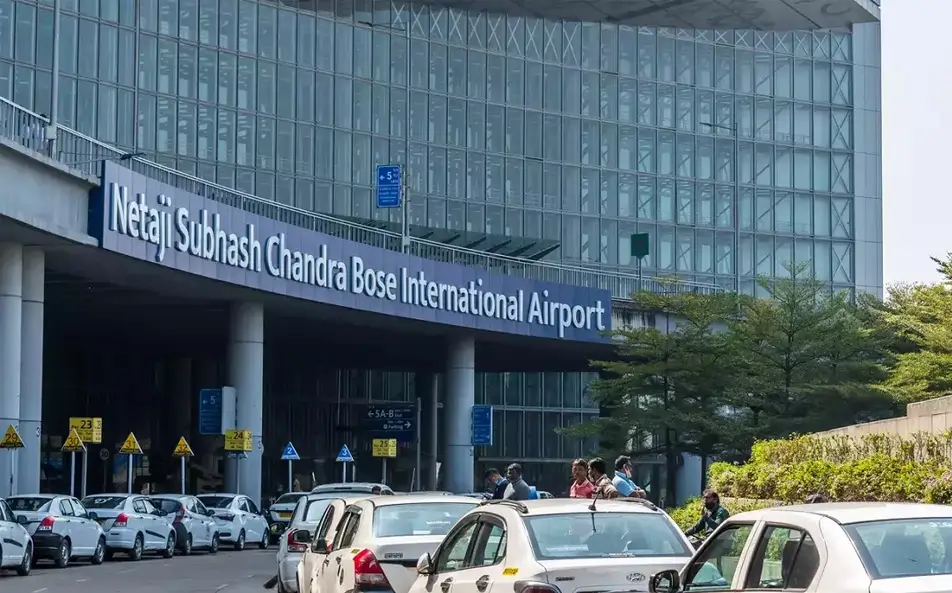
Nashik airport is planned to receive a new terminal and apron, with an estimated investment of ₹629.41 crore.
Five railway stations in the region are also being redeveloped under projects worth approximately ₹1,329 crore.
These upgrades are expected to improve connectivity and make it easier for visitors travelling from different parts of India.
The wider development programme also includes road widening, bridges, water supply improvements, ghat repairs and better public facilities.
The idea is to ensure that infrastructure created for the festival remains useful for everyday city life.
A note on the budget: The ₹34,732-crore figure is the broader outlay reported by the Authority's commissioner. Separately, the Maharashtra government confirmed a ₹22,425.39-crore comprehensive development plan approved on 13 March 2026. These figures have different reported scopes and should not be added together. (PIB, Times of India)
With millions of devotees expected to take a sacred dip, keeping the Godavari clean is one of the biggest responsibilities facing the administration.
Four new sewage-treatment plants are being established, while an existing facility is also being upgraded. Together, they are expected to provide a treatment capacity of 547 million litres per day (MLD).
The proposed system will also use online SCADA monitoring connected to an Integrated Command and Control Centre.
However, environmentalists have raised concerns about pollution entering through smaller streams and tributaries. Cleaning the main river alone will not solve the problem. Riverbank encroachments and other sources of pollution also need attention.
Managing millions of visitors across two busy pilgrimage centres is no small task.
Authorities are planning more than 4,000 CCTV cameras, drones and an AI-enabled digital twin of the event area. In simple terms, a digital twin is a virtual map of the gathering that can help officials monitor crowd density, traffic movement and emergencies.
These systems will be particularly important during the main bathing days, when large crowds are expected around the ghats.
The preparations have also raised environmental concerns. The proposed Sadhugram development at Tapovan initially involved cutting approximately 1,700 trees to create accommodation space for sadhus and seers.
Residents and environmentalists protested, including through a Chipko-style demonstration. The National Green Tribunal subsequently imposed an interim stay on tree felling.
In an important development, the Nashik Municipal Corporation decided in October 2026 to proceed with Sadhugram development without cutting trees while the stay remains in force.
The issue raises a larger question: Can a gathering of this scale be organised without putting unnecessary pressure on the city's green spaces?
The economic opportunity is another major part of the story.
Water Resources Minister Girish Mahajan has estimated that the gathering could generate around ₹35,000 crore in business for the local economy. This estimate is based on 12 crore pilgrim visits and average spending of ₹3,000 per visit.
Hotels, restaurants, transport operators, local vendors and retail businesses could benefit from the increased demand.
However, another planning estimate puts the potential economic activity at around ₹26,000 crore. The actual benefit will depend on how much visitors spend, how long they stay and whether small businesses receive a fair share of the opportunity.
The real test of this ambitious development plan will begin after the celebrations end.
Better roads, improved railway connectivity, airport upgrades, stronger sewage systems and improved public amenities could benefit residents for years. These developments could also support tourism around Nashik and Trimbakeshwar.
But infrastructure alone cannot guarantee lasting progress. Timely completion, proper maintenance, environmental protection and responsible use of public funds will matter just as much.
The Trimbakeshwar Kumbh Mela and its Nashik counterpart represent much more than a religious gathering. They offer Maharashtra an opportunity to improve infrastructure, support local businesses and strengthen tourism.
Yet, the success of this ambitious plan will not be measured only by the number of devotees who arrive or the money spent on development.
It will also depend on whether the Godavari remains clean, green spaces are protected and local residents experience genuine improvements.
The pilgrims may eventually leave, but the decisions being made today will shape these two sacred cities for years to come.
Everything you need to know
The Simhastha period began on 31 October 2026 with the traditional Dhwajarohan ceremony. The major Amrit Snan dates are 2 August, 31 August and 11–12 September 2027.
Around 12 crore pilgrim visits are projected throughout the Simhastha period, making it one of India's largest upcoming religious gatherings.
The broader development outlay reported by the Kumbh Authority's commissioner is ₹34,732 crore. A separate comprehensive development plan worth ₹22,425.39 crore was approved by the Maharashtra government.
Nashik's Ramkund is the traditional bathing centre for Vaishnav Akhadas, while Kushavarta Tirtha in Trimbakeshwar is the bathing centre for Shaiva Akhadas.
Major projects include a 65.60-km outer ring road, airport expansion, railway station redevelopment, sewage-treatment plants, improved civic facilities and AI-based crowd-monitoring systems.





Oct 31, 2026
TUI Staff
Oct 21, 2026
TUI Staff
Oct 14, 2026
TUI Staff
Oct 08, 2026
TUI Staff
Oct 31, 2026
TUI Staff
Oct 30, 2026
TUI Staff
Oct 30, 2026
TUI Staff

Stay informed with independent, fact-checked journalism on technology, environment, government, economy and more. India’s most trusted digital news platform.





Comments (0)
Be the first to comment!