
After 2-Year Delay, LCA Mk1A Nears Delivery: HAL Reveals What Is Still Holding It Back
Radar fixes, weapons trials and engine supplies now stand between Tejas Mk1A and IAF induction.
 IN
Fri, Sep 18, 2026 | 06:23 PM IST
IN
Fri, Sep 18, 2026 | 06:23 PM IST


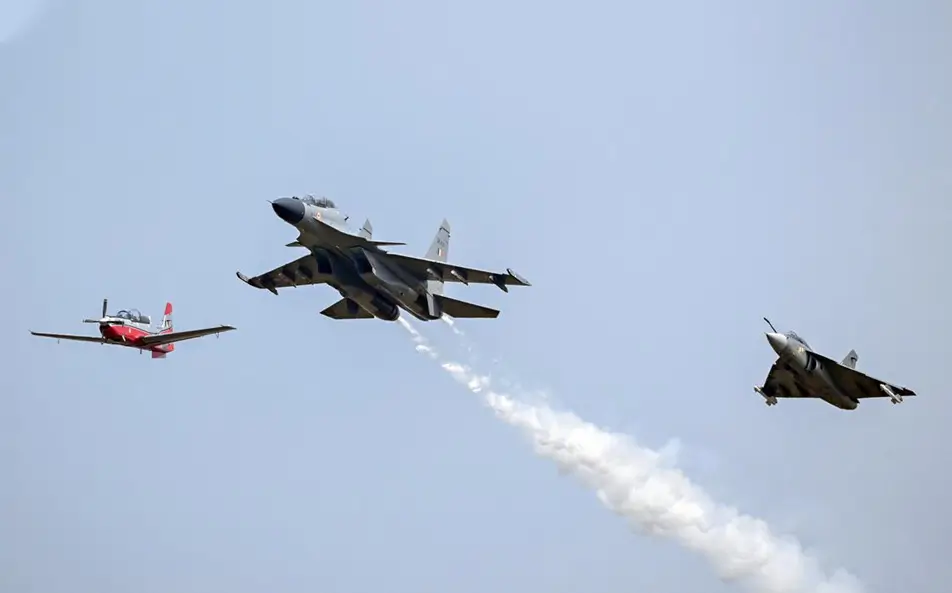
Hindustan Aeronautics Limited expects to begin delivering the long-awaited LCA Mk1A to the Indian Air Force by the end of 2026, with final radar corrections and weapons-integration trials now approaching completion. HAL chairman and managing director Ravi K said the company is working through the final technical issues and expects the first aircraft to be ready for delivery within the coming months.
“The last-mile corrections are underway,” Ravi told Hindustan Times, adding that some radar-related issues and final weapons-integration testing still need to be completed. HAL expects those tasks to be resolved shortly. The delivery will mark a major milestone for India's indigenous light combat aircraft programme after the first Mk1A aircraft missed its original March 2024 delivery target. HAL now has 10 GE Aerospace F404 engines and 27 Mk1A airframes ready at different production stages. The company believes it can hand over around 10 aircraft to the Indian Air Force during the current financial year.
The first LCA Mk1A aircraft could reach the Air Force by December if the remaining certification and integration work proceeds as planned. According to Ravi, HAL currently has enough engines to deliver 10 aircraft. “I have got 10 engines from GE Aerospace, and 27 LCA Mk-1A airframes are ready. We can definitely deliver 10 aircraft,” he said.
That represents a significant improvement from earlier in the programme, when delayed supplies of the American-made F404-IN20 engine became one of the largest obstacles to Mk1A production. HAL has continued assembling airframes even when engines were unavailable so completed aircraft can move through final production more quickly as new engines arrive.
The manufacturer says its current production infrastructure can support up to 24 Mk1A aircraft annually, provided the supply chain—particularly engine deliveries—remains stable.
The first Mk1A delivery was originally expected in March 2024. That target slipped because of a combination of engine supply problems and delays in completing certifications and system integration. GE Aerospace's F404-IN20 engines became a particularly serious constraint. The first engine under HAL's 99-engine order arrived only in March 2025, even though deliveries were originally expected to begin earlier. Business Standard reported that HAL later imposed contractual penalties on GE Aerospace because of the delays.
Engine supplies have since begun improving. By September 2026, GE Aerospace had delivered 10 F404 engines for the programme, including three additional engines received in August.
HAL says stabilising that supply line is critical because aircraft production itself has continued. The company has accumulated completed or substantially completed airframes that can move towards delivery once engines and final systems are available.
The Mk1A is an upgraded version of India's indigenous Tejas light combat aircraft, developed to provide the Air Force with improved radar, electronic warfare and weapons capabilities.
The Ministry of Defence describes the Mk1A as a modern 4+ generation fighter.
Its major capabilities include:
The government approved the original Mk1A acquisition in January 2021 as a major step towards increasing indigenous fighter production. The aircraft is expected to form an increasingly important part of the Indian Air Force combat fleet as older fighter types retire.
India has placed two major orders linked to the Mk1A programme. The first, approved in 2021, covered 83 aircraft at a programme value of nearly ₹48,000 crore.
It included:
The government said at the time that indigenous content would begin at around 50% and progressively rise during production. The Ministry of Defence signed another contract with Hindustan Aeronautics Limited in September 2025 for 97 LCA Mk1A aircraft at more than ₹62,370 crore, excluding taxes. That second order consists of:
The government says these aircraft will contain more than 64% indigenous content. Deliveries under the second contract are officially scheduled to begin in 2027-28 and continue for six years. Together, the two procurement packages cover 180 aircraft.
The 97 aircraft ordered in 2025 will incorporate more Indian-developed equipment than the earlier batch. The Ministry of Defence has confirmed that the second contract includes 67 additional indigenous items over the first programme. Among the important systems are the Uttam AESA radar, Swayam Raksha Kavach electronic warfare suite and indigenous control-surface actuators. HAL's Ravi K has also said around 40 systems that were imported for the initial aircraft are expected to be indigenised as the second contract progresses.
That makes the programme important not just for the number of fighter jets delivered but also for India's wider effort to build a domestic military-aerospace supply chain. The Ministry of Defence says nearly 105 Indian companies are directly supporting manufacturing for the newer contract, with thousands of direct and indirect jobs expected during execution.
The urgency around deliveries reflects the Air Force's shrinking fighter strength. Hindustan Times reports that the IAF currently operates around 30 fighter squadrons, compared with an authorised strength of 42.5. That gap increases pressure on programmes designed to replace retiring aircraft. The Tejas family is expected to become one of the largest components of India's future combat fleet, alongside Rafales, Su-30MKIs and future indigenous aircraft. The Mk1A is particularly important because it is already in production and can potentially be manufactured in larger numbers than imported fighter jets. HAL's ability to sustain a production rate of around 24 aircraft per year will therefore influence how quickly the IAF can begin rebuilding squadron strength.
One encouraging development is the number of aircraft structures already built. HAL says 27 LCA Mk1A airframes are ready, even though only 10 engines have currently been received.
The strategy has been to keep manufacturing moving rather than slowing the assembly lines whenever engine supplies fall behind. This approach means HAL can potentially accelerate deliveries once the F404 supply becomes predictable. The company operates dedicated Tejas production infrastructure in Bengaluru and has expanded manufacturing capacity as the programme grows. HAL itself describes its LCA Tejas Division as the principal manufacturing centre for the indigenous aircraft programme, working alongside the Aeronautical Development Agency.
HAL is simultaneously working on the more powerful LCA Mk2. According to Ravi, the front, centre and rear fuselage structures of the prototype have now been joined. HAL is targeting the aircraft's first ground run by March 2027, followed by a maiden flight later in the year, although the production contract with the Air Force has not yet been signed. Unlike the Mk1A, which uses GE's F404, the Mk2 is planned around the more powerful F414 engine. HAL and GE Aerospace are negotiating the terms for joint production of F414 engines in India. Ravi said the technical discussions have been resolved and HAL is waiting for GE's commercial proposal before further negotiations. The planned arrangement involves substantial technology transfer, according to HAL.
The immediate milestone is completing radar corrections, weapons integration and remaining certifications on the first production aircraft. After that, HAL will be able to formally offer the aircraft to the Air Force for acceptance and induction. If the current schedule holds, deliveries could finally begin by the end of 2026—more than two years after the original first-delivery target.
For Hindustan Aeronautics Limited, the challenge will then shift from getting the first aircraft across the line to sustaining production at scale. For the Indian Air Force, every additional aircraft matters as it works to address a significant fighter-squadron shortfall. And for India's indigenous combat-aircraft programme, the first operational delivery of the LCA Mk1A would represent a crucial transition: from years of development, testing and supply-chain delays to the large-scale induction of one of India's most important home-built fighter jets.
Everything you need to know
HAL chairman Ravi K said deliveries could begin by the end of 2026, likely in December, if engine supply and final radar and weapons-integration issues are resolved, according to Hindustan Times.
HAL has 27 LCA Mk-1A airframes ready and 10 GE Aerospace engines in hand, and Ravi K said HAL can definitely deliver 10 aircraft.
The Indian Air Force has placed two orders totaling 180 LCA Mk-1A fighters worth a combined ₹1.1 lakh crore, including a 2021 contract for 83 aircraft and a September 2025 contract for 97 more aircraft worth over ₹62,370 crore.




Sep 17, 2026
TUI Staff
Sep 11, 2026
TUI Staff
Sep 07, 2026
TUI Staff
Sep 05, 2026
TUI Staff
Sep 17, 2026
TUI Staff
Sep 17, 2026
TUI Staff
Sep 17, 2026
TUI Staff

Stay informed with independent, fact-checked journalism on technology, environment, government, economy and more. India’s most trusted digital news platform.



Comments (0)
Be the first to comment!