
From Engine Shortage to Delivery : HAL’s HTT-40 Finally Moves Towards the Indian Air Force
From Engine Delays To A New Chapter In Training
 IN
Thu, Oct 22, 2026 | 08:11 PM IST
IN
Thu, Oct 22, 2026 | 08:11 PM IST


The Indian Air Force is about to receive three aircraft that carry a much bigger story than their numbers suggest.
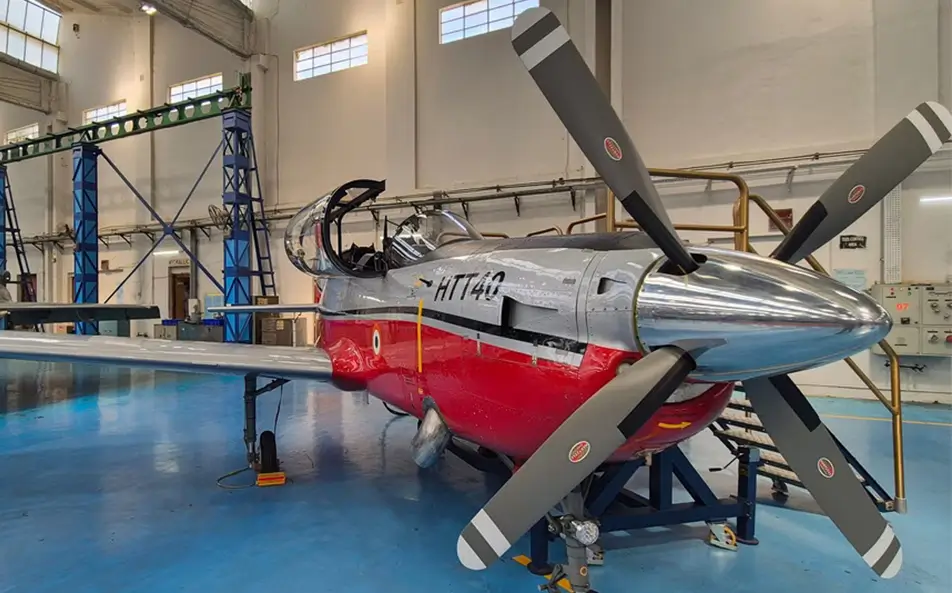
Hindustan Aeronautics Limited (HAL) is preparing to deliver the first batch of HTT-40 basic trainer aircraft after a programme setback that kept deliveries grounded through 2025-26. Two aircraft have been built in Bengaluru and one in Nashik, according to the latest report by Hindustan Times.
The reason? A missing piece no aircraft can do without: its engine.
Now that Honeywell has started supplying the TPE331-12B engines, the HTT-40 programme is moving again. But the bigger question is whether HAL can turn this first batch into a steady production pipeline.
The Hindustan Turbo Trainer-40 is an indigenous basic trainer aircraft developed by HAL for military pilot training. It is a fully aerobatic, tandem-seat turboprop with modern avionics and zero-zero ejection seats. It can reach about 450 kmph and a service ceiling of six kilometres.
The aircraft first flew in May 2016 and obtained system-level certification in June 2022. It was designed to address the shortage of basic trainers and improve training for newly inducted pilots.
In March 2023, the government approved the purchase of 70 HTT-40 aircraft from HAL for ₹6,828.36 crore, with supplies planned over six years. The procurement also included associated training equipment and a full-mission simulator.
That made the HTT-40 an important programme for both pilot training and India's push towards greater self-reliance in aerospace manufacturing.
This is where the story gets interesting.
Although the aircraft is indigenously designed and developed, its propulsion system depends on Honeywell's TPE331-12B turboprop engine. Honeywell was expected to supply the first engine in September 2025.
But supply-chain bottlenecks delayed engine deliveries.
The impact was significant. HAL was expected to supply 12 aircraft to the Indian Air Force during FY2025-26. It delivered none, according to the latest reporting.
That distinction matters. The setback was not simply about HAL failing to build aircraft. A delay in a critical imported component affected the wider production schedule.
It is also a useful lesson in defence manufacturing: an indigenous airframe does not automatically mean an entirely domestic supply chain.
Under a roughly $100-million agreement covering 88 TPE331-12B engines and kits, Honeywell is expected to supply the first 16 engines. HAL is then expected to manufacture the remaining units through technology transfer, according to the latest reporting.
Honeywell confirmed in June 2026 that it had delivered three TPE331-12B engines to HAL for the HTT-40 programme. The company said it would supply the first 16 engines before HAL begins local engine assembly and expands in-country repair and overhaul capabilities.
That matters because the long-term value lies not only in getting engines delivered, but in developing domestic capability around manufacturing and sustaining them.
For India's defence ecosystem, this is an important distinction. A genuinely resilient aerospace programme needs reliable access to the aircraft, its critical components and the capabilities required to maintain them.
HAL is now preparing to deliver three HTT-40s - two built at Bengaluru and one at Nashik.
Three aircraft may sound small against a 70-aircraft order. But after a year of missed deliveries, they mark a clear shift from delay to delivery.
HAL has also been expanding its production infrastructure. According to the latest reporting, it can now produce up to 20 HTT-40 aircraft annually across Bengaluru and Nashik.
The real test now is maintaining a predictable flow of engines and turning production capacity into actual deliveries.
For readers tracking the latest Indian defence news, this is the part worth watching.
The aircraft sits at the beginning of the military flying-training pipeline.
At present, rookie pilots begin Stage-I, or ab-initio, training, on the Swiss-origin Pilatus PC-7 MkII. After this common stage, pilots are divided into fighter, transport and helicopter streams.
Those selected for the fighter stream then move through further stages involving the PC-7 MkII and Kiran Mk-1A before progressing to the Hawk advanced jet trainer.
The HTT-40 is not a fighter aircraft. It is the platform on which new pilots build basic flying skills before moving towards more advanced aircraft.
Every military pilot begins with foundational flying skills, making a dependable training fleet a basic building block of air power.
The HTT-40 is more than a new trainer aircraft. It is also a test of how far India can build a complete aerospace ecosystem at home.
The Ministry of Defence says the aircraft had around 56% indigenous content at the time of the 2023 contract, with the share expected to rise above 60% through the indigenisation of major components and subsystems.
That makes the engine story especially relevant.
India can design and manufacture the aircraft, but critical foreign components can still affect production. The programme shows both the growth of indigenous aerospace capability and the need to strengthen domestic supply chains.
For the wider India defence sector, that distinction matters. The goal is not simply to produce a fighter aircraft or trainer at home; it is to build the industrial depth needed to support it throughout its service life.
The immediate milestone is clear: the first three aircraft are ready for delivery.
HAL still has to deliver the remaining aircraft from the 70-aircraft order while maintaining a steady flow of engines and components. Its reported capacity of up to 20 aircraft a year provides room to accelerate production, but momentum will depend on whether supply constraints remain resolved.
That is why this matters in the latest Indian defence news cycle. It is a test of whether a delayed indigenous programme can regain momentum.
For the Indian Air Force, the first three HTT-40s could strengthen pilot training. For HAL, they are an opportunity to prove that an Indian-designed trainer can move into a dependable delivery cycle.
For India defence, the bigger story is simple: building the aircraft is only half the job. Building the ecosystem that keeps it flying is just as important.
Everything you need to know
The HTT-40 is an indigenous basic trainer aircraft developed by HAL for military pilot training, particularly at the initial stage of flying instruction.
The deliveries were delayed primarily because of supply-chain bottlenecks affecting the availability of Honeywell’s TPE331-12B turboprop engines.
The Indian Air Force ordered 70 HTT-40 aircraft from HAL under a contract worth ₹6,828.36 crore.
Three aircraft are currently ready- two built at Bengaluru and one at Nashik.
HAL can reportedly produce up to 20 HTT-40 aircraft annually across its Bengaluru and Nashik facilities.

Oct 21, 2026
TUI Staff
Oct 21, 2026
TUI Staff
Oct 14, 2026
TUI Staff
Oct 08, 2026
TUI Staff
Oct 22, 2026
TUI Staff
Oct 22, 2026
TUI Staff
Oct 22, 2026
TUI Staff
Oct 19, 2026
TUI Staff

Stay informed with independent, fact-checked journalism on technology, environment, government, economy and more. India’s most trusted digital news platform.


Comments (0)
Be the first to comment!