
Israel Election Results 2026: Netanyahu Leads, Eisenkot Trails, but 19 Arab Party Seats Could Change Everything
A completed vote count leaves Israel's next government uncertain.
 IN
Fri, Oct 30, 2026 | 11:48 AM IST


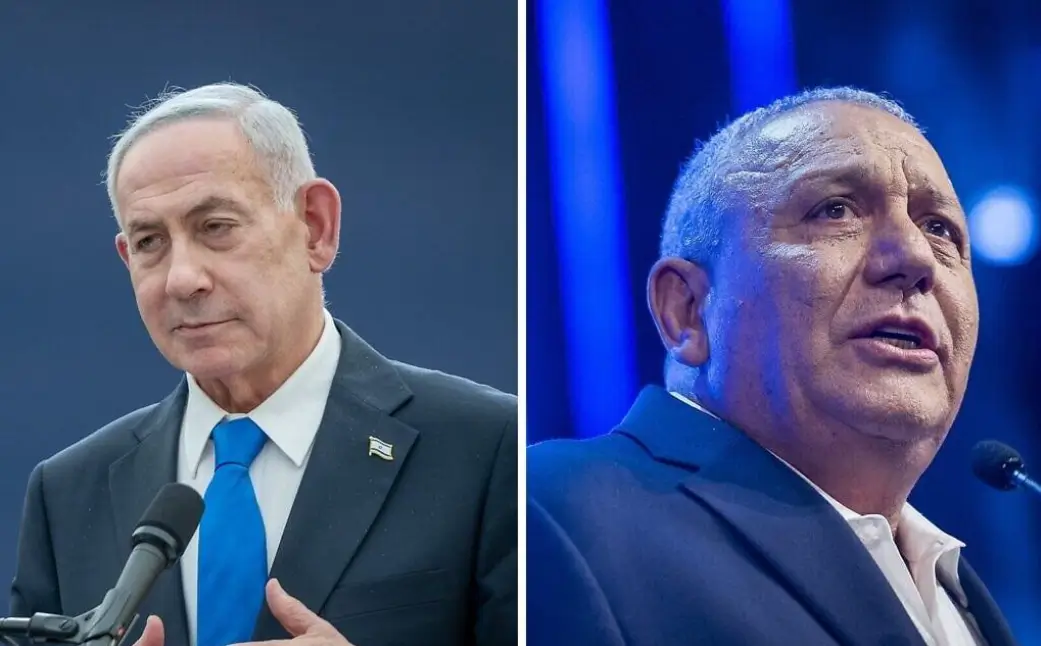
Israel's October 27 parliamentary election has produced a completed vote count but no clear governing majority. Prime Minister Benjamin Netanyahu and his allies secured 53 seats in the 120-member Knesset, while the opposition bloc led by Gadi Eisenkot won 48. Two Arab-led parties captured the remaining 19 seats.
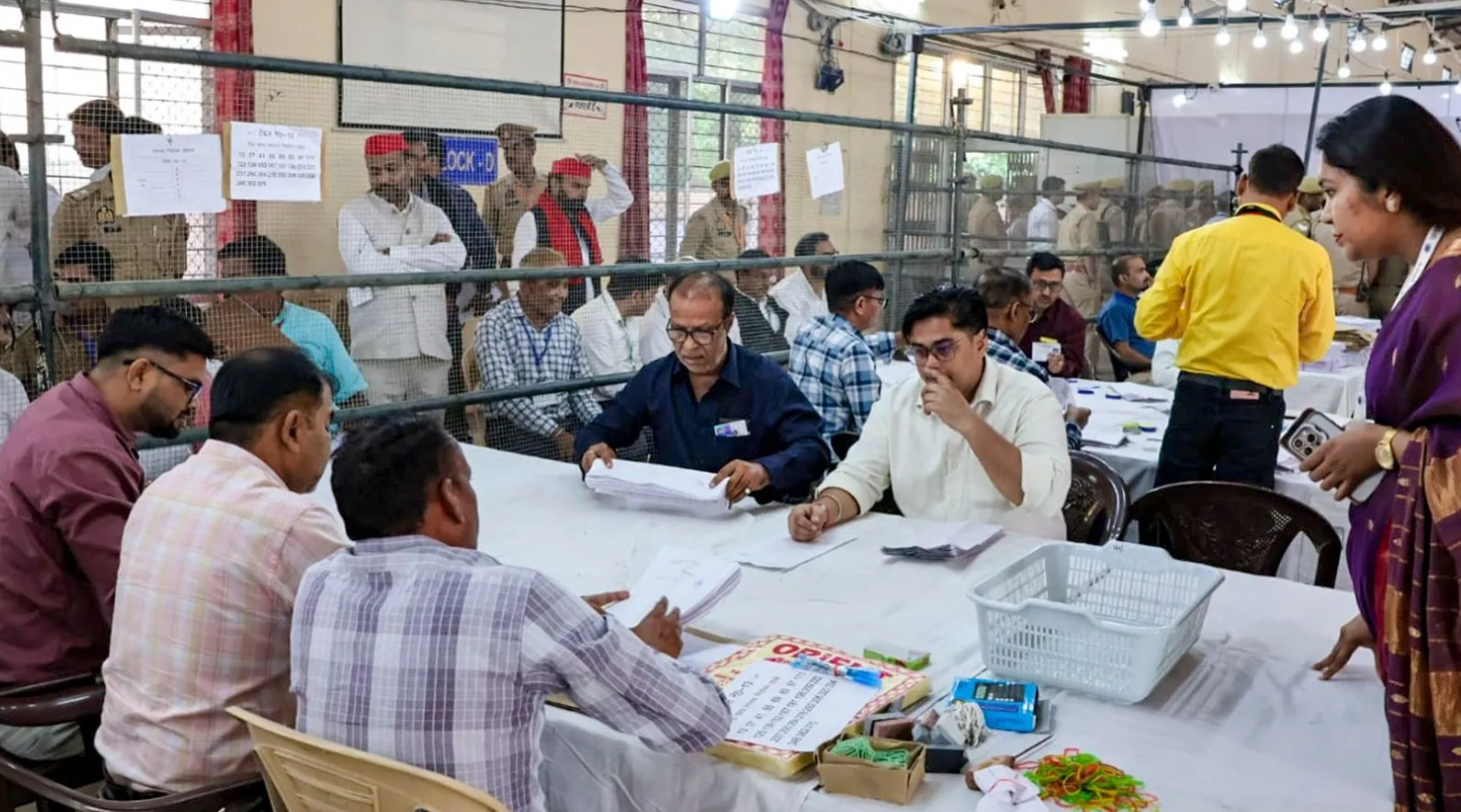
The Central Elections Committee published the completed count early on October 30. However, the results remain subject to final checks before their scheduled formal publication on November 4. The election, the first since the October 7, 2023 Hamas-led attacks and the subsequent wars, was closely watched as a test of the government's political support. For now, neither principal camp has secured the 61 seats required for an absolute parliamentary majority.
The Israel election results confirm that Likud remains the country's largest party, with 27 seats. Gadi Eisenkot's Yashar finished second with 21, followed by former prime minister Naftali Bennett's B'Yachad with 12. Here is the complete party-wise distribution reported by The Times of Israel:
| Political party | Seats |
|---|---|
| Likud | 27 |
| Yashar | 21 |
| B'Yachad | 12 |
| Joint List | 11 |
| The Democrats | 8 |
| Ra'am | 8 |
| Yisrael Beytenu | 7 |
| United Torah Judaism | 7 |
| Otzma Yehudit | 7 |
| Shas | 6 |
| Religious Zionism | 6 |
| Total | 120 |
The incumbent alliance consists of Likud, United Torah Judaism, Otzma Yehudit, Shas and Religious Zionism. For Netanyahu, the result represents a substantial political setback. His alliance held 68 seats in the outgoing Knesset but will have only 53 in the new parliament. That leaves him eight seats short of a majority. Even persuading all seven lawmakers from Yisrael Beytenu to switch sides would bring his camp to just 60 seats. It would also require an opposition party to abandon its current political alignment.
One of the most significant developments is the performance of the Joint List and Ra'am. The two parties won 11 and eight seats respectively, giving Arab-led factions a combined 19 seats. That is their highest-ever representation in the Knesset, according to The Times of Israel. Adding these 19 seats to Eisenkot's 48 would produce a theoretical majority of 67. However, the arithmetic is easier than the politics.
Bennett and Avigdor Liberman have opposed forming or supporting a government dependent on Arab-led parties. Democrats leader Yair Golan has advocated cooperation, while the two Arab parties have indicated varying degrees of willingness to support a change of government. In the Israeli elections, Netanyahu and his allies campaigned against an administration that would rely on Arab parties. Those political disagreements make the 67-seat calculation a hypothetical coalition rather than an agreement already reached.
The opposition has already begun testing possible arrangements. Eisenkot met Bennett and Golan after the vote to discuss government formation. Golan also held talks with Ra'am leader Mansour Abbas, according to Al Jazeera's October 29 report.
The meetings show that negotiations have started, but they do not mean a coalition has been formed. A minority government backed by lawmakers outside the cabinet is one possibility. Another would involve a broader unity arrangement bringing together Likud and some centrist or right-wing opposition parties.
Reuters' coalition analysis identifies a possible 66-seat unity combination. Such an arrangement would require major compromises, including reconsideration of existing alliances and campaign commitments. If neither side secures enough support, another election could eventually follow.
The dispute has extended beyond coalition numbers. Likud has alleged irregularities and possible foreign interference in the election. The Central Elections Committee has rejected claims of widespread or systematic electoral fraud. According to the Associated Press, election officials referred specific concerns to security authorities for investigation but stressed that the allegations remained unverified.
The committee said the investigation would not affect the results submitted to President Isaac Herzog. It is therefore important to distinguish a security inquiry into allegations from evidence that the overall vote count was fraudulent. No such conclusion has been established.
The Central Elections Committee recorded turnout of 77.9%, with approximately 5.72 million votes cast. This was the highest turnout in decades, reflecting the importance voters attached to the country's next government. The election followed years of political instability and major disputes over the government's security policies, the Gaza war and accountability following October 7. Yet the strong turnout did not deliver a straightforward governing majority.
The Central Elections Committee's official timetable schedules formal publication of the election results for November 4, 2026. President Isaac Herzog will then consult representatives of the elected parties and decide which lawmaker has the strongest prospect of forming a government. The new Knesset is scheduled to be sworn in on November 10. Coalition negotiations may continue for weeks after that date. The current prime minister remains in office in a caretaker capacity until a new government takes over. Israel's October vote has established which parties won seats, but not who will lead the next administration. The outcome now depends on political agreements that remain far from settled.
Everything you need to know
No bloc won the 61 seats needed for a Knesset majority. The completed count showed Netanyahu's alliance with 53 seats, Eisenkot's opposition with 48 and Arab-led parties with 19.
Likud won 27 seats, making it the largest individual party in the new Knesset. Its broader alliance secured 53 seats.
Mathematically, the 48-seat opposition bloc combined with 19 Arab-party seats would have 67. Politically, such an arrangement remains uncertain because several opposition leaders have opposed relying on Arab-led parties.
No. Election officials rejected allegations of widespread fraud. Specific concerns have been referred for investigation, but no finding invalidating the completed results has been established.
There is no confirmed formation date. Official election results are scheduled for November 4, and the new Knesset is expected to convene on November 10. Coalition talks could last weeks or longer.



Oct 30, 2026
TUI Staff
Oct 29, 2026
TUI Staff
Oct 29, 2026
TUI Staff
Oct 30, 2026
TUI Staff
Oct 29, 2026
TUI Staff
Oct 29, 2026
TUI Staff
Oct 28, 2026
TUI Staff

Stay informed with independent, fact-checked journalism on technology, environment, government, economy and more. India’s most trusted digital news platform.



Comments (0)
Be the first to comment!