
18th BRICS Summit in Delhi: How India Wants to Build a Startup Bridge Across 11 Nations
Can India turn BRICS into a startup bridge?
 IN
Thu, Oct 15, 2026 | 04:28 PM IST
IN
Thu, Oct 15, 2026 | 04:28 PM IST


Imagine an Indian startup finding its next investor in the UAE, its technology partner in China, its first overseas customers in Indonesia and its research collaborator in Brazil.
That may sound ambitious today. But India is trying to make such cross-border connections easier through its 2026 BRICS chairship.
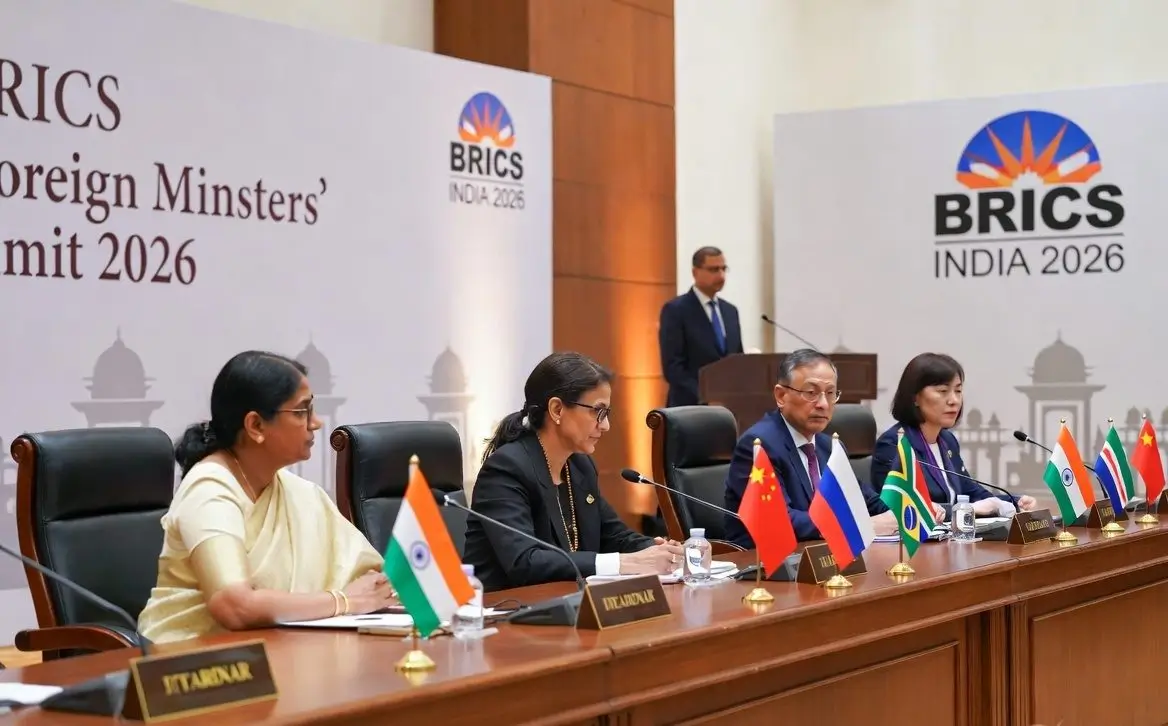
The 18th BRICS Summit in Delhi will take place at Bharat Mandapam on September 12–13, bringing together the expanded BRICS grouping and its partner and outreach countries. The summit comes at an important moment: BRICS has grown to 11 members and 2026 also marks 20 years of the grouping.
For India, however, BRICS is not only about diplomacy. One of its most interesting goals is to deepen cooperation in startups, innovation, technology, MSMEs and digital infrastructure.
So, can India turn BRICS into a startup bridge connecting entrepreneurs across 11 very different economies?
India assumed the BRICS chairship on January 1, 2026, with the theme “Building for Resilience, Innovation, Cooperation and Sustainability.” The Ministry of External Affairs has positioned India's chairship around a people-centric and “Humanity First” approach.
The opportunity is significant because the BRICS Member Countries now span Asia, Africa, the Middle East and Latin America.
The grouping includes Brazil, Russia, India, China, South Africa, Egypt, Ethiopia, Iran, Saudi Arabia, the UAE and Indonesia. Together, they represent roughly half of the world's population and around two-fifths of global economic output, according to Indian government data.
For startups, that means access to a potentially huge network of consumers, investors, researchers, manufacturers and technology partners.
The most significant development came from the BRICS Industry Ministers' Meeting held in Jaipur in August.
India proposed a BRICS Incubator Network and a BRICS Startup Innovation Fund to support innovation-led growth. The meeting also adopted a joint declaration covering cooperation in startups, MSMEs, logistics and industrial development.
Importantly, these should currently be viewed as proposals and developing cooperation mechanisms, not as a fully operational BRICS funding programme that startups can immediately apply to.
If implemented, however, the idea could address one of the biggest challenges faced by young companies: finding the right combination of capital, mentorship, technology and market access.
India is already strengthening its domestic startup funding ecosystem. The government has notified the ₹10,000-crore Startup India Fund of Funds 2.0, with a focus on areas including deep tech, innovative manufacturing and early-growth startups.
The BRICS proposal takes that ecosystem-building ambition one step further - across borders.
A startup incubator does more than provide office space. It can connect founders with mentors, investors, researchers, technology and potential customers.
A BRICS-wide incubator network could potentially create similar connections between innovation ecosystems in member countries.
The idea is already gaining support within BRICS' science and technology track. The recent Chennai Declaration welcomed stronger engagement among incubators, accelerators and early-stage investors, greater mobility for young innovators and better access to relevant markets. It also welcomed the BRICS Youth Startup Platform and noted consideration of a BRICS Startup Innovation Fund.
For a Bengaluru-based startup, that could eventually mean finding a research partner in Brazil or a market-entry partner in Indonesia without having to build every relationship from scratch.
The BRICS Member Countries are not one uniform market. That is precisely what makes the grouping interesting for entrepreneurs.
India has strengths in software, fintech and digital public infrastructure. China is a major manufacturing and technology ecosystem. The UAE and Saudi Arabia bring significant investment capacity. Brazil offers a large Latin American market, while Indonesia is an important digital economy in Southeast Asia.
South Africa can also provide a gateway to wider African markets.
This diversity could create opportunities in sectors such as:
The opportunity is therefore not simply about raising money. It is about finding customers, partners and markets.
Img Src : Khan Global Services
There is another piece of the puzzle: payments.
The Reserve Bank of India has been involved in discussions on connecting fast-payment systems and central bank digital currencies, or CBDCs, among BRICS countries. RBI Governor Sanjay Malhotra said in August that such discussions aim to make cross-border payments more efficient and reduce costs.
For startups selling internationally, easier payments could eventually reduce some of the friction around currency conversion, settlement and transaction costs.
But this does not mean BRICS is preparing to launch a single currency.
The much-discussed BRICS Currency idea is different from the current discussions around payment-system interoperability, CBDCs and greater use of national currencies. No common BRICS currency has been announced as an outcome of these discussions.
That distinction is important because headlines around a “BRICS Currency” can easily create more excitement than the facts justify.
India's startup bridge is also being built around emerging technologies.
At the BRICS Communications Ministers' Meeting in Pune, India identified AI and future network technologies, digital public infrastructure, innovation, startups and entrepreneurship among the key areas for cooperation.
The science and technology track is similarly focusing on collaborative research, young innovators and stronger links between startups, incubators and investors.
That could be particularly valuable for Indian deep-tech companies that need research expertise, specialised talent and international capital to scale.
A successful BRICS innovation ecosystem cannot focus only on venture-backed unicorns.
MSMEs are equally important.
The BRICS Industry Ministers' Meeting advanced cooperation on SME ecosystems, while India has also joined the BRICS Centre for Industrial Competencies, which aims to support manufacturing companies and MSMEs with Industry 4.0 capabilities.
That creates another potential pathway for Indian businesses to connect with overseas markets, technologies and supply chains.
The vision is promising, but building a genuine cross-border startup ecosystem will not be easy.
The BRICS Member Countries have different regulations, currencies, tax systems, languages and rules around data, foreign investment and technology.
Geopolitical differences also remain.
That means an incubator network or startup fund will only matter if entrepreneurs can actually use it. A declaration alone cannot help a founder enter a new market.
The real test will be whether these initiatives eventually deliver:
Funding + Mentorship + Market Access + Partnerships + Easier Payments
As the 18th BRICS Summit in Delhi approaches, founders and investors should watch for concrete details around:
The 18th BRICS Summit in New Delhi on September 12–13 is therefore more than another diplomatic calendar event. It could become a test of whether BRICS can convert its enormous demographic and economic scale into practical opportunities for entrepreneurs.
And for India, the ambition is clear: move from simply being a major startup nation to becoming a bridge connecting emerging-market innovation ecosystems.
If these proposals move from declarations to implementation, the next big Indian startup success story may not stop at India's borders.
It could be built in India - and scaled across the BRICS world.
Everything you need to know
It is the 18th leaders' summit of BRICS, hosted by India at Bharat Mandapam in New Delhi on September 12–13, 2026.
The 11 members are Brazil, Russia, India, China, South Africa, Egypt, Ethiopia, Iran, Saudi Arabia, the UAE and Indonesia.
No common BRICS currency has been announced. Current discussions focus on cross-border payment systems, CBDCs and greater use of national currencies.
It is an Indian proposal aimed at supporting innovation-led growth and improving startup financing and cooperation across BRICS. Its final structure and implementation details are still developing.


Oct 14, 2026
TUI Staff
Oct 08, 2026
TUI Staff
Oct 06, 2026
TUI Staff
Oct 15, 2026
TUI Staff
Oct 15, 2026
TUI Staff
Oct 15, 2026
TUI Staff
Oct 14, 2026
TUI Staff

Stay informed with independent, fact-checked journalism on technology, environment, government, economy and more. India’s most trusted digital news platform.



Comments (0)
Be the first to comment!