
Kalkaji Mandir: History, Ancient Legends and Heritage of Delhi's Famous Shrine
Inside the Legends of Maa Kalka
 IN
Fri, Oct 16, 2026 | 11:06 AM IST
IN
Fri, Oct 16, 2026 | 11:06 AM IST

What if a temple standing opposite one of Delhi's busiest business districts held stories of ancient mythology, Mughal-era history and centuries of devotion? Just across Nehru Place, Kalkaji Mandir offers a fascinating glimpse into the capital's spiritual heritage.
Dedicated to Maa Kalka, the shrine is associated with the legend of Goddess Kali and the demon Raktabija. But its story doesn't end with mythology. Historical records point to an 18th-century structure, while a nearby Ashokan inscription adds another dimension to the area's past. Here's what makes this South Delhi landmark worth discovering.
Located in South Delhi, the temple is dedicated to Goddess Kalka, associated with Goddess Kali. The surrounding locality takes its name from the shrine, which stands opposite Nehru Place.
According to the South East Delhi District Administration, devotees believe the goddess's image is swayambhu, meaning self-manifested. The shrine is traditionally associated with Satya Yuga, the first age in Hindu cosmology.
For worshippers, the temple represents faith and the protective power of the goddess. For history enthusiasts, it raises an interesting question: how do traditional accounts of its origins compare with the evidence available today?
The traditional story begins with demons threatening the gods. According to the legend, the gods sought help from Brahma, who directed them towards Parvati. From Parvati emerged Goddess Kaushiki, who took on the challenge of fighting the demons.
One opponent proved especially difficult to defeat: Raktabija.
His power came from a terrifying ability. Every drop of his blood that touched the ground produced another demon. The more he was wounded, the larger his army became.
The legend describes Goddess Kali emerging from Kaushiki's forehead or eyebrows. She consumed Raktabija's blood before it could reach the ground, preventing more demons from appearing and helping secure victory.
This story explains the temple's traditional association with Goddess Kalika and her fierce, protective form. The district administration's account also records the belief that the shrine dates back to Satya Yuga.
However, this is a religious tradition, not an archaeologically established construction date. Keeping that distinction clear helps readers understand both the spiritual story and the temple's documented history.
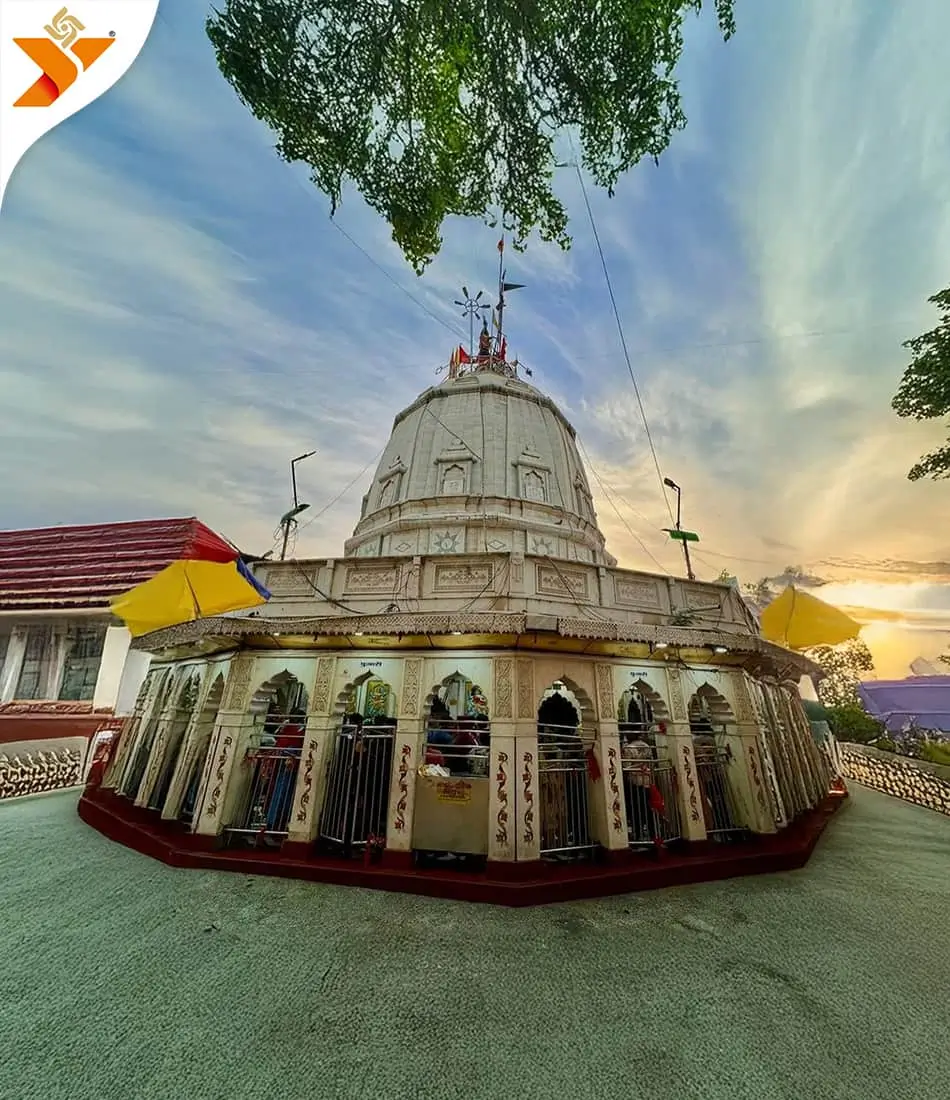
Img Src : YatraDham
The temple's traditional origins reach back to mythology, but the surviving structure has a more specific documented timeline.
The National Mission on Monuments and Antiquities places the shrine's documented architectural period in the 18th–19th centuries and identifies 1764 AD as a significant date.
This does not disprove the temple's religious traditions. It simply means the available architectural record does not establish that the present building dates to Satya Yuga.
The nearby Ashokan Rock Edict
South Delhi also has an important historical landmark: the Bahapur Ashokan Rock Edict, associated with Emperor Ashoka and the third century BCE.
The Indira Gandhi National Centre for the Arts' historical documentation discusses this inscription, which belongs to the tradition of Ashoka's Minor Rock Edicts.
The inscription adds an ancient historical connection to the surrounding area. However, it does not prove that the temple itself existed during Ashoka's reign.
For anyone exploring Delhi's heritage, this is an important distinction: the area's ancient past and the temple's documented architectural history are connected by geography, but they are not the same historical claim.
One of the more intriguing episodes in the temple's history concerns its reported expansion in the early 19th century.
The National Mission on Monuments and Antiquities associates Mirza Raja Kidar Nath, the Peshkar of Mughal emperor Akbar II, with additions to the shrine around 1816.
Historical accounts describe the development of outer rooms and a prominent pyramidal roof, followed by further additions to the complex.
Some secondary accounts also tell a story about temple priests seeking a wealthy benefactor and identifying Kidar Nath through a religious ritual. While this makes an engaging anecdote, it should be treated as a traditional account unless stronger historical documentation confirms the details.
The broader story shows how the shrine developed over time, with successive additions shaping the complex visitors see today.
The temple's architecture offers another reason to look beyond its religious significance. Heritage descriptions associate the shrine with the Mughal-Maratha period.
The central chamber is described as polygonal, surrounded by a verandah with multiple arched openings. Marble surfaces and red sandstone features contribute to its distinctive appearance.
The complex also includes smaller shrines dedicated to Shiva, Hanuman, Ganesha, Lakshmi Narayan, Bhairon and Sita-Ram. Descriptions of the grounds also mention a hawan space, a sacred Neem tree and a Tulsi plant.
Rather than rushing through the visit, take a moment to notice how the central shrine, surrounding spaces and smaller places of worship form one larger religious complex.
Source: National Mission on Monuments and Antiquities. Detailed measurements and individual construction attributions should be checked against the relevant heritage records.
Navratri is one of the most important periods in the temple's religious calendar. Chaitra Navratri and Sharad Navratri celebrate the divine feminine through worship, prayers and devotional observances.
During these festivals, devotees visit to seek Maa Kalka's blessings, participate in darshan and offer prayers. The increased footfall can make the surrounding roads and queues considerably busier.
The shrine is also associated with the devotional name Manokamna Siddha Peetha, reflecting the belief that worshippers can pray for the fulfilment of their wishes.
Planning a visit during Navratri? Read our guide to Navratri dates, rituals and celebrations, and allow extra time for travel and queues.
The temple is accessible by public transport, making it convenient for visitors from different parts of the capital.
The official district administration guide confirms the temple's location and nearby transport connections.
Kalkaji Mandir Delhi timings can vary with rituals, festivals and local arrangements. Visitors should confirm the latest opening hours and aarti schedule with the temple authorities before travelling.
This is particularly important during Navratri, when crowd management and special arrangements may affect access.
If you have extra time, consider exploring the nearby Lotus Temple or ISKCON Temple in East of Kailash. Check their individual visiting hours before adding them to your itinerary.
From the legend of Raktabija to its documented architectural development, Kalkaji Mandir brings together different chapters of Delhi's cultural story.
Its traditional association with Maa Kalka continues to shape its religious importance, while historical records help explain how the surviving structure developed. The nearby Ashokan inscription adds another dimension to the history of the surrounding area.
Whether you're visiting to pray or exploring the capital's heritage, the shrine offers a reminder that a city's history isn't found only in museums and monuments. Sometimes, it continues to live in the places people visit, the stories they share and the traditions they carry forward.
Everything you need to know
The shrine is known for its association with Goddess Kalka, the traditional legend of Raktabija and its importance as a religious landmark in South Delhi.
The temple is traditionally believed to have ancient origins. The National Mission on Monuments and Antiquities identifies 1764 AD as a significant date in the history of its surviving structure.
Kalkaji Mandir Metro Station is the nearest metro station and is served by the Violet and Magenta lines.
Schedules may change according to rituals and festivals. Confirm the latest timings with the temple authorities before visiting.
Navratri honours the divine feminine. Devotees visit to offer prayers, participate in darshan and seek Maa Kalka's blessings.





Oct 15, 2026
TUI Staff
Oct 08, 2026
TUI Staff
Oct 06, 2026
TUI Staff
Oct 01, 2026
TUI Staff
Oct 15, 2026
TUI Staff
Oct 15, 2026
TUI Staff
Oct 15, 2026
TUI Staff
Oct 14, 2026
TUI Staff

Stay informed with independent, fact-checked journalism on technology, environment, government, economy and more. India’s most trusted digital news platform.





Comments (0)
Be the first to comment!