
Shri Radha Rani Temple Barsana: Legends, 200+ Steps & The Magic of Lathmar Holi
The Legendary Shrine That Makes Barsana Truly Special
 IN
Thu, Oct 08, 2026 | 03:52 PM IST
IN
Thu, Oct 08, 2026 | 03:52 PM IST


What if the road to a temple took you through centuries of legends, a hilltop climb, royal history and one of India’s most colourful Holi celebrations?
That is the story of Shri Radha Rani Temple Barsana, the celebrated hilltop shrine in Mathura district, Uttar Pradesh. Perched on Bhanugarh Hill, the temple is deeply associated with Radha Rani and is also known as Shreeji Temple and Ladli Ji Temple.
The District Mathura administration identifies the historical Radha Rani Temple as the main attraction of Barsana and places the town within the wider Krishna pilgrimage circuit.
But what makes this shrine special isn't just its religious importance. It is the story behind the hill, the legends surrounding Radha's connection with Barsana, the temple's distinctive architecture and the dramatic celebrations of Radhashtami and Lathmar Holi.
The temple stands on Bhanugarh Hill in Barsana, a town traditionally regarded as Radha's sacred home in Braj.
Its history blends religious tradition with the history of the present shrine. According to a long-standing belief, an original shrine at the site was established by King Vajranabh, traditionally described as Krishna's great-grandson, around 5,000 years ago. The original shrine is said to have fallen into ruins before its sacred icons were rediscovered by Narayan Bhatt, a figure associated with the revival of Braj's sacred sites.
The present historic structure belongs to a much later period. Sources commonly associate a temple built at the site in 1675 with Raja Bir Singh Deo.
There is an important distinction here. The 5,000-year-old origin is a religious tradition, not an archaeologically established date for the current building. The 1675 reference relates to the later temple history.
That distinction makes the story more interesting, not less: this is a sacred site whose devotional importance stretches far beyond the age of its present architecture.
The story of Barsana is inseparable from the story of Radha.
According to a popular Braj legend, Nanda and Vrishbhanu were close friends. Nanda, associated with Krishna, settled around Nandishvar Hill, while Vrishbhanu made Bhanugarh his home. Over time, these settlements became associated with Nandgaon and Barsana respectively.
The symbolism is beautiful.
Nandgaon became closely associated with Krishna, while Barsana became the land of Radha. Their neighbouring hills and temples continue to form an important part of the sacred geography of Braj.
That is why visiting Barsana feels different from simply visiting another temple town. Here, the landscape itself is part of the story.
Radha Rani is lovingly worshipped here as Ladli Ji, meaning the beloved or cherished daughter.
The principal deities are traditionally worshipped together as Shri Laadli Lal, representing the beloved daughter and son of Barsana.
The Shri Radha Rani Temple Barsana is therefore known by several names, including Radha Rani Temple, Shreeji Temple and Ladli Ji Temple.
For devotees, these aren't simply different names for the same monument. They reflect the intimate devotional relationship between Radha, Krishna and the people of Braj.
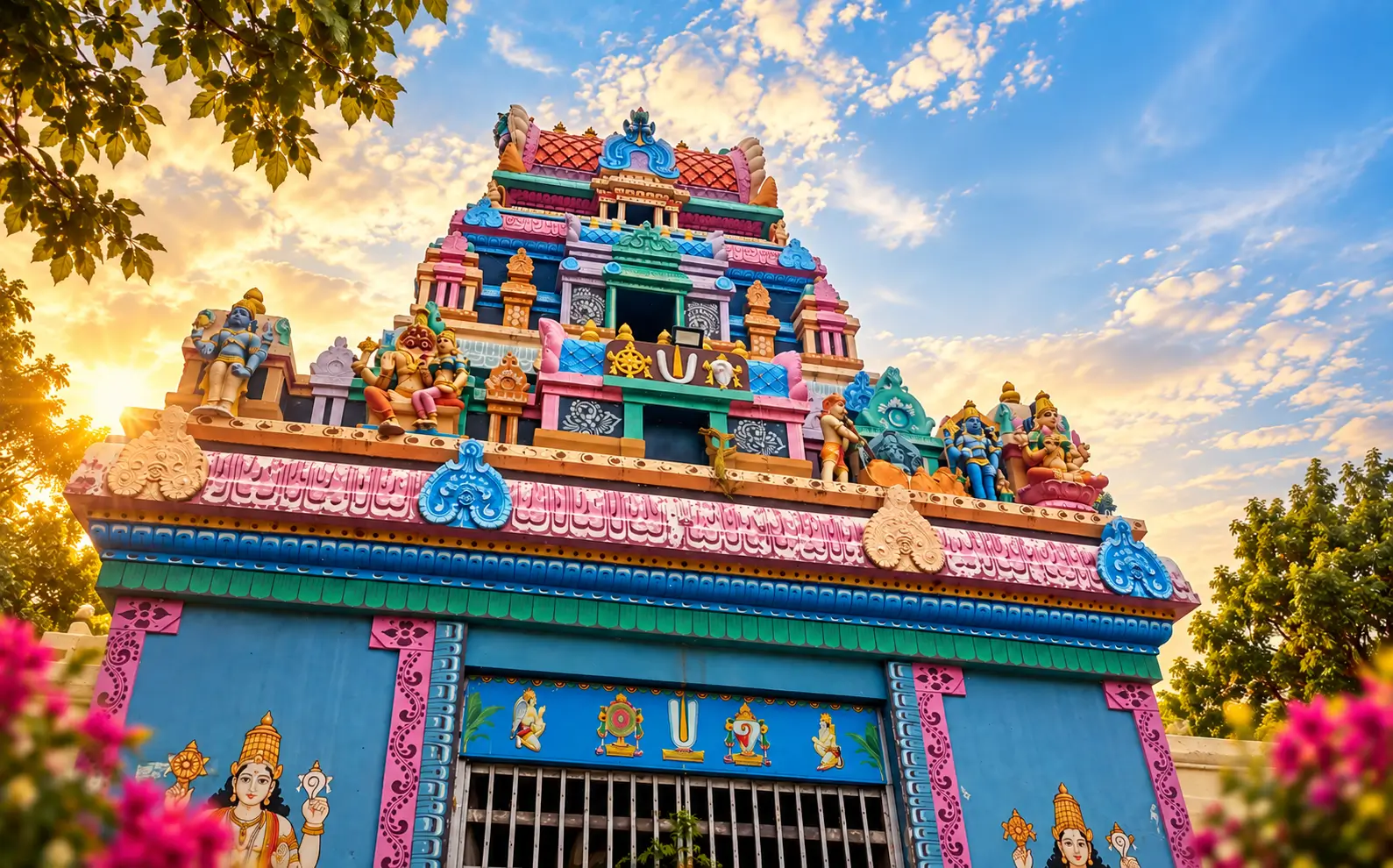
The setting of Shri Radha Rani Temple Barsana is dramatic enough to grab attention even before you reach the entrance.
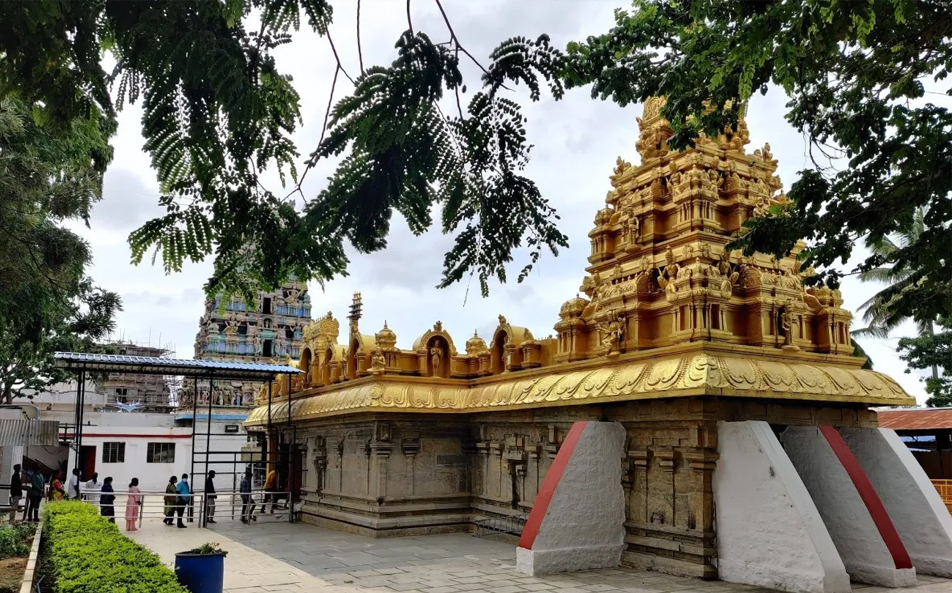
Its architecture features red sandstone, carved pillars, arches, domes and paintings, with design elements commonly associated with Rajput architecture and Mughal-era influences.
Red and white stone elements are traditionally associated with the love of Radha and Krishna.
The hilltop location adds another layer to the experience. From the temple premises, visitors can look across Barsana and the surrounding Braj landscape.
It is easy to see why the shrine has become both a pilgrimage destination and a point of interest for travellers fascinated by India's living heritage.
Reaching the temple means making your way up more than 200 steps, according to the traditional temple descriptions.
The climb also leads past important sites.
At the foot of the steps stands the palace associated with Vrishabhanu Maharaj, with idols linked to Vrishabhanu Maharaj, Kirtida, Shridama and Radha. Nearby are the Brahma Temple and Ashtasakhi Temple.
Government project records have also documented the historic access route as involving roughly 190–200 steps, showing why the ascent is such a notable part of the pilgrimage experience.
So, don't rush the climb. The steps are not merely something to get through before darshan. They are part of the journey.
If Barsana is fascinating on an ordinary day, festival season takes that experience to another level.
Radhashtami: When Barsana Celebrates Radha
Radhashtami, the festival associated with Radha Rani's appearance, is one of the most important celebrations at the temple.
The shrine is decorated with flowers, lights and festive adornments. The deities are dressed in special clothes and jewellery, followed by aarti and offerings.
One traditional highlight is Chappan Bhog, the offering of 56 varieties of food, which is later distributed as prasad.
For devotees, Radhashtami is not just a date on the religious calendar. It is when Barsana's identity as Radha's sacred town becomes especially visible.
Krishna Janmashtami
Janmashtami is another major festival at the temple. Special decorations, deity attire, jewellery, aarti and devotional offerings add to the celebrations.
Then comes Lathmar Holi, the festival that has made Barsana famous far beyond the Braj region.
The celebration is rooted in the playful Radha-Krishna traditions associated with Barsana and Nandgaon. Devotees and visitors gather to experience the colourful festivities and distinctive local customs.
According to the supplied reference, Barsana's Holi celebrations begin before the main Holi festival and continue until Rang Panchami.
If you're planning to visit specifically for Lathmar Holi, expect a very different experience from a quiet temple morning: bigger crowds, more colour and a town operating at full festive energy.
Temple timings can change with the season, daily rituals and major festivals.
The supplied sources give different afternoon schedules, so publishing one fixed timetable without confirmation could mislead visitors. Current travel guides also advise checking the day's timings before travelling.
The safest approach is to verify the latest darshan schedule before your visit, especially during Radhashtami, Janmashtami and Lathmar Holi.
Barsana is well connected to the wider Braj region.
The District Mathura administration lists Mathura as the main rail and road gateway, with regular trains to Mathura Junction and road connectivity from major cities. It also lists Kheria Airport in Agra and Indira Gandhi International Airport in Delhi as airport options for reaching the region.
For travellers, the easiest plan is often to combine Barsana with Mathura, Vrindavan, Nandgaon and Govardhan, creating a broader Braj itinerary instead of treating the temple as a standalone stop.
For comfortable sightseeing, we at TheUnitedIndian would suggest October to March is generally considered the more pleasant period for exploring Barsana and the wider Braj region.
But the best time depends on what you want from the trip.
Want a calmer pilgrimage experience? Choose a regular day and start early.
Want to see Barsana at its most spectacular? Plan around Radhashtami or Lathmar Holi — but be prepared for significantly larger crowds.
Some temples are remembered for their size. Others for their architecture.
Radha Rani Mandir Barsana is remembered for the story it carries.
It is the hill associated with Radha, the town shaped by her legend, the shrine reached after a climb of more than 200 steps and the setting for festivals that turn the streets of Barsana into a celebration of Braj culture.
There is history here, but also living tradition. There is architecture, but also faith. And there is a sense that the journey doesn't really begin when you reach the temple gate - it begins when you look up at Bhanugarh Hill and decide to climb.
That is what makes a visit to Barsana memorable. You aren't simply seeing a temple. You are stepping into one of the most enduring stories of Braj.
Everything you need to know
Shri Radha Rani Temple Barsana is located on Bhanugarh Hill in Barsana, Mathura district, Uttar Pradesh. The District Mathura administration identifies it as the main attraction of Barsana.
The shrine is popularly known as Shreeji Temple and Ladli Ji Temple, with Radha Rani worshipped lovingly as Ladli Ji.
Traditional descriptions refer to more than 200 steps leading to the temple. Government project records have documented an approach of roughly 190–200 steps, while current visitor guides give slightly different counts depending on the route.
The major celebrations include Radhashtami, Krishna Janmashtami and Lathmar Holi. Radhashtami is especially significant for devotees of Radha Rani, while Lathmar Holi is one of Barsana's best-known cultural traditions.
No. The 5,000-year origin belongs to religious tradition. The present historic temple is associated with a much later period, including the commonly cited 1675 construction date.


Oct 06, 2026
TUI Staff
Oct 01, 2026
TUI Staff
Sep 30, 2026
TUI Staff
Oct 08, 2026
TUI Staff
Oct 07, 2026
TUI Staff
Oct 06, 2026
TUI Staff
Oct 05, 2026
TUI Staff

Stay informed with independent, fact-checked journalism on technology, environment, government, economy and more. India’s most trusted digital news platform.



Comments (0)
Be the first to comment!