
Old Vijayawada vs New Vijayawada : How Has The City Changed Over the Years?
Old-world charm meets a city embracing change
 IN
Tue, Nov 03, 2026 | 09:39 PM IST

If you have visited Vijayawada after a gap of five or ten years, you may have noticed something interesting. The familiar streets are still there, the aroma of local food still fills the air, and Kanaka Durga Temple continues to draw devotees. But look around a little more and you will spot new apartment buildings, busy commercial areas, changing shopping habits and a city that is steadily growing.
That is what makes Vijayawada's story worth exploring. It is not just about new roads or buildings. It is about how people shop, travel, work and spend their everyday lives. And for anyone who has lived here, moved away or plans to visit, understanding this change offers a glimpse into the city's past as well as its future.
So, what was old Vijayawada, Andhra Pradesh like, and what does the city look like today? Let's take a walk through its changing streets.
Before it became widely known as Vijayawada, the city was called Bezawada. Its history is closely connected with the Krishna River, Indrakeeladri Hill and the temples that have shaped its identity over generations.
Local legends offer different explanations for the name Vijayawada. One popular belief connects it with Arjuna's penance on Indrakeeladri Hill to receive the Pasupatastra from Lord Shiva. These stories remain an important part of the city's cultural memory.
Vijayawada's civic history is equally interesting. According to the Krishna District administration, the municipality was established on 1 April 1888 and became a municipal corporation in 1981. Its boundaries expanded in 1985 with the merger of nearby local bodies and villages.
The city's population also reflects its growth. The 2011 Census recorded 10,39,518 people within the municipal corporation. This is a historical figure, not a current population estimate.
Ask someone who has lived in Vijayawada for decades, and they may tell you that One Town feels like a city within a city. Its narrow lanes, traditional shops and busy marketplaces offer a glimpse of the city's older trading culture.
Kothapet, Islampet and Winchipet are among the neighbourhoods associated with this familiar side of Vijayawada. Besant Road, meanwhile, remains a popular shopping destination. From clothing and accessories to everyday essentials, the area continues to attract shoppers looking for variety and familiar local stores.
But the city has expanded well beyond its older commercial pockets.
Benz Circle, Labbipet, Mogalrajapuram and Patamata have become important parts of its changing urban landscape. Apartment complexes, restaurants, offices, showrooms and newer commercial spaces have changed how people live, shop and spend their free time.
The contrast is easy to notice. Older areas retain their traditional markets and closely connected neighbourhoods, while newer pockets offer a more contemporary mix of residential and commercial development. Neither has replaced the other. Both are part of the city's character.
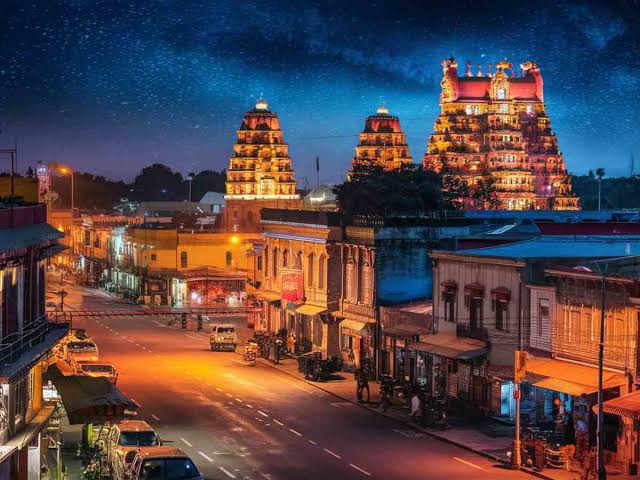
Img Src : Travel India
Vijayawada has long benefited from its location near the fertile Krishna delta. Agriculture and the trade of farm produce have played an important role in the region's economy.
Mangoes are a particularly familiar part of this story. The wider region is known for varieties such as Banganapalle and Totapuri. Mango trading, food processing and related businesses continue to connect the city with the agricultural economy around it.
And then there is Andhra's love for avakaya. For many households, mango season is not complete without preparing or buying this much-loved pickle.
Today, the city's economy has several other dimensions. Education, healthcare, hospitality, construction, retail and professional services contribute to its urban growth. Its location within the Andhra Pradesh Capital Region has also brought greater attention to real estate and business development.
The shift is not from agriculture to modern business. It is the growth of a more diverse economy in which traditional trade continues alongside newer industries and services.
While roads and buildings have changed, the Krishna River remains central to the identity of Vijayawada.
One of its most recognisable landmarks is the Prakasam Barrage, built between 1954 and 1957. It replaced the older Krishna anicut and plays an important role in the irrigation system of the Krishna delta. The Krishna District administration's irrigation profile documents its construction and regional importance.
For residents, the barrage is much more than an irrigation structure. It is a familiar landmark, a route across the river and a popular place to enjoy the evening breeze.
Another landmark that continues to define the city is the Kanaka Durga Temple, situated on Indrakeeladri Hill. The temple attracts devotees throughout the year, with Dasara being one of its biggest celebrations. The ten-day festivities, special decorations of the Goddess and Theppotsavam are important parts of the religious calendar.
Modernisation has brought new shopping spaces, restaurants and entertainment options, but Vijayawada's cultural identity remains closely connected to its traditions.
A wonderful example is the nearby town of Kondapalli, known for its colourful wooden toys. Called Kondapalli Bommallu, these handcrafted pieces depict animals, village scenes and mythological characters. The craft has received a Geographical Indication (GI) tag, recognising its traditional origin and identity. You can find its details on the Government of India's ODOP portal.
These toys are more than souvenirs. They represent generations of craftsmanship and a connection to the region's cultural heritage.
Festivals, local food, Telugu traditions and religious gatherings also continue to bring communities together. They are reminders that a city's identity is built as much on its people as on its infrastructure.
Vijayawada's location has always made it an important transport centre. Over the years, its road, rail and air connections have strengthened its links with other parts of Andhra Pradesh and India.
The city is connected through major road routes, including National Highways 16 and 65. Vijayawada Junction is an important railway station, while the Pandit Nehru Bus Station serves as a major road transport hub.
For air travellers, Vijayawada International Airport at Gannavaram is located around 25 kilometres from the city, according to the Airports Authority of India.
However, better connectivity also brings a familiar urban challenge: traffic. Busy junctions and commercial stretches can get congested, especially during peak hours. As the city grows, improving everyday commuting will remain just as important as expanding its transport network.
The story of Vijayawada Andhra Pradesh is still unfolding. Its role in the wider Andhra Pradesh Capital Region, growing service economy, educational institutions and expanding residential areas will continue to influence its development.
But growth also brings responsibilities. Better traffic management, reliable civic services, cleaner public spaces and careful urban planning will matter as much as new buildings and roads.
The real challenge is to make the city more liveable without losing the character that makes it familiar to its residents.
Old Vijayawada was shaped by traditional markets, agriculture, temples and close-knit neighbourhoods. New Vijayawada reflects changing lifestyles, modern businesses, expanding residential areas and stronger connectivity.
Yet, the two are not separate stories.
You can shop in One Town, enjoy the view from Prakasam Barrage and head towards Benz Circle later in the day. The surroundings may change, but the city's familiar energy remains.
And perhaps that is what makes Vijayawada special. It is growing, adapting and making room for the future, while holding on to the roots that brought it here.
Everything you need to know
Vijayawada was historically known as Bezawada. The name is associated with local legends and the city's cultural history.
One Town is among the city's traditional areas. Localities such as Islampet, Kothapet and Winchipet reflect its older markets and neighbourhood culture.
Vijayawada has expanded beyond its traditional markets and older neighbourhoods. Newer residential areas, commercial spaces, educational institutions and improved transport connections have shaped its growth.
Vijayawada is known for the Kanaka Durga Temple, the Krishna River, Prakasam Barrage, traditional markets and its cultural heritage.
Its location along the Krishna River, railway and road connectivity, trade, education and commercial activity make Vijayawada an important urban centre in Andhra Pradesh.

Nov 02, 2026
TUI Staff
Oct 31, 2026
TUI Staff
Oct 29, 2026
TUI Staff
Nov 03, 2026
TUI Staff
Nov 03, 2026
TUI Staff
Nov 03, 2026
TUI Staff
Nov 03, 2026
TUI Staff

Stay informed with independent, fact-checked journalism on technology, environment, government, economy and more. India’s most trusted digital news platform.



Comments (0)
Be the first to comment!