
US Strikes Iran's Qeshm Island, Oil Prices Surge Above $106: What Happened Near Hormuz?
Qeshm strike reports revive fears over global oil supplies.
 IN
Tue, Nov 03, 2026 | 04:54 PM IST


Reports of American strikes on Iran's Qeshm Island jolted energy markets on November 3, 2026, hours after oil benchmarks suffered a steep sell-off. Brent reached $106.61 a barrel and West Texas Intermediate $98.06 in a Reuters snapshot at 1:14 pm IST. Those prices are intraday readings, not settlement figures.
The development matters to India because the country depends on imports for almost nine-tenths of its crude requirements. Renewed uncertainty around a crucial Gulf shipping corridor could raise the cost of imported energy, even if domestic petrol and diesel prices do not move immediately.
"US strikes Iran" became the market-moving headline after The Wall Street Journal, citing US officials, reported limited attacks on Qeshm Island on November 2. Iranian state media also described explosions on the island, but those reports alone did not establish who caused them. An American official later told Reuters that the United States had struck targets on the island. Some officials characterised the operations as defensive measures intended to protect commercial shipping. The precise targets, extent of damage and any casualties have not been independently established in the reports reviewed.
The Iran Qeshm Island attack report should therefore be described with attribution, not as a fully documented account of events on the ground. Although the "US strikes Iran" reports now have confirmation from an unnamed American official, a detailed public military briefing is not available in the cited coverage.
At 03:55 GMT, or 9:25 am IST, Brent futures were $104.80 a barrel and US benchmark WTI crude stood at $96.66. By 07:44 GMT, Reuters reported Brent at $106.61, a gain of $1.84 or 1.76%, while WTI crude reached $98.06, up $1.60 or 1.66% against Monday's settlement.
That was a rebound, not a new all-time high. On November 2, Brent settled at $104.77 after falling 7.63%, while WTI closed at $96.46, down 7.36%. The Brent crude oil price recovered some of the previous day's losses as traders reconsidered the prospects for a ceasefire. The Brent crude oil price can change quickly when reported attacks coincide with diplomatic news. The shift in crude oil prices reflects uncertainty about future supply, not proof that an oil terminal or tanker was destroyed.
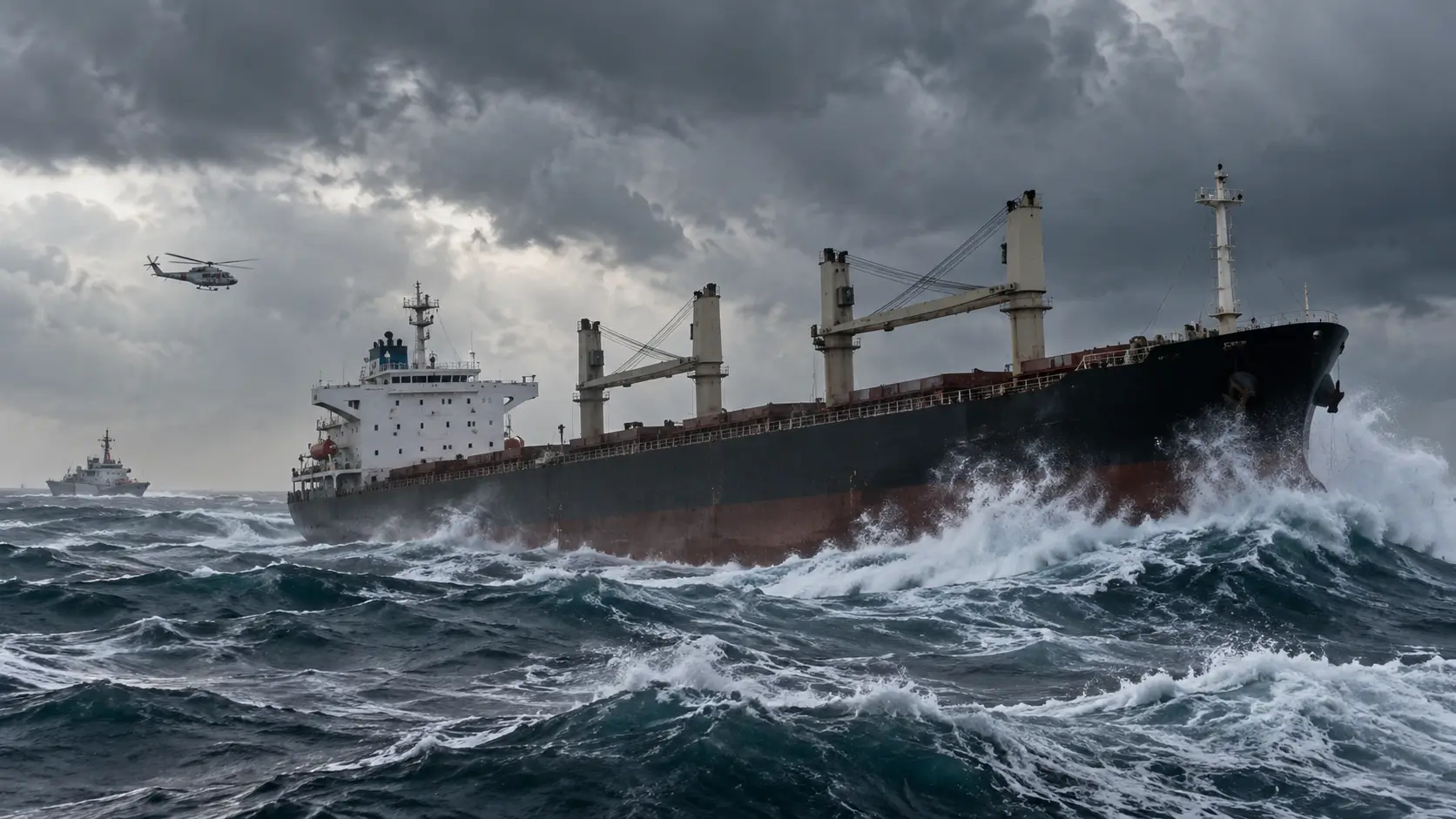
Qeshm lies along the Strait of Hormuz, the passage linking the Persian Gulf to the Gulf of Oman. Military action nearby can raise fears over shipping delays, tanker insurance costs and the security of oil cargoes. Before the US-Iran conflict began in late February, the waterway handled roughly one-fifth of the world's oil supply. But describing that as today's traffic would be misleading: US Energy Information Administration estimates show flows fell from 21.6 million barrels a day in the final quarter of 2025 to 4.9 million in the second quarter of 2026.
The Strait of Hormuz remains strategically important despite that collapse in traffic. The US-Iran conflict has already forced importers, shipowners and insurers to reassess Gulf routes; further attacks could complicate operations without necessarily producing a complete new blockade.
India's crude import dependence was about 88.7% in the 2025–26 financial year, based on Petroleum Planning and Analysis Cell data. Higher crude oil prices sustained over weeks could increase the import bill, add pressure to the rupee and affect freight, refining costs and inflation.
However, Middle East tensions do not automatically translate into an overnight rise at Indian petrol pumps. Retail fuel pricing also reflects taxes, exchange rates, refining and marketing decisions. The impact depends on how long higher international benchmarks persist.
The new reports land on the day of the US midterm elections, as President Donald Trump faces domestic concern over energy costs. Negotiations involving Iran and Qatari mediators had prompted Monday's price slide, but a senior Iranian official told Reuters on Tuesday that a deal remained distant. That mix of talks and operations keeps Iran and US tension in focus. The phrase "US strikes Iran" captures the political sensitivity, but what matters next is whether military activity widens or negotiators can reach an agreement.
With Middle East tensions unresolved, analysts say the Iran Qeshm Island attack news has restored a geopolitical risk premium. The continued Iran and US tension could keep traders cautious after the US midterm elections, especially if fresh security incidents affect shipping. For now, oil prices have rebounded, but the next direction depends on verified developments rather than predictions about escalation.
Everything you need to know
No official US statement confirming the strike was available in reporting. The Wall Street Journal cited unnamed US officials, and Iranian media reported explosions on Qeshm Island without confirming US attribution, according to Le Monde and AGBI.
Brent crude rose about 0.5% to $105.25 a barrel and WTI rose about 0.5% to $96.93 in early Asian trading on November 3, 2026, according to a market update cited by Al Jazeera. This followed a sharp 7.63% fall in Brent the previous day, per Reuters.
India imports most of its crude oil and prices it off the Brent benchmark. Any threat to shipping through the Strait of Hormuz, where Qeshm Island is located, can raise a risk premium on oil prices that eventually affects fuel costs and freight rates in India.




Nov 03, 2026
TUI Staff
Nov 03, 2026
TUI Staff
Nov 03, 2026
TUI Staff
Nov 02, 2026
TUI Staff
Nov 03, 2026
TUI Staff
Nov 03, 2026
TUI Staff
Nov 03, 2026
TUI Staff
Nov 02, 2026
TUI Staff

Stay informed with independent, fact-checked journalism on technology, environment, government, economy and more. India’s most trusted digital news platform.





Comments (0)
Be the first to comment!