
Kartik Purnima 2026: November Supermoon and Dev Deepawali Coincide on November 24
A sacred full Moon meets a rare celestial spectacle
 IN
Sat, Nov 21, 2026 | 05:58 PM IST


A sacred full Moon, thousands of glowing diyas and a rare celestial event will come together on November 24, 2026. This year, Kartik Purnima 2026 coincides with the November Beaver Moon, which is also a Supermoon.
The date matters for two reasons. Devotees will observe an important religious occasion, while skywatchers will get an opportunity to see the Moon close to its nearest point to Earth. Here is what makes the night special, when to watch the Moon and why this date deserves a place on your calendar.
Kartik Purnima falls on Tuesday, November 24, 2026. The astronomical full Moon is expected at approximately 8:23 - 8:24 PM IST.
According to the Jaipur Panchang, the Purnima Tithi begins at around 11:42 PM on November 23 and ends at approximately 8:23 PM on November 24. These are Hindu calendar timings. The exact astronomical full Moon is calculated separately.
The November event is also known as the supermoon November 2026 or the Beaver Moon Supermoon. The Moon reaches perigee, its closest point to Earth, on November 25. At that point, it will be approximately 359,347 kilometres away.
Why it matters: The same date brings together an important Hindu observance, Dev Deepawali celebrations and a notable event in the night sky.
The November full Moon is traditionally called the Beaver Moon. The name comes from seasonal observations in North America, where beavers prepare their lodges and store food before winter.
November was also historically associated with beaver trapping. This is another reason the name became popular in traditional Moon calendars.
Different communities have used other names for this full Moon, including the Frost Moon, Freezing Moon and Deer Rutting Moon.
In 2026, the Beaver Moon has another reason to attract attention. It is a full moon supermoon, which means the full phase occurs when the Moon is close to perigee.
The Moon does not orbit Earth in a perfect circle. Its orbit is slightly oval-shaped, so its distance from our planet changes throughout the month.
The closest point is called perigee. The farthest point is known as apogee. When a full Moon occurs near perigee, it is commonly called a Supermoon.
NASA explains that a Supermoon can appear slightly larger and brighter than a full Moon that occurs farther away. However, the difference is subtle. You may not notice it easily without comparing photographs.
There is another reason the Moon sometimes looks enormous. It is called the Moon Illusion. When the Moon sits near the horizon, our brains perceive it as larger because we see it alongside familiar objects such as buildings, trees and hills.
The Moon may also appear orange or golden near the horizon. Earth's atmosphere scatters shorter blue wavelengths, allowing more reddish and orange light to reach our eyes.
The religious importance of the occasion goes well beyond the Moon's appearance. Kartik Purnima marks the full Moon day of the Hindu month of Kartik and holds a special place in many Hindu traditions.
Devotees commonly observe the day by taking holy dips in sacred rivers, offering prayers, lighting diyas and performing acts of charity. Many believe these rituals bring spiritual merit and blessings.
The occasion is closely connected with Dev Deepawali 2026, which is especially celebrated in Varanasi. Often described as the Diwali of the Gods, the festival is associated with the belief that the gods descend to Earth to celebrate Lord Shiva's victory over the demon Tripurasura.
The ghats of Varanasi are traditionally decorated with thousands of earthen lamps. Their reflection on the Ganga creates one of the city's most recognisable festive sights.
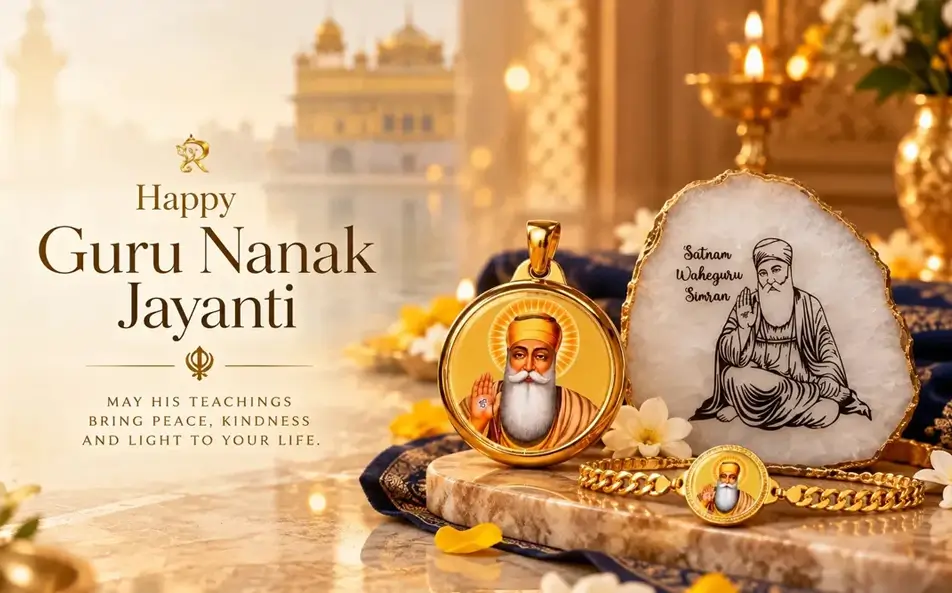
November 24 also marks Guru Nanak Jayanti 2026, the birth anniversary of Guru Nanak Dev Ji, which is observed on Kartik Purnima. The day is marked by prayers, kirtans, community service and celebrations at Gurudwaras.
Vedic astrology offers another traditional interpretation of the November full Moon. These interpretations belong to astrological belief systems and are not scientific explanations of the Supermoon.
According to the astrological reading published by The Times of India, the Moon is associated with Taurus and Krittika Nakshatra during this period. In Vedic astrology, the exalted Moon in Taurus is traditionally linked with emotional balance, comfort and stability.
Krittika Nakshatra is ruled by the Sun and associated with Agni, the deity of fire. Some interpretations also discuss Saturn's influence on the Moon and the Sun's placement in Scorpio.
The article also refers to Anuradha nakshatra, which is associated with the Sun's position in Scorpio in this reading. Astrologers interpret these placements symbolically, but they do not change the astronomical appearance of the Moon.
Yes. November's event is the first in a series of three consecutive Supermoons.
The next one will occur in December 2026 and is traditionally known as the Cold Moon. The third will appear in January 2027 and is called the Wolf Moon.
This means the supermoon November 2026 is part of a longer sequence of lunar events. Skywatchers will have more opportunities to observe a full Moon occurring close to Earth over the following two months.
You do not need a telescope to enjoy the full moon supermoon. A clear horizon and a little planning are enough.
Here are a few simple viewing tips:
For a better view, check your local weather forecast and Moonrise time before heading out.
November 24 brings together three occasions: Kartik Purnima, Dev Deepawali and a Supermoon. It is also Guru Nanak Jayanti, making the date significant for many communities across India.
Whether you plan to visit a ghat, take part in prayers or simply watch the Moon from your terrace, there is plenty to look forward to.
The best part? You do not need special equipment or an elaborate plan. Just find a clear view of the sky and take a moment to look up.
Everything you need to know
Kartik Purnima will be observed on Tuesday, November 24, 2026. The Purnima Tithi begins on November 23 and ends on November 24.
Kartik Purnima 2026 coincides with the November Beaver Moon Supermoon. The date also marks Dev Deepawali and Guru Nanak Jayanti, making it significant for religious observances and skywatchers.
The full Moon is expected at approximately 8:23–8:24 PM IST on November 24. The Moon reaches its closest point to Earth, called perigee, on November 25.
The November full Moon is traditionally called the Beaver Moon because beavers prepare their lodges and store food before winter. The name is also linked to historical beaver trapping in North America.
Dev Deepawali is celebrated on Kartik Purnima, particularly in Varanasi. Devotees light thousands of diyas along the Ganga ghats to mark the occasion, which is associated with Lord Shiva's victory over Tripurasura.
Nov 21, 2026
TUI Staff
Nov 21, 2026
TUI Staff
Nov 20, 2026
TUI Staff
Nov 21, 2026
TUI Staff
Nov 21, 2026
TUI Staff
Nov 20, 2026
TUI Staff

Stay informed with independent, fact-checked journalism on technology, environment, government, economy and more. India’s most trusted digital news platform.




Comments (0)
Be the first to comment!