
Varun Chakravarthy Out, Pressure on Dube and Nitish Reddy: India’s Fifth-Bowler Test Begins
One injury has exposed the weak link in India’s otherwise powerful T20 attack.
 IN
Tue, Sep 15, 2026 | 08:11 PM IST
IN
Tue, Sep 15, 2026 | 08:11 PM IST


India may have started the Afghanistan T20I series with a comfortable seven-wicket win, but Varun Chakravarthy being ruled out has exposed a problem that the scoreline did not show.
The 35-year-old spinner suffered a side strain after the opening match in New Delhi and will miss the remaining games of the series. His latest setback comes soon after he returned from a hamstring injury that had kept him out of action.
For Indian cricket, the immediate question is not simply who replaces him. India also need their secondary bowling options to become more reliable, particularly when frontline bowlers cannot complete all 20 overs themselves. That puts players such as Shivam Dube and Nitish Kumar Reddy firmly under the spotlight.
The absence of Varun Chakravarthy is significant because of the control he provided in the first T20I. The India spinner returned figures of 1/16 from four overs against Afghanistan, helping India restrict the visitors despite a middle-order recovery led by Azmatullah Omarzai and Mohammad Nabi. His economy was particularly important.
In T20 cricket, a bowler who can control the middle overs gives the captain greater freedom to rotate the rest of the attack. Without that control, weaker bowling options can be targeted much more aggressively.
India have Ravi Bishnoi and Washington Sundar available as specialist alternatives, while Axar Patel remains another established spin option. But replacing one specialist does not completely solve India's bigger problem.cThe first match showed that the bowling attack becomes considerably more vulnerable once India move away from their frontline bowlers.
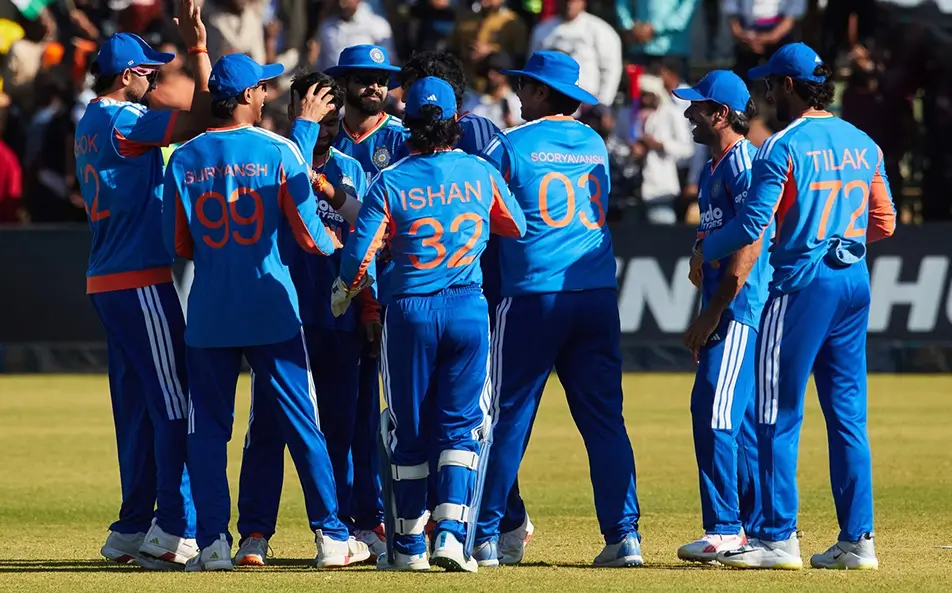
India's main specialist bowlers largely kept Afghanistan under control. The secondary options did not. Nitish Kumar Reddy conceded 30 runs from his two overs without taking a wicket. Shivam Dube then conceded 21 runs from the only over he bowled. Together, the two all-rounders went for 51 runs in just three overs. Abhishek Sharma also bowled one over for eight runs, meaning India's secondary options conceded 59 runs across four overs.
Those numbers reveal why India's bowling depth remains an issue despite winning the match comfortably. Dube's figures do need context. Captain Shreyas Iyer introduced him only for the final over, when Afghanistan were already looking to attack and Omarzai was well set. Iyer later acknowledged that asking Dube to immediately bowl the 20th over was a difficult assignment. Still, elite T20 cricket teams need bowlers who can handle precisely those uncomfortable situations. India cannot always rely on favourable match-ups or give every part-time bowler time to settle.
The balance of a T20 side changes dramatically when a genuine seam-bowling all-rounder is unavailable. Hardik Pandya normally gives India that balance. He can contribute meaningful overs while batting in the middle order, allowing the team to field an extra batter without weakening the attack. In his absence, India have been testing alternatives.
Nitish Kumar Reddy is one of the most obvious candidates because he offers pace bowling alongside middle-order batting. But the Afghanistan series is another reminder that potential and reliability are different things. He needs to show that his bowling can survive against batters deliberately targeting him. The same applies to Shivam Dube.
Dube has developed into an important power-hitting option against spin, but if India want to use him regularly as their sixth bowler, his medium pace must offer more control.
For Indian cricket, developing those secondary options could become particularly important when injuries force changes to a first-choice XI.
The most straightforward response to Varun's absence is Ravi Bishnoi. Bishnoi provides a specialist spin option and has considerable international experience. He also gives India a wicket-taking leg-spinner who can attack through the middle overs. For that reason, replacing one India spinner with another specialist appears safer than asking a batting all-rounder to suddenly absorb four overs. India did exactly that for the second T20I, bringing Bishnoi into the XI in place of the injured Varun.
Washington Sundar provides another route. His off-spin can be particularly useful against left-handed batters, while his batting strengthens the lower middle order.
However, whichever specialist India select, the captain still needs six or seven usable bowling options across a long tournament. That is where Dube, Reddy and even Abhishek Sharma become important.
India have also been working on Abhishek Sharma's off-spin. The opener bowled one over in the first match and conceded eight runs. That is a small sample, but his development as a bowler could give India another tactical option. Abhishek does not need to become a specialist. Even two dependable overs can significantly improve a captain's flexibility.
Modern cricket increasingly rewards batters who can contribute with the ball. Teams such as India rarely want to enter major tournaments with only five genuine bowling choices because one poor spell can disrupt the entire plan. That is particularly true when injuries begin affecting first-choice players.
The immediate Afghanistan series is only part of the concern surrounding Varun Chakravarthy. Reports indicate that his side strain has also created uncertainty around his availability for the Asian Games, with India's squad due to travel to Japan shortly after the Afghanistan series. He has reportedly been sent back to the BCCI Centre of Excellence for further assessment.
The timing is frustrating because Varun had only recently completed rehabilitation for a hamstring injury. He had returned strongly too. His 1/16 against Afghanistan suggested he had quickly rediscovered the control that makes him difficult to attack through the middle overs. Another injury therefore forces India to reconsider both their immediate bowling combinations and their workload management.
Afghanistan will have noticed exactly where their scoring opportunities came from in the opening match. They recovered from a poor start through an 83-run partnership between Mohammad Nabi and Azmatullah Omarzai. The pair demonstrated that once India's frontline bowlers were rotated out, scoring could accelerate. That provides a simple strategy for the remaining games: survive India's strongest bowlers and attack the secondary options. India know that too. A strong performance from Nitish Kumar Reddy or Shivam Dube would therefore mean more than simply improving their individual figures. It would make the entire bowling unit harder to plan against. When every bowler represents a genuine threat, batters cannot simply wait for one favourable match-up.
India's opening victory showed that the team still possesses an elite core. Jasprit Bumrah returned to international action, Arshdeep Singh took 3/19 and India's specialist bowlers largely controlled Afghanistan before Abhishek Sharma's 82 off 32 balls made the chase straightforward. But strong teams also need insurance. Injuries are unavoidable, particularly in a crowded international calendar. India therefore need players beyond their first-choice attack who can deliver under pressure rather than simply complete overs.
Varun's latest setback has made that need more urgent. India have enough specialist talent to replace one injured bowler. The tougher challenge is developing all-rounders who can be trusted when an opponent deliberately attacks them. Against Afghanistan, that responsibility now falls heavily on India's secondary bowling group.
And while the series result matters, finding dependable extra overs from Dube, Reddy and the other all-rounders could prove far more valuable when India face stronger opposition in bigger tournaments.
Everything you need to know
Varun Chakravarthy has been ruled out of the remaining matches because of a side strain suffered after the opening T20I in New Delhi. He has been sent back to the BCCI Centre of Excellence for assessment.
His participation is currently uncertain. India are due to travel for the Asian Games shortly after the Afghanistan series, and a final decision will depend on his medical assessment and recovery.
Ravi Bishnoi is the most direct specialist-spin replacement, while Washington Sundar and Axar Patel give India other established spin options.

Sep 14, 2026
TUI Staff
Sep 14, 2026
TUI Staff
Sep 13, 2026
TUI Staff
Sep 15, 2026
TUI Staff
Sep 15, 2026
TUI Staff
Sep 14, 2026
TUI Staff
Sep 14, 2026
TUI Staff

Stay informed with independent, fact-checked journalism on technology, environment, government, economy and more. India’s most trusted digital news platform.

Comments (0)
Be the first to comment!