
Should IPL Scrap Impact Player Rule? Raina’s Latest Comment Puts BCCI Under Pressure
Extra Batter, Bigger Debate
 IN
Tue, Oct 20, 2026 | 09:52 PM IST
IN
Tue, Oct 20, 2026 | 09:52 PM IST

Former India and Chennai Super Kings star Suresh Raina has joined the growing list of cricketers calling for a rethink of one of the IPL's most controversial innovations. The four-time IPL winner said he is against the substitution system because it allows fully fit players to contribute only with the bat and then spend the rest of the match off the field. “A lot of fit players also bat and just sit down,” Raina said while arguing that the extra specialist option has made life significantly harder for bowlers.
His criticism comes at an important time. The BCCI originally approved the IPL Impact Player Rule for the entire 2025–2027 regulations cycle. But following renewed criticism during the 2026 season, the board has now asked all 10 franchises for detailed feedback before deciding whether changes are needed for IPL 2027. That means the debate is no longer merely theoretical.
Raina's objection centres on the balance between batting and bowling. “I am against the Impact player rule. A lot of fit players also bat and just sit down. There is nothing left for the bowlers. It is tough for bowlers,” he said. He also pointed to the rapid increase in team totals, saying that scores are moving towards 300 because teams effectively have access to an additional specialist batter. That comment should be understood as criticism of the scoring trend rather than a claim that 300-run totals have become routine.
The larger point is that an extra batting option changes how aggressively teams can approach an innings. A specialist batter can attack knowing that the team may later replace him with a bowler rather than requiring the same player to contribute in the field. For Raina, that removes part of the traditional trade-off involved in selecting an XI.
The Impact Player Rule in IPL was introduced in 2023. Teams nominate a group of possible substitutes and can bring one designated player into the match in place of another member of the XI. The substitute can then participate fully according to the playing conditions, including batting or bowling depending on the tactical requirement. In practice, teams frequently use the mechanism to create a deeper batting line-up while batting and then replace a batter with a specialist bowler when defending a total.
The IPL Governing Council subsequently confirmed that the regulation would continue throughout the 2025–2027 cycle. Critics argue that this effectively turns an 11-player contest into something closer to a 12-player tactical game. Supporters see exactly the same feature as its strength.
The controversy intensified because scoring rates rose substantially after the rule's introduction. The Indian Express noted that collective batting strike rates moved above 150 during the period in which the substitution system became established, while the number of high-scoring matches increased significantly. That does not prove the rule alone caused the scoring boom. Modern batting methods, flatter pitches, improved power-hitting and tactical changes have all contributed.
But giving teams access to an extra specialist does reduce the consequences of losing wickets. A batting side can attack deeper into an innings because its effective batting resources are stronger than under a conventional XI. That is why bowlers have become central to the criticism. Raina's argument is that they are being asked to operate against deeper batting line-ups without receiving an equivalent protection.
Rohit Sharma became one of the most prominent critics back in 2024. He said he was “not a big fan” of the substitution system because cricket is traditionally played with 11 players rather than 12. More importantly, Rohit warned that the system could damage India's development of all-rounders. He specifically cited Washington Sundar and Shivam Dube, arguing that players capable of contributing with both bat and ball were receiving fewer opportunities to develop their secondary skill.
That concern has become one of the strongest arguments against the IPL Impact Player Rule. Why develop a batter who can bowl a useful two overs if a team can simply substitute him for a specialist bowler? For India's national team, however, that option does not exist in international cricket.
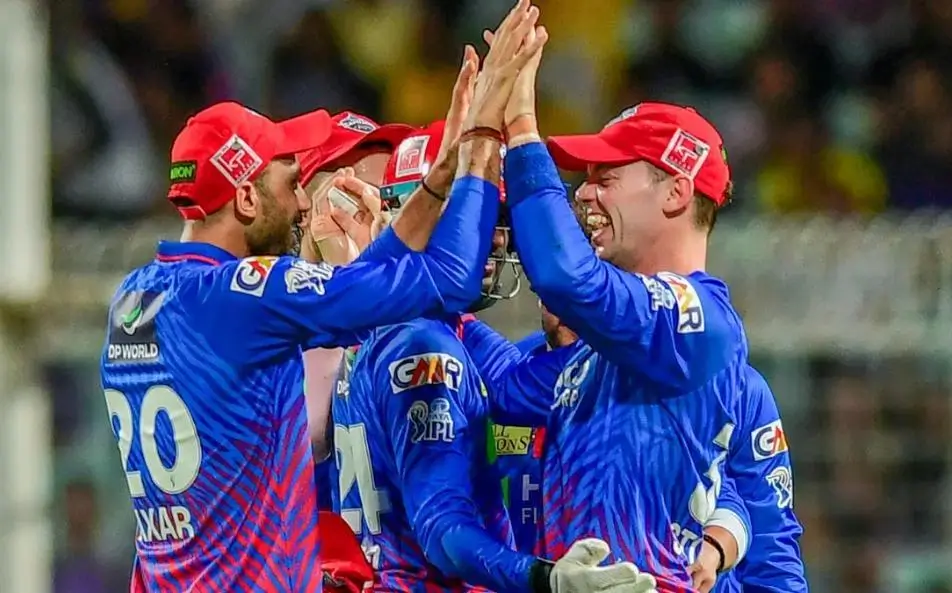
Axar Patel made almost exactly the same point ahead of IPL 2026. As an all-rounder himself, the Delhi Capitals captain admitted he disliked the rule. “Earlier, you would pick an allrounder for batting and bowling,” Axar said. He argued that team managements can now simply select a specialist batter or specialist bowler and ask: “Why do we need an allrounder?”
That is the development-pipeline question confronting Indian cricket. Players improve as all-rounders by receiving meaningful opportunities to perform both roles under pressure.
Shubman Gill has also publicly opposed the system. Ahead of IPL 2026, the Gujarat Titans captain argued that it makes the sport increasingly “one-dimensional” and “takes the skill out of the game”. His concern was not simply about higher scores. It was about adaptability. A conventional XI forces a captain to construct a balanced team before the match begins.
Pick an extra batter and the bowling may become weaker.
Pick an additional bowler and the batting becomes shorter. An all-rounder can solve both problems, but finding one good enough requires scouting and development. The substitution option reduces that compromise because a franchise can effectively change the balance of its XI during the match.
Raina's criticism carries particular weight because of his long association with Chennai Super Kings. During his playing career, he was not only one of the franchise's most important batters but also contributed as a part-time off-spinner and elite fielder. The IPL's official profile describes him as a player capable of providing useful breakthroughs with the ball in addition to his batting and fielding. That type of multidimensional player is precisely what critics fear the substitution era could make less valuable.
There is also an interesting connection with current CSK strategy. Former Chennai batter Subramaniam Badrinath recently revealed that MS Dhoni had told him he did not want to be used purely as an Impact Player and preferred to remain on the field as a wicketkeeper throughout an innings. So the debate has particular resonance around Chennai Super Kings, even though teams across the league use the rule tactically.
Scrapping the system entirely is only one possibility. The board could theoretically retain the substitution concept while restricting how it is used. For example, policymakers could examine whether an Impact Player should be available only in specific circumstances, whether overseas-player restrictions should change, or whether substitutions should be limited in ways that protect genuine all-rounders. No such modification has been officially announced. For now, the BCCI is collecting feedback rather than confirming a new rule. That distinction matters because speculation about its removal has already increased following the franchise consultation.
Raina is not introducing a new argument. What makes his comments important is how many major cricketers are now making variations of the same one. Rohit worries about Washington Sundar and Shivam Dube. Axar worries that franchises no longer need genuine all-rounders. Gill believes the concept removes skill and makes cricket more one-dimensional.
And Suresh Raina believes fully fit players should not simply bat and then sit out while bowlers face increasingly powerful line-ups. Different players are approaching the issue from different angles, but the underlying concern is remarkably consistent:
Has tactical flexibility gone so far that it has started changing what kind of cricketer the IPL rewards? The BCCI originally answered that question by keeping the regulation through 2027. Its decision to reopen discussions with the franchises suggests it is now willing to hear the argument again. And this time, Raina has added another influential voice to the opposition.
Everything you need to know
Suresh Raina said he is against the rule, arguing that fit players can bat without fielding, which leaves nothing for bowlers and adds to pressure that has pushed totals close to 300, per Sportskeeda.
Rohit Sharma and Axar Patel have both criticised the rule. Rohit said it hurts bowling opportunities for all-rounders like Washington Sundar and Shivam Dube, while Axar said teams now question whether they need genuine all-rounders at all, per Hindustan Times and The Times of India.
No immediate change is expected. Reports say the BCCI plans to keep the rule until at least the end of IPL 2027, even as it collects franchise feedback for a possible future review, per Hindustan Times and India Today.




Oct 19, 2026
TUI Staff
Oct 19, 2026
TUI Staff
Oct 18, 2026
TUI Staff
Oct 17, 2026
TUI Staff
Oct 19, 2026
TUI Staff
Oct 19, 2026
TUI Staff
Oct 17, 2026
TUI Staff
Oct 17, 2026
TUI Staff

Stay informed with independent, fact-checked journalism on technology, environment, government, economy and more. India’s most trusted digital news platform.




Comments (0)
Be the first to comment!