
Diwali 2026 Date: Complete 5-Day Diwali Calendar, Rituals & Celebration Guide
A Celebration Full of Traditions
 IN
Sat, Oct 17, 2026 | 05:57 PM IST
IN
Sat, Oct 17, 2026 | 05:57 PM IST

Diwali is not just one night of diyas, sweets and fireworks. It is a five-day celebration - and in 2026, the calendar has a surprising twist. The main festival falls on Sunday, November 8, while some of the traditional observances share the same Gregorian date.
So, when is Diwali 2026 Date? What are the dates of Dhanteras, Naraka Chaturdashi, Lakshmi Puja, Govardhan Puja and Bhai Dooj? And why aren't all five days consecutive?
Here’s your complete, easy-to-follow Diwali 2026 calendar, including important rituals, timings and the story behind each day.
According to the Hindu calendar, the main Diwali celebration in 2026 falls on Sunday, November 8. The Government of India's Incredible India portal also lists November 8, 2026, as Diwali and describes it as a five-day festival of lights.
| Festival | Date in 2026 | What It Signifies |
| Dhanteras | Friday, November 6 | Prosperity, health & auspicious beginnings |
| Naraka Chaturdashi | Sunday, November 8 | Victory of good over evil |
| Diwali / Lakshmi Puja | Sunday, November 8 | Light, prosperity & spiritual renewal |
| Govardhan Puja | Tuesday, November 10 | Gratitude towards nature & Krishna |
| Bhai Dooj | Wednesday, November 11 | The bond between brothers and sisters |
The dates above follow the New Delhi/Delhi Panchang. Drik Panchang lists Dhanteras on November 6, Naraka Chaturdashi and Diwali on November 8, Govardhan Puja on November 10 and Bhai Dooj on November 11.
This is where the 2026 calendar gets interesting.
The dates of Hindu festivals are determined by tithis, or lunar days, rather than simply following the Gregorian calendar. The timing of a tithi in relation to sunrise, sunset, Pradosh Kaal and other traditional considerations determines when a festival is observed.
In 2026, Naraka Chaturdashi and Diwali both fall on November 8 in the New Delhi calendar. The Krishna Chaturdashi tithi ends around 11:27 AM on November 8, while Amavasya begins at 11:27 AM and continues into November 9.
That is why the traditional five-day sequence doesn't translate into five consecutive dates on the Western calendar.
The five-day festive journey begins with Dhanteras, also known as Dhantrayodashi.
The day is associated with Goddess Lakshmi, Lord Dhanvantari and the idea of inviting prosperity and well-being into the home. Families traditionally clean and decorate their homes, light diyas and make auspicious purchases such as gold, silver or utensils.
For New Delhi, the Dhanteras Puja Muhurat on November 6 is 6:02 PM to 7:57 PM, according to Drik Panchang.
A traditional Yama Deepam is also associated with this day, with a diya lit as part of prayers for protection.
Also called Choti Diwali, Naraka Chaturdashi is linked to the story of Lord Krishna's victory over the demon Narakasura.
The day traditionally focuses on cleansing, renewal and the symbolic victory of light over darkness. In several parts of India, people observe early-morning rituals, take an oil bath and light lamps around their homes.
Interestingly, in the 2026 New Delhi calendar, Naraka Chaturdashi falls on the same Gregorian date as the main Diwali celebration - November 8.
This is the heart of the festival.
Diwali 2026 Date is Sunday, November 8, when homes across India will glow with diyas, candles, decorative lights and colourful rangoli. The festival is widely associated with the triumph of light over darkness and good over evil.
For many Hindu families, the evening centres around Lakshmi Puja, with Goddess Lakshmi worshipped for prosperity and abundance. Lord Ganesha is also commonly worshipped alongside her.
For New Delhi, the Lakshmi Puja Muhurat is 5:54 PM to 7:50 PM on November 8, while Pradosh Kaal runs from 5:31 PM to 8:09 PM.
The exact puja time can vary by city, so people should check a local Panchang before planning rituals.
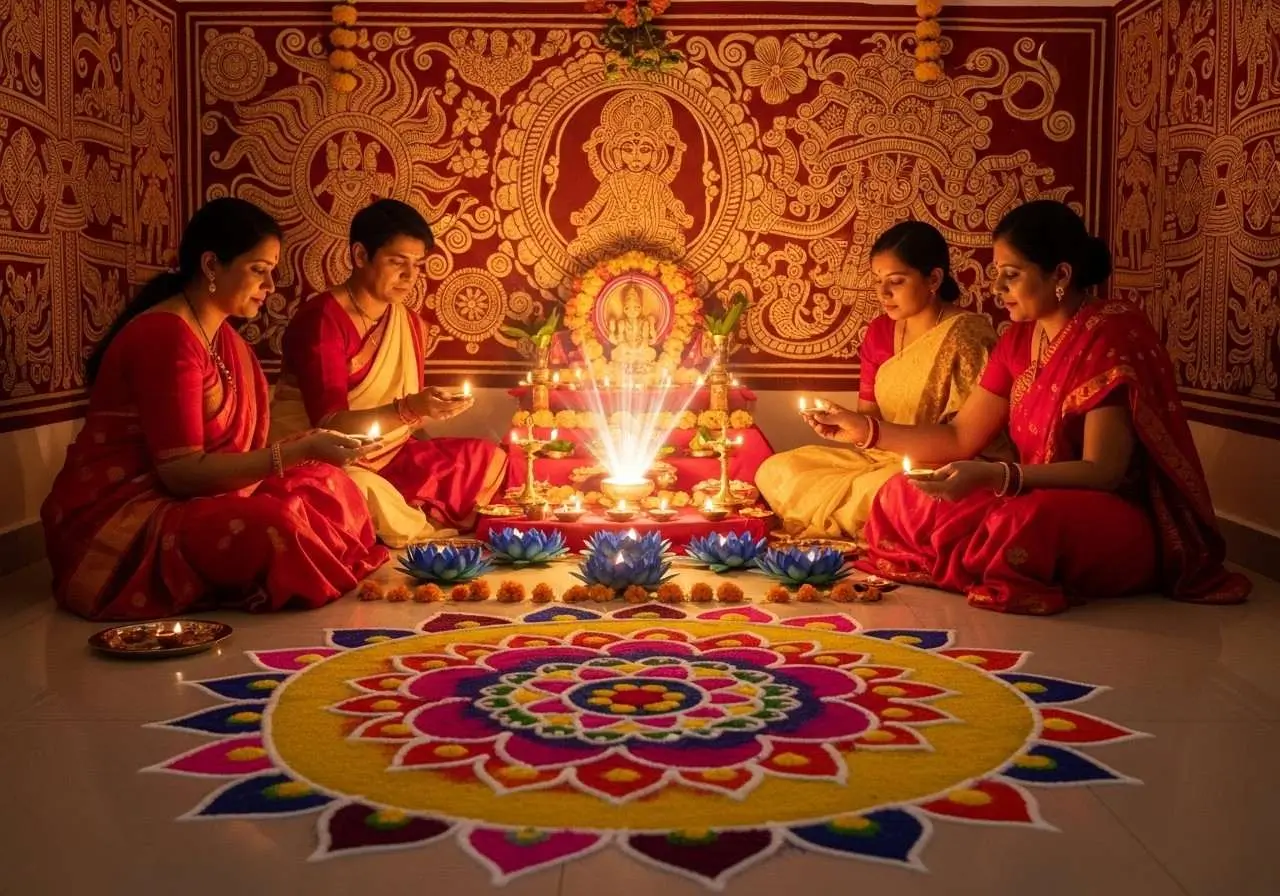
Img Src : PoojaN
For many households, Diwali is not complete without Lakshmi Puja. The ritual represents more than material wealth - it is also a moment to seek prosperity, positivity, wisdom and a fresh beginning.
The tradition extends to businesses as well. Many business families worship their Bahi-Khata, along with pens and accounting materials, as part of the Diwali worship tradition.
And that is one reason the festival feels like both a spiritual celebration and a symbolic reset for the year ahead.
The next major observance is Govardhan Puja, also known as Annakut.
The festival commemorates the story of Lord Krishna lifting Govardhan Hill to protect the people of Braj from torrential rain. It is also associated with gratitude towards nature and the belief that food and natural resources should be respected.
In New Delhi, Govardhan Puja falls on Tuesday, November 10, 2026, with the Pratahkala Muhurat from 6:40 AM to 8:50 AM.
Annakut offerings - often featuring a large variety of vegetarian foods - are prepared and offered as part of the celebration.
The five-day celebration concludes with Bhai Dooj, also known as Yama Dwitiya.
It celebrates the special bond between brothers and sisters. Traditionally, sisters apply a tilak to their brothers, perform prayers and share sweets or a festive meal. Brothers, in turn, offer gifts and blessings.
In New Delhi, Bhai Dooj will be celebrated on Wednesday, November 11, 2026, with the Aparahna period for the tilak ceremony listed as 1:10 PM to 3:20 PM.
The festival is traditionally connected with the story of Yama and his sister Yamuna, adding a deeper layer of affection and family bonding to the celebration.
One reason Deepavali is so fascinating is that there isn't one single way to celebrate it.
In North India, the festival is strongly associated with Lord Rama's return to Ayodhya, Lakshmi Puja, diyas and family gatherings. In southern India, Naraka Chaturdashi has particular significance and is often marked with early-morning rituals.
In West Bengal, the night of November 8, 2026, also coincides with Kali Puja, while Maharashtra and Gujarat have their own regional traditions and variations in the festive sequence. The Government of India's festival calendar also lists Kali Puja on November 8.
So, while the lights may look similar, the stories, rituals and foods can change dramatically from one state to another.
The biggest talking point this year is the calendar itself.
Diwali 2026 Date is November 8, but the five-day celebration stretches across November 6 to November 11, with two key observances falling on November 8. That makes this year's festival calendar slightly different from what many people may expect.
More importantly, Diwali remains less about a single date and more about a sequence of ideas - cleansing, prosperity, light, gratitude, family and renewal.
Whether you're lighting your first diya, preparing a family feast, visiting relatives or simply enjoying the glow of the city, the festival offers a chance to pause, reconnect and start afresh.
Quick Recap: Diwali 2026 Dates
November 6: Dhanteras
November 8: Naraka Chaturdashi and Diwali/Lakshmi Puja
November 10: Govardhan Puja
November 11: Bhai Dooj
So if you're planning shopping, travel, family gatherings or puja preparations, save these dates now.
Everything you need to know
The main Diwali festival will be celebrated on Sunday, November 8, 2026.
Dhanteras falls on Friday, November 6, 2026. The New Delhi Puja Muhurat is 6:02 PM to 7:57 PM.
Lakshmi Puja will be observed on Sunday, November 8, 2026. In New Delhi, the listed Muhurat is 5:54 PM to 7:50 PM.
Govardhan Puja falls on November 10, while Bhai Dooj falls on November 11, 2026, according to the New Delhi Panchang.
Because Hindu festival dates are determined by lunar tithis. In 2026, Krishna Chaturdashi and Amavasya transition on November 8, resulting in both observances being marked on the same Gregorian date in the New Delhi calendar.

Oct 15, 2026
TUI Staff
Oct 15, 2026
TUI Staff
Oct 14, 2026
TUI Staff
Oct 15, 2026
TUI Staff
Oct 15, 2026
TUI Staff
Oct 15, 2026
TUI Staff
Oct 14, 2026
TUI Staff

Stay informed with independent, fact-checked journalism on technology, environment, government, economy and more. India’s most trusted digital news platform.





Comments (0)
Be the first to comment!