
IND vs ENG Highlights: India’s Darkest T20I Night at Trent Bridge
India Collapse Again
 IN
Wed, Oct 07, 2026 | 03:50 PM IST
IN
Wed, Oct 07, 2026 | 03:50 PM IST
India’s night at Trent Bridge began with a plan and ended with one of their most painful T20 results. England beat India by 125 runs in the third T20I at Nottingham after posting 201 for 7 and then bowling the visitors out for only 76 in 11.4 overs. The margin became India’s biggest defeat by runs in T20 internationals. That number will hurt. India were chasing 202 on a ground where boundaries are usually available and the pitch did not look impossible. The target was large, but not strange for modern T20 cricket. The problem was not the number. The problem was the collapse. England now lead the series 2-0. India need to win the remaining matches just to avoid a series defeat. For a team still carrying the tag of world champions, this was not a normal bad day. It was a warning.
Shreyas Iyer won the toss and chose to bowl first. India made one change, bringing Prince Yadav into the side in place of Ravi Bishnoi. The first over from Arshdeep Singh was excellent. England did not score a run from it. For a short while, India looked sharp and clear. Then the match slowly moved away. Jos Buttler gave England a fast start in the powerplay, but Phil Salt became the main player in the innings. He made 70 from 44 balls, hitting seven fours and three sixes. It was not an innings of wild hitting from the first ball. He took time, adjusted and then pushed England towards a strong score. That is what India did not do later. Salt understood the surface better as his innings grew. He did not treat every ball like a hitting contest. He picked the moments. England had some trouble in the middle overs. Prince Yadav removed Harry Brook. Harshit Rana took wickets off consecutive deliveries and briefly pulled India back into the match. At 111 for 4, India had a chance to keep England below 180. They missed it. Sam Curran’s unbeaten 41 gave England the late lift they needed. A dropped catch also hurt India. On nights like this, every mistake looks bigger by the end. England finished at 201 for 7. It was a good total. It was not supposed to be a match-ending total before the chase had even started.
India’s reply began with promise and panic in the same breath. Vaibhav Sooryavanshi and Abhishek Sharma hit early sixes. For a moment, it looked like India wanted to answer England with fearless powerplay batting. Then the wickets arrived too quickly. Abhishek fell for 10. Sooryavanshi made 13 from five balls before Jofra Archer removed him with a short ball. Ishan Kishan also made 13, but he could not convert the start. Shreyas Iyer fell first ball. India were 41 for 4 after 4.1 overs. The chase had almost ended before most fans had settled into it. Axar Patel made 10. Tilak Varma was stumped. Shivam Dube, Harshit Rana, Arshdeep Singh, Varun Chakravarthy and Prince Yadav could not stretch the innings long enough to create any fight. This was not a slow defeat. It was sudden. Anyone watching late at night in India would have felt that strange silence after a collapse. One minute, you are calculating the required run rate. Five minutes later, you are wondering whether the team can cross 100. India did not. They were all out for 76. India had lost a T20I by more than 100 runs for the first time, were bowled out for their second-lowest T20I total, lost five wickets in the powerplay for the first time and remained winless for five straight T20Is.
England’s fast bowlers deserve full credit. Archer took 3 for 29 and was named Player of the Match. His pace, short ball and accuracy exposed India’s top order. He did not need to search for magic. He kept asking simple questions at high speed. Josh Tongue was even more damaging on the scorecard. He finished with 4 for 28 and kept striking whenever India looked for a brief pause. Together, Archer and Tongue broke the chase inside the powerplay. Will Jacks and Adil Rashid then completed the job. This is where India’s batting will face the hardest questions. The shots looked rushed. The decision-making looked unclear. Batters attacked without first understanding what England’s bowlers were doing. T20 cricket demands aggression, but aggression without reading the pitch becomes carelessness. Shreyas Iyer called the performance unacceptable after the match. He said India failed to adapt and lost too many wickets in the powerplay. That assessment was fair. A chase of 202 needs intent. It also needs one batter to bat long enough to make the opposition nervous. India had neither.
The biggest issue was not only that India lost. It was how quickly they lost control. First, the fielding slipped at important moments. Curran’s late runs became costly. Second, the bowling did not finish the innings well after creating an opening in the middle overs. Third, the batting had no recovery plan. Once the top order fell, the middle order did not slow the game down or rebuild. In T20s, teams often say they want to play fearless cricket. That phrase sounds good. It can also become a trap. Fearless does not mean ignoring the score, the pitch or the bowler’s plan. The best T20 batters attack with information. They know which bowler to target and which over to survive. India batted as if every delivery needed an answer. England bowled as if every delivery had a purpose. That was the difference. The short ball also troubled India again. Archer used it well against Sooryavanshi, and England kept the pressure through pace and bounce. India must decide whether this is a temporary batting failure or a pattern that opponents can target.
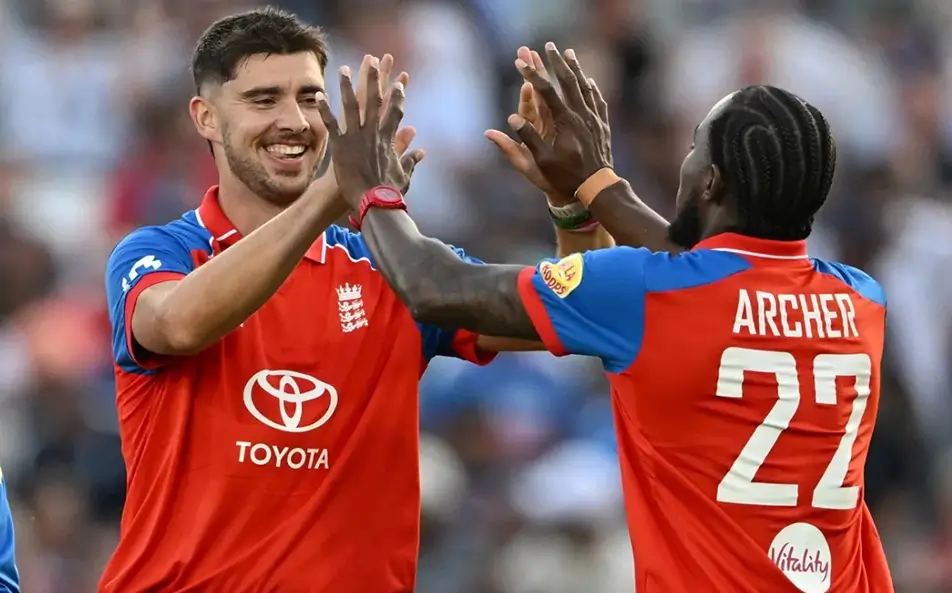
The next match will be played in Bristol. India now have no room for a casual response. The team needs changes in approach more than just changes in names. The batting order must show clearer roles. The powerplay cannot become a lottery. The bowlers must close the innings better if they win early control. England, meanwhile, will feel strong. They have runs from Salt, a useful lower-order finish from Curran and a pace attack that has found India’s weakness. Brook’s side also showed that they could win even after a few middle-over setbacks. For India, the dressing room conversation should be direct. No overreaction. No excuses. Just a clear look at why a chase ended in less than 12 overs.
At The United Indian, we see this match as more than a bad scorecard. India lost by a record margin because batting intent became batting confusion.
Modern T20 cricket rewards courage, but it punishes poor reading of conditions. England adapted faster. India chased badly. The series is still alive, but only just. The next match will show whether India can respond with calm planning or carry the same mistakes into Bristol.
Everything you need to know
England beat India by 125 runs at Trent Bridge and took a 2-0 lead in the five-match series.
India were bowled out for 76 in 11.4 overs while chasing 202.
Phil Salt top-scored with 70 runs from 44 balls as England posted 201 for 7.
The 3rd T20I between India and England was played at Trent Bridge, Nottingham. The match was held on July 7, 2026, with the action starting at 11:00 pm IST for Indian viewers.
Yes. The 125-run loss became India’s biggest defeat by runs in T20 internationals.




Oct 06, 2026
TUI Staff
Oct 06, 2026
TUI Staff
Oct 05, 2026
TUI Staff
Oct 03, 2026
TUI Staff
Oct 06, 2026
TUI Staff
Oct 05, 2026
TUI Staff
Oct 05, 2026
TUI Staff

Stay informed with independent, fact-checked journalism on technology, environment, government, economy and more. India’s most trusted digital news platform.






Comments (0)
Be the first to comment!