
Trump Plan to Remove 60-Day Grace Period: What It Means for H-1B Workers in the US
A proposed change could reshape H-1B job-loss rules
 IN
Tue, Oct 13, 2026 | 09:50 PM IST
IN
Tue, Oct 13, 2026 | 09:50 PM IST


Lose your job in America. Lose your immigration cushion too?
That is the concern behind a new Trump administration proposal that could remove the 60-day grace period currently available to certain foreign workers after employment ends.
The proposal has now cleared a key White House regulatory review. But before anyone starts packing their bags, there is an important distinction: the 60-day grace period has not been removed. Nothing changes for workers right now.
For Indian professionals working in the US, however, this is a development worth watching closely. The proposal still needs to be published, opened for public comment and potentially finalized before it can take effect.
Here is what we know, what remains unclear and why this could matter for thousands of Indian professionals and their families.
The US Department of Homeland Security (DHS) has proposed a rule titled “Eliminating the Discretionary 60-day Grace Period.” The proposal is listed under RIN 1615-AD22 and was submitted for White House regulatory review on August 6, 2026. The official US regulatory database lists it as a proposed rule from DHS and US Citizenship and Immigration Services (USCIS).
The proposal seeks to eliminate the existing regulatory grace period available to certain nonimmigrant workers when their employment ends.
The current provision was introduced in 2017. It allows eligible workers to remain in the US for up to 60 days, or until their authorized validity period expires, whichever comes first. The time can be used to look for another employer, pursue a change of status or make arrangements to leave the country.
The original DHS rule specifically described the grace period as a way to give high-skilled workers facing an unexpected end to employment time to seek new employment, change status or prepare for departure.
That is why this proposal matters. The 60 days are not simply an administrative number; they can provide valuable breathing room after a sudden layoff.
No.
This is the most important point in this week's H-1B Visa News.
The proposal cleared review at the White House Office of Information and Regulatory Affairs (OIRA) on August 27, 2026. The official regulatory record confirms the review concluded with the action marked “Consistent with Change.”
That is a significant step, but it is not the same as a final rule.
The proposal must still move through the formal rulemaking process. It needs to be published in the Federal Register, followed by a public-comment period. DHS would then consider the feedback before deciding whether to issue a final regulation.
Until that happens, the existing provision remains in force.
So, for anyone following this h-1b visa rules update, the message is simple: the rule has moved forward, but it has not taken effect.
Under the current system, an eligible worker who loses employment can generally have up to 60 days to find another qualifying employer, explore other US immigration options or prepare to leave the US, subject to their authorized stay and individual circumstances.
If the proposed rule is finalized, that specific regulatory safety net could disappear.
Imagine the situation H-1B workers whose sponsored job ends unexpectedly.
Today, the worker may have a limited window to:
Without the existing grace period, the timeline could become much tighter.
That does not automatically mean every affected worker would have to leave America on the day employment ends. The final rule, the worker's authorized stay and their individual immigration circumstances would all matter.
But losing the regulatory buffer could make layoffs considerably more stressful.
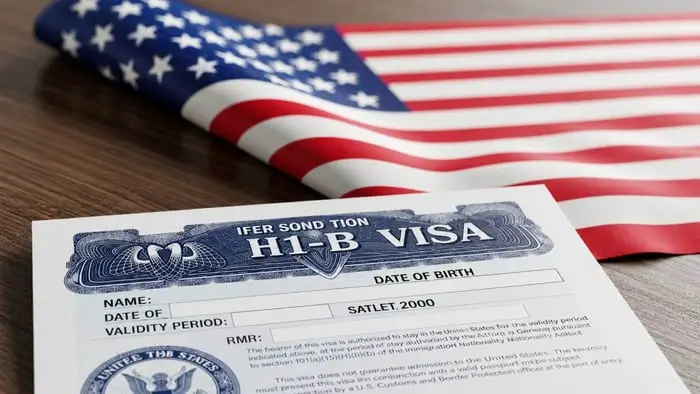
Img Src : Morse Report
The Indian connection is difficult to miss.
According to the USCIS FY2024 Characteristics of H-1B Specialty Occupation Workers report, 71% of approved H-1B petitions in FY2024 were for beneficiaries born in India. China was the next-largest country of birth at about 12%.
That makes this proposal particularly important for Indian technology professionals, engineers, researchers and other skilled workers in America.
For many H-1B workers, their job is closely connected to their ability to remain in the country. A layoff is therefore not simply an employment problem. It can quickly become an US immigration problem as well.
No.
The existing grace-period regulation applies to several categories of nonimmigrant workers. These include:
Certain dependants are also covered by the existing provision.
However, the full text of the new DHS proposal has not yet been publicly released. That means the precise scope of the proposed change, including possible exceptions or transition provisions, still needs to be confirmed.
This is an important distinction because some headlines may make the proposal sound broader-or more immediate - than the available evidence currently allows.
The impact could extend far beyond the person holding the visa.
Consider a family where one parent works on an H-1B visa and the children attend school in the US. A sudden termination could raise difficult questions about:
In other words, the 60-day window can provide time for a family to make decisions, not simply for a worker to submit job applications.
That human impact is an important part of the H-1B Visa News story and is often lost when immigration policy is reduced to paperwork and deadlines.
Yes.
The current grace period gives companies and workers some time to manage an employment transition. Removing it could make hiring decisions and immigration filings more time-sensitive.
For employers considering an H-1B worker who has recently lost a job, delays in interviews, hiring approvals or immigration paperwork could become more consequential.
The proposal therefore has implications not only for foreign professionals but also for businesses that depend on specialized talent.
The proposed grace-period change comes alongside other Trump administration actions affecting the H-1B programme.
Bloomberg Law has reported on a separate proposal involving a $103,265 fee for certain new H-1B hires. That is a different policy measure, but it adds to the uncertainty surrounding the future cost and regulation of the H-1B programme.
For Indian professionals and their employers, keeping track of each development is becoming increasingly important.
The next major milestone is publication in the Federal Register.
The process is broadly expected to look like this:
DHS proposal → OIRA review → Federal Register publication → Public comments → DHS review → Possible final rule
The public-comment stage will give workers, employers, immigration groups and other stakeholders an opportunity to respond.
Only after DHS considers those comments and issues a final rule would a new requirement potentially take effect, subject to the effective date and any transition provisions included in that rule.
Until the proposal is published, several important questions remain unanswered.
The current h-1b visa rules update does not require workers to take immediate action because the existing 60-day grace period remains in place.
However, staying informed is sensible.
Workers can:
Most importantly, do not confuse a proposal with an implemented rule.
The Trump administration's proposal could remove an important safety net for foreign professionals who suddenly lose their jobs in America.
For Indian professionals, the stakes are particularly high because they make up such a large share of the H-1B workforce.
But there is no need for panic today.
The 60-day grace period is still in place.
What has changed is that its future is now uncertain.
For a worker who has built a career, home and family in the US, those 60 days can mean valuable time to find a way forward. Whether that safety net survives will become clearer when DHS publishes the proposal and the formal rulemaking process begins.
Everything you need to know
No. As of late August 2026, the DHS proposal to eliminate the grace period has cleared White House OIRA review but has not been published in the Federal Register or finalized. The existing 60-day grace period remains legally in effect, according to SHRM and Bloomberg Law.
DHS submitted the proposed rule, titled 'Eliminating the Discretionary 60-Day Grace Period,' to the White House Office of Information and Regulatory Affairs on 6 August 2026. It cleared that review on 28 August 2026, per Bloomberg Law.
The proposal must still be published in the Federal Register, followed by a public comment period typically lasting 30 to 60 days. DHS can then revise the rule before issuing a final version with an effective date, which is when the grace period would actually change, per Hindustan Times.




Oct 08, 2026
TUI Staff
Oct 06, 2026
TUI Staff
Sep 23, 2026
TUI Staff
Oct 13, 2026
TUI Staff
Oct 13, 2026
TUI Staff
Oct 13, 2026
TUI Staff
Oct 09, 2026
TUI Staff

Stay informed with independent, fact-checked journalism on technology, environment, government, economy and more. India’s most trusted digital news platform.




Comments (0)
Be the first to comment!