
Missed JEE? IIT Madras Offers a Second Route to the IIT Dream
The IIT dream may begin with JEE for some, but IIT Madras is creating another route for learners ready to prove themselves.
 IN
Fri, Oct 16, 2026 | 05:46 PM IST
IN
Fri, Oct 16, 2026 | 05:46 PM IST


For many Indian students, one exam result appears to decide whether the IIT dream survives. IIT preparation often begins years before Class 12, yet intense competition means capable students can still miss a residential seat.
IIT Madras has opened another route. Learners can study online, complete graded work and earn an institute-awarded qualification without entering through the standard JEE Advanced pathway.
Students, working professionals and older learners now have another way to access demanding higher education. It is not a regular IIT BTech seat, but it is more than a short certificate.
The institute offers four non-campus BS options: Data Science and Applications, Electronic Systems, Aeronautics and Space Technology, and Management and Data Science.
These are separate programmes with different eligibility rules, according to the official programme overview.
The best-known course is the Bachelor of Science in Data Science and Applications. It combines recorded lessons, live support, weekly assignments, projects and in-person examinations.
Students do not receive the same daily campus experience as residential BTech learners. They work towards a degree awarded by IIT Madras after meeting the required standards.
The Data Science course accepts applications from anyone who has passed Class 12 or an accepted equivalent. There is no stated age limit.
Applicants are expected to have studied Mathematics and English in Class 10, according to the official admissions rules.
Most applicants complete four weeks of qualifier coursework in English, mathematics, statistics and computational thinking. They submit assignments and take a qualifier examination. Those who meet the required scores enter the foundation level.
This differs from traditional IIT preparation. The programme measures progress through coursework, quizzes, projects and examinations instead of relying only on one entrance rank.
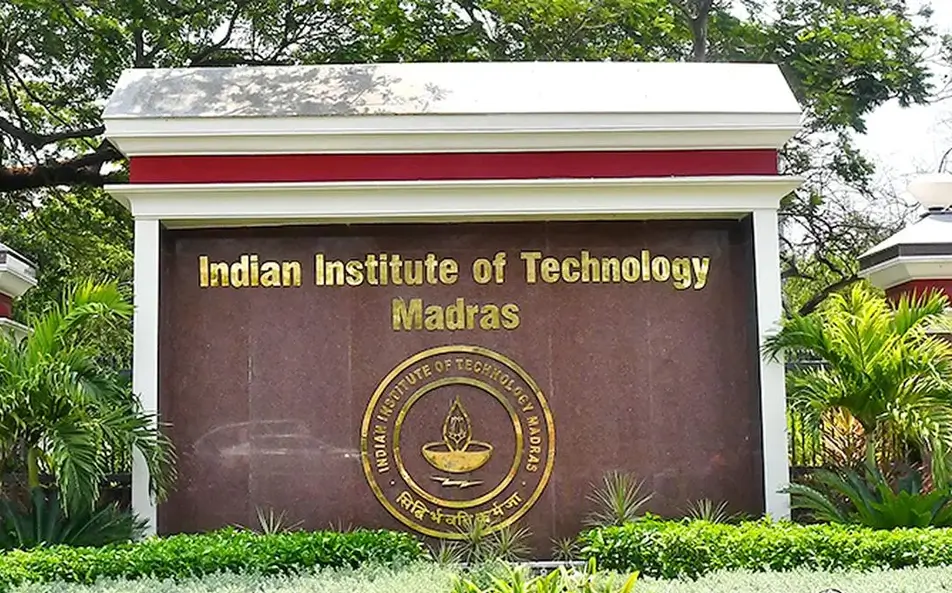
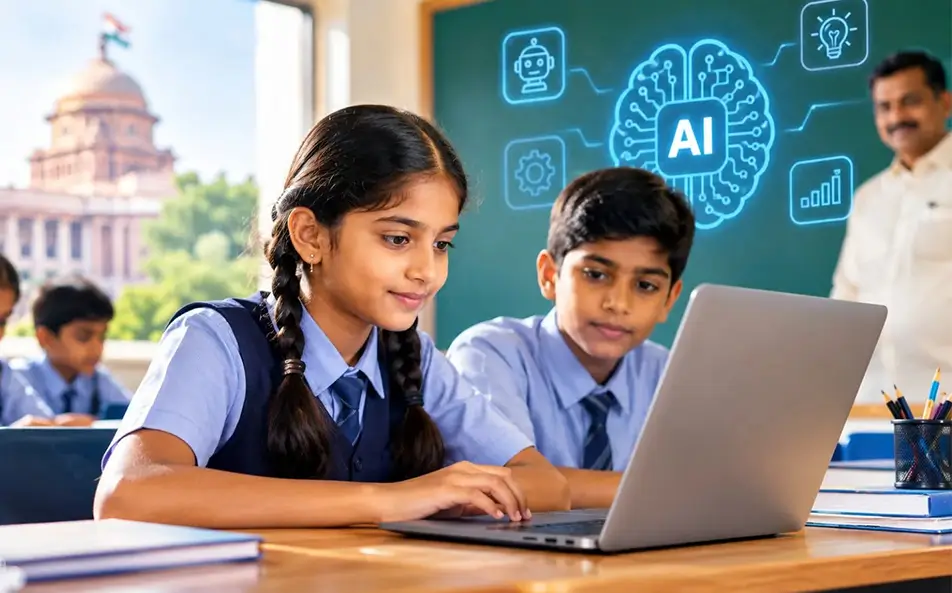
Img Src : Education Post
The Online degree program runs across three terms each year. Each term includes 12 weeks of coursework, two in-person quizzes and end-term examinations.
Some subjects also require programming tests, projects or vivas, according to the academic structure.
The institute estimates about 10 hours of weekly work for each foundation course. Diploma and degree-level courses may require about 15 hours.
Students can move more slowly, but they must complete the required credits within the allowed period. The flexibility helps learners balance other duties, but failing a course can delay progress and require another full course fee.
Updated UGC guidelines allow one physical programme alongside an online or distance programme. Institutional and professional rules still apply.
This makes combinations such as BTech with an Online degree program possible.
The official course homepage says more than 20,000 learners study Data Science alongside another degree. It also lists more than 3,000 working professionals. These are current headline figures published by the programme, rather than a cohort-based completion report.
A second qualification can add technical skills, but it can also create a heavy workload. Students should compare exam dates, weekly hours and fees before enrolling.
TUI has also examined entrance-exam pressure in its coverage of the JEE Main 2026 result.
For students joining from January 2026, the Bachelor of Science costs between ₹3.86 lakh and ₹4.50 lakh for all 142 credits.
The foundation stage costs ₹48,000. Completing both diplomas takes the cumulative fee to ₹2.10 lakh, while the BSc exit costs between ₹2.86 lakh and ₹3.10 lakh.
The official fee table provides the full breakdown.
Eligible Indian learners can receive 50% or 75% fee support, based on family income, category and supporting documents. Students pay for the courses they register for each term.
The course can reduce relocation costs, but students still need a computer, reliable internet and examination-centre travel.
For wider context, read TUI’s report on the changing education system in India.
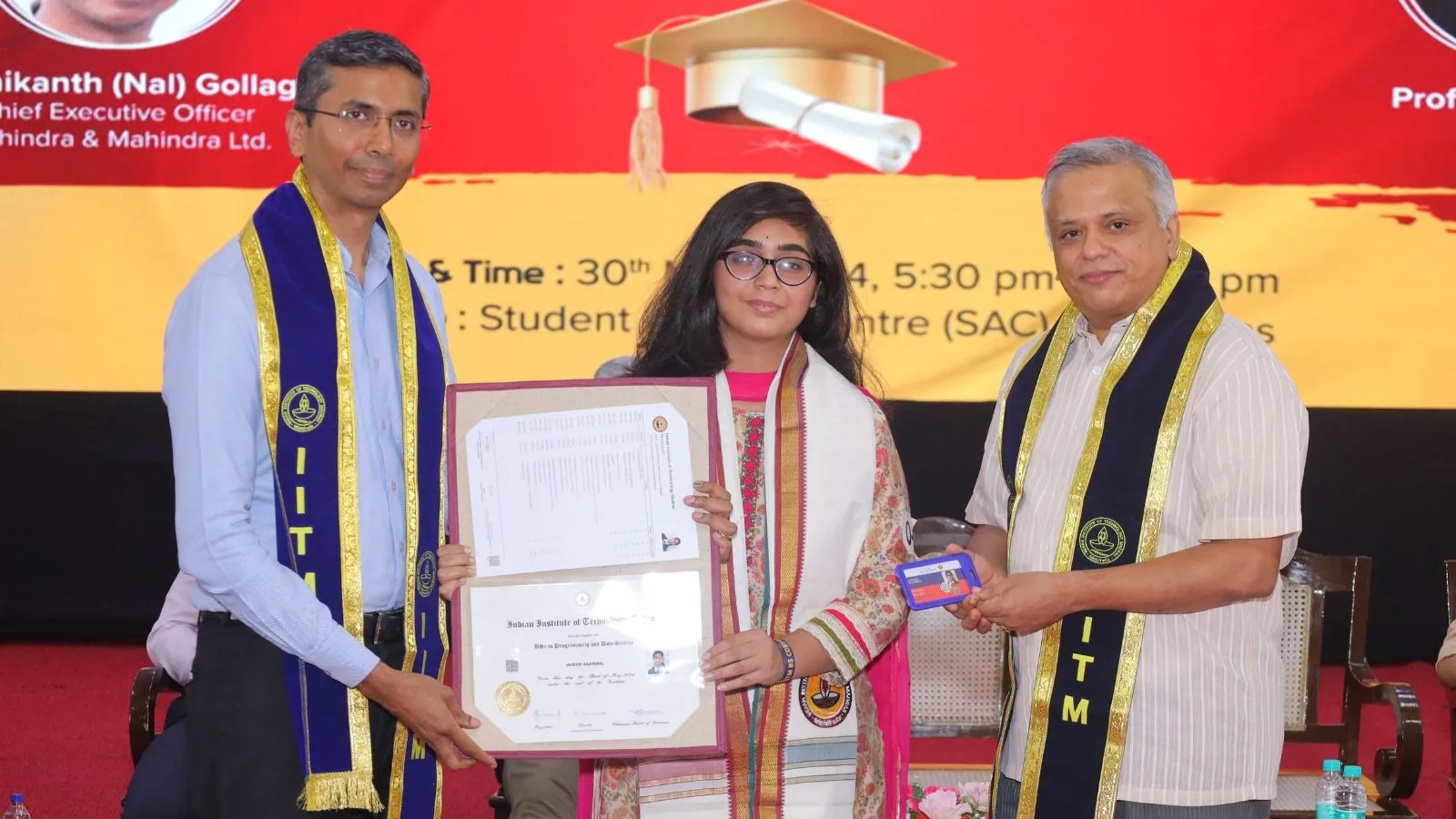
Img Src : Indian Express
Students can exit after defined stages with a foundation certificate, one or two diplomas, a BSc, or the full Bachelor of Science, depending on the credits earned.
A student who leaves with a planned diploma or BSc has not necessarily failed. Recent entrants also have not had enough time to complete the full degree.
The September 2025 programme report recorded:
These figures describe different groups. They should not be merged into one dropout rate.
The official programme report explains the categories and states that it was updated on October 31, 2025.
The curriculum covers statistics, Python, databases, application development, machine learning and business analytics. It can support job-ready projects, but no degree guarantees employment.
The January 2026 career report recorded 1,115 self-secured internships and 379 self-secured jobs reported by students who said the course helped their résumé or knowledge.
These were survey responses. They were not campus-wide placement guarantees.
For opportunities handled through the placement support system, the report listed:
The figures apply only to participating and eligible students. The official career report provides the method and results.
Readers can also explore TUI’s guide to vocational training in India.
The Online degree program remains mainly remote, but it includes student houses, clubs, live sessions and peer groups. Paradox, its annual student festival, also brings learners to Chennai.
A Press Information Bureau release said around 4,000 students were expected at Paradox 2024 for 57 academic, cultural and sporting activities over four days.
A festival cannot replace four years of hostel life. Yet it gives remote learners a shared identity and a chance to meet classmates in person.
The programme may suit independent learners, professionals seeking technical skills and adults returning after a career break.
It may not suit someone who needs daily classroom supervision, expects guaranteed placement or mainly wants the residential IIT experience.
Before applying, students should check the course, eligibility, exam centre, workload, full fee and exit rules.
The IIT dream no longer belongs only to those who enter a residential campus at 18. This model gives learners another chance, but it does not remove the work required to succeed.
Strong IIT preparation may help with the foundation subjects. After admission, steady effort matters more than an old entrance rank.
That is the programme’s real value. It keeps the IIT dream alive without lowering the finish line.
Everything you need to know
Yes. Eligible students can apply for IIT Madras’s non-campus BS programmes through a qualifier-based admission route. However, this is different from securing a regular residential IIT BTech seat through JEE Advanced.
Yes. Students who complete the required credits receive a degree awarded by IIT Madras. The institute classifies it as a non-campus programme because most teaching takes place online.
For students entering the Data Science and Applications programme from January 2026, the complete BS costs approximately ₹3.86 lakh to ₹4.50 lakh. Eligible Indian students may receive partial fee support.
Yes. UGC rules allow students to pursue a recognised physical degree alongside an online programme, subject to institutional requirements. Students must consider the added workload before enrolling.
No. IIT Madras provides eligible students with career and placement support, but admission does not guarantee employment. Skills, projects, academic performance, communication and previous experience still influence career outcomes.


Oct 15, 2026
TUI Staff
Oct 15, 2026
TUI Staff
Oct 08, 2026
TUI Staff
Oct 06, 2026
TUI Staff
Oct 15, 2026
TUI Staff
Oct 15, 2026
TUI Staff
Oct 15, 2026
TUI Staff
Oct 14, 2026
TUI Staff

Stay informed with independent, fact-checked journalism on technology, environment, government, economy and more. India’s most trusted digital news platform.


Comments (0)
Be the first to comment!