
Iran Attacks US Bases in Jordan After Larak Strike: Why India Should Watch Hormuz Risk
Missiles in Jordan, Risk at Hormuz
 IN
Fri, Oct 16, 2026 | 04:35 AM IST
IN
Fri, Oct 16, 2026 | 04:35 AM IST


Iran has launched missiles and drones towards bases hosting American forces in Jordan, reigniting direct military exchanges with the United States after roughly a month of relative calm. The Islamic Revolutionary Guard Corps said the operation targeted the King Hussein and Al Azraq bases following a US strike on Iranian military launchers on Larak Island in the Strait of Hormuz on August 30, 2026.
Iranian state media called the retaliation “Punishment of the Aggressor” and claimed the attack damaged technical and maintenance infrastructure at the bases. Jordan, however, said its air defences intercepted eight missiles and reported no injuries. Independent confirmation of Iran's damage claims has not emerged. The exchange matters far beyond the two bases.
It signals the resumption of direct US-Iran military action after a late-July lull, increases the pressure on Jordan as a major American security partner and adds another layer of risk around the Strait of Hormuz, one of the world's most important energy corridors. For India, the consequences could eventually be felt through oil prices, LNG supplies, shipping costs and the safety of millions of Indian nationals living across Gulf countries.
The latest confrontation began when US forces struck two Iranian launchers on Larak Island, near the Strait of Hormuz. US Central Command said the launchers belonged to the IRGC and were preparing to deploy rockets carrying naval mines into the waterway. Washington described the action as limited and defensive rather than the start of another sustained bombing campaign. Tehran rejected that explanation.
The Islamic Revolutionary Guard Corps characterised the Larak strike as an act of aggression and responded by targeting facilities used by American forces in Jordan.
Its operation focused on the King Hussein and Al Azraq bases. Iranian accounts said ballistic missiles and drones were used and claimed significant damage to aircraft-related and maintenance facilities. Jordan offered a sharply different version. Its military said eight Iranian missiles entering Jordanian airspace were intercepted. No injuries were reported at either target. That gap between the two accounts is important. Iran's claim that the bases were effectively damaged should be presented as an IRGC assertion, not as independently established fact.
The August attack is part of a much larger pattern. By July 28, the Los Angeles Times reported that Jordan had been targeted on nine occasions since the July 8 breakdown of a ceasefire, with Iranian ballistic missiles and drones aimed at US assets and installations across the country. About 4,000 American service members were stationed at bases in Jordan, according to the same report. That means describing the latest attack as only the fourth Iranian strike on Jordan understates the scale of the campaign.
Several facilities have previously come under threat, including Muwaffaq Al-Salti Air Base, King Faisal Airbase, Prince Hassan Airbase and sites near Aqaba. The presence of those US military bases and American personnel has placed Jordan in an increasingly difficult position. Amman is not merely an uninvolved country caught accidentally between Iran and the United States. It is a long-standing US security and counterterrorism partner that hosts American forces while simultaneously trying to prevent the regional war from spilling further onto Jordanian territory.
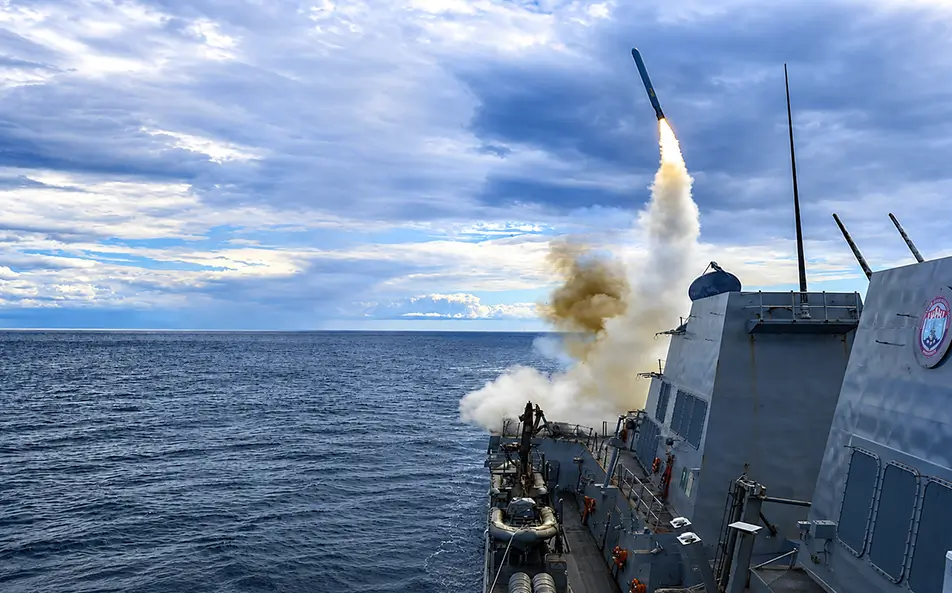
The most serious attack came on July 17 at Muwaffaq Al-Salti Air Base. US Central Command initially said two American service members were killed, four were medically evacuated and another soldier was missing after Iranian ballistic missile and drone attacks. US authorities later identified Sgt. Angel Rampersad as the third service member believed to have been killed in the strike.
The Army said Rampersad had previously been classified as missing and was believed to have died during the July 17 attack. The attack was especially significant because it struck an area where US personnel were based rather than simply being intercepted over Jordanian territory. It demonstrated that even sophisticated air-defence networks cannot guarantee that every incoming missile or drone will be stopped.
The confrontation continued later that month. On July 28, Iran again launched ballistic missiles towards American forces in Jordan. Jordan said five missiles were intercepted and destroyed. US Central Command called it an “attempted surprise attack” and said all missiles directed towards American forces had been intercepted. The IRGC said it had targeted Muwaffaq Al-Salti Air Base and a US command facility.
Washington responded with another major wave of strikes against Iranian military infrastructure, including command centres, missile and drone facilities and coastal defence sites. After that exchange, direct fighting eased for several weeks. The Larak Island strike has now broken that lull.
Larak Island sits in the strategic Strait of Hormuz near Iran's southern coast. On August 30, US forces struck two launchers there. A US official said the targets were associated with Iranian forces preparing systems capable of delivering sea mines into the waterway. Iranian media reported casualties from the attack, although the precise number was initially unclear.
The United States argued that the action was intended to protect international shipping rather than launch a broader offensive against Iran.
That distinction is central to the competing narratives of the US Iran War. Washington says Iran's attempts to control or mine parts of Hormuz threaten commercial navigation. Tehran argues that US military activity close to Iranian territory amounts to aggression and says it has the right to defend itself.
India is particularly exposed to prolonged disruption in the Gulf. Reuters reported earlier this year that India sourced about 55% of its imported crude oil from the Middle East in January 2026, while roughly two-thirds of its LNG supplies came from the region. Another Reuters report said about 40% of India's crude imports normally pass through the Strait of Hormuz. That means the consequences of renewed fighting between Iran and the United States do not require an actual attack on an Indian ship to affect Indian consumers.
If shipping becomes more dangerous, insurers can charge more. If tanker availability falls, freight becomes more expensive. If crude prices rise, India's import bill increases. Those pressures can eventually influence petrol, diesel, LPG, aviation fuel, inflation and the rupee. The renewed conflict has already pushed oil prices higher, making the economic risk more immediate than theoretical.
The information war surrounding these strikes is becoming almost as predictable as the military exchange. Iran says its missiles are successfully damaging American assets.
Jordan and the US frequently say most or all incoming weapons have been intercepted. Both sides have strategic reasons to emphasise different outcomes. Iran wants to demonstrate that American bases remain vulnerable.
Jordan wants to show that its air-defence system can protect its territory. The United States wants to demonstrate that Iranian attacks are failing to significantly degrade its military capabilities. Independent access to military installations is limited, making immediate verification difficult. The safest formulation for readers following iran us war news is therefore straightforward: report what Iran claims, report what Jordan and the United States say, and clearly distinguish both from independently verified facts.
The August 30-31 exchange is significant because it ended the longest recent pause in direct US-Iran military attacks. Whether it turns into another sustained cycle of retaliation will depend largely on what each side does next. Iranian President Masoud Pezeshkian has said Tehran does not seek war but will respond to aggression. Washington, meanwhile, maintains that it will use force if Iranian actions threaten American personnel or international shipping. Meanwhile, oil markets are already pricing in renewed risk.
The immediate questions are whether Iran launches additional attacks on US military bases, whether Washington strikes further IRGC targets and whether other Gulf countries are pulled deeper into the conflict. For Jordan, the problem is particularly acute. It hosts thousands of American troops, has repeatedly intercepted Iranian weapons and has already experienced fatalities at one of its military facilities. For India, the most important signal will come from the waters farther south. As long as the Strait of Hormuz remains contested, every new round of the US Iran War carries a potential price far beyond the battlefield — including at India's fuel pumps, ports and shipping terminals.
Everything you need to know
Iran's Revolutionary Guard has struck US-linked bases in Jordan at least four times since July 2026: on 9 July at Al Azraq, on 17 July and again on 29 July at Muwaffaq Al-Salti, and on 30 August at both King Hussein and Al Azraq bases.
Yes. The Los Angeles Times reported three US service members killed in the 17 July strike on Muwaffaq Al-Salti base, while the Wall Street Journal put the confirmed toll at two, with a third set of remains under examination at the time of reporting.
No. Jordan's military said it intercepted eight missiles and reported no injuries, while Iran's IRGC claimed it had destroyed both targeted bases and caused heavy damage to technical infrastructure. Neither claim has been independently verified.






Oct 15, 2026
TUI Staff
Oct 15, 2026
TUI Staff
Oct 14, 2026
TUI Staff
Oct 15, 2026
TUI Staff
Oct 15, 2026
TUI Staff
Oct 15, 2026
TUI Staff
Oct 14, 2026
TUI Staff

Stay informed with independent, fact-checked journalism on technology, environment, government, economy and more. India’s most trusted digital news platform.




Comments (0)
Be the first to comment!