
Are Eggs Good or Bad for Cholesterol? The Heart Health Debate Explained
Egg Fear Needs Better Science
 IN
Tue, Oct 13, 2026 | 10:59 PM IST
IN
Tue, Oct 13, 2026 | 10:59 PM IST

Are eggs bad for your heart? A Hyderabad doctor has revived the debate after highlighting long-term global data that found higher egg consumption was associated with lower rates of ischemic heart disease. Dr Sudhir Kumar, senior neurologist at Apollo Hospitals Hyderabad, wrote on X on August 28 that international data covering nearly three decades showed a negative association between egg intake and both new cases of ischemic heart disease and deaths from the condition. The finding challenges the long-standing belief that eating egg yolks automatically raises cholesterol and increases heart-attack risk.
But there is an important qualification. The study does not prove that eating more eggs prevents heart attacks. It compared population-level trends between countries, meaning other differences in diet, lifestyle, healthcare and income could influence the results. That distinction is important when discussing eggs and cholesterol, particularly for people who already have cardiovascular disease or very high LDL levels.
The research Dr Kumar highlighted was published in 2023 in the International Journal of Environmental Research and Public Health. It examined egg intake and ischemic heart disease trends from 1990 to 2018. While the Global Dietary Database used by the researchers contains dietary estimates for 185 countries, the final statistical analysis included 142 countries with populations of at least one million for which sufficient data were available. That is an important correction to reports describing it simply as a “185-country study.”
Researchers compared national egg consumption with age-standardised incidence and mortality rates for ischemic heart disease. Even after adjusting their model for factors including GDP, smoking, physical activity, obesity, BMI, education, energy intake and dietary cholesterol, they found a statistically significant negative association. The reported coefficients were:
In broad terms, countries with higher egg consumption tended to record lower rates of ischemic heart disease and related deaths. That finding is relevant to the debate over egg consumption and heart disease, but correlation is not the same as causation.
This is where the headlines need restraint. The global study found an inverse association, but its authors themselves warned that the results could not establish individual-level causality.
Because it was an ecological study, researchers did not follow individual people to see who ate eggs and who later developed heart disease. They also could not fully account for what people ate with their eggs or how the eggs were prepared. A boiled egg with vegetables is nutritionally different from eggs regularly served with large amounts of butter, processed meat or other saturated-fat-rich foods.
The researchers therefore specifically said their findings should not be interpreted as a recommendation to consume large quantities of eggs to prevent ischemic heart disease.
That caveat changes the answer to Are eggs bad for your heart? For most healthy people, current evidence does not suggest that moderate egg intake meaningfully increases cardiovascular risk. But evidence that eggs actively prevent heart disease is much less certain.
The international ecological analysis is not the only evidence available. A major BMJ analysis combined three large US prospective cohorts with an updated meta-analysis covering more than 1.7 million people. It found that an increase of one egg per day was not associated with an overall increase in cardiovascular disease. The pooled relative risk was 0.98, with the confidence interval crossing 1.0, meaning there was no statistically significant increase or decrease overall. Researchers also found a potentially lower cardiovascular risk in Asian cohorts.
Another international study involving around 177,000 people across 50 countries concluded that moderate intake of roughly one egg per day was not associated with higher major cardiovascular disease or mortality.
The newest broader assessment is also reassuring, although hardly definitive. A 2025 umbrella review examined 14 meta-analyses covering observational and intervention studies. It concluded that there was insufficient evidence to discourage egg consumption and found no overall association between egg intake and cardiovascular outcomes or all-cause mortality when comparing higher with lower consumption. However, the researchers rated the overall strength of much of the available evidence as low or very weak. So the most defensible conclusion on egg consumption and heart disease is not that eggs are a miracle heart food. It is that moderate consumption has not consistently been shown to raise cardiovascular risk.
Dr Kumar said most modern prospective studies and meta-analyses suggest that moderate consumption — around one egg per day — is generally compatible with heart health in healthy adults. That broadly fits the large prospective evidence. But “one egg a day” should not be treated as a prescription everyone must follow. Your overall eating pattern matters.
Two eggs cooked with little oil and eaten alongside vegetables or whole grains are very different from a breakfast built around eggs, butter, cheese and processed meat. For people concerned about heart health, saturated fat intake, fibre intake, body weight, physical activity, smoking, blood pressure, diabetes and LDL levels all matter far more than isolating one food.
The benefits of eating eggs are one reason nutrition researchers have moved away from treating them purely as a source of dietary cholesterol. Eggs provide high-quality protein along with nutrients including choline, lutein and zeaxanthin. A 2026 comprehensive review published in the Journal of Poultry Science noted that eggs provide carotenoids associated with antioxidant and eye-health functions. It also reviewed clinical and observational evidence showing limited or inconsistent links between moderate egg consumption and cardiovascular disease.
The same review found that some clinical studies reported improvements in HDL cholesterol and reductions in oxidised LDL after adding eggs to the diet. Those nutritional qualities explain some of the benefits of eating eggs, but they still do not turn eggs into a treatment for cardiovascular disease.
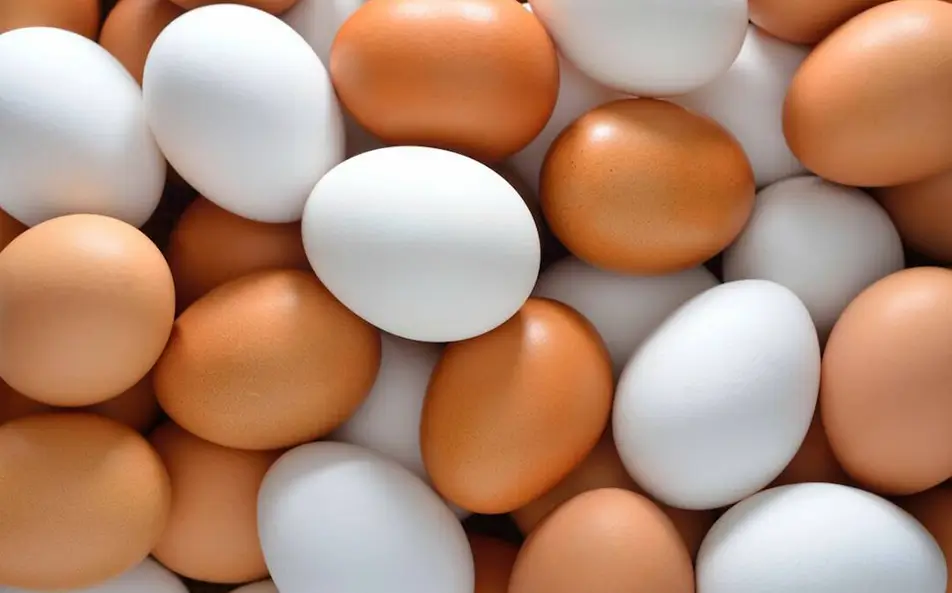
General advice becomes less useful for people with significant existing cardiovascular risk. Dr Kumar has previously advised greater caution for people with conditions such as familial hypercholesterolemia, LDL levels above 190 mg/dL, established cardiovascular disease or poorly controlled LDL in some people with diabetes. For those groups, he suggested limiting intake to around three eggs per week unless a doctor or dietitian recommends otherwise.
That is Dr Kumar's clinical guidance rather than a universal rule for every patient. People with very high LDL or established heart disease should base their diet on their complete lipid profile, medication, family history and overall cardiovascular risk rather than applying a general social-media recommendation.
For most healthy adults, the available evidence does not support treating moderate egg consumption as a major threat to heart health. The 28-year international study adds another interesting piece of evidence: countries consuming more eggs tended to have lower ischemic heart disease incidence and mortality. But it cannot show that eggs caused that reduction.
More importantly, large prospective studies and meta-analyses have generally found that consuming around one egg a day is not associated with a meaningful increase in cardiovascular disease risk. The practical lesson is therefore less dramatic than either side of the egg debate suggests.
Keep the egg if you enjoy it. Pay more attention to the rest of the plate — particularly saturated fat, vegetables, fibre and highly processed foods — and treat very high cholesterol or existing cardiovascular disease as reasons for personalised medical advice rather than blanket dietary rules. The science has not proved that eggs prevent heart attacks. But it has made the old idea that every egg yolk is automatically bad for the heart increasingly difficult to defend.
Everything you need to know
According to Dr Sudhir Kumar, a senior neurologist at Apollo Hospitals Hyderabad, the study found a significant negative association between egg consumption and both the incidence and mortality of ischemic heart disease, with correlation coefficients of about -0.253 for new cases and -0.359 for deaths, meaning higher egg intake tracked with fewer heart attacks and lower cardiac death rates across the countries studied, per Hindustan Times and News24.
Dr Kumar told the Economic Times that up to one egg a day is generally safe even for people with moderately high cholesterol, if prepared with minimal oil and paired with high-fibre food. A 2025 trial summarised by Harvard Health found two eggs a day did not raise LDL cholesterol when eaten as part of a low-saturated-fat diet.
Per the Economic Times, people with familial hypercholesterolemia, LDL above 190 mg/dL, established cardiovascular disease, or diabetics with uncontrolled LDL should limit intake to about three eggs a week unless their doctor advises otherwise.






Oct 08, 2026
TUI Staff
Oct 06, 2026
TUI Staff
Oct 01, 2026
TUI Staff
Sep 30, 2026
TUI Staff
Oct 13, 2026
TUI Staff
Oct 13, 2026
TUI Staff
Oct 13, 2026
TUI Staff
Oct 09, 2026
TUI Staff

Stay informed with independent, fact-checked journalism on technology, environment, government, economy and more. India’s most trusted digital news platform.







Comments (0)
Be the first to comment!