
Hanuman Chalisa Lyrics, Meaning and Significance: Who Wrote the Hanuman Chalisa?
Strength, Devotion and Courage in 40 Verses
 IN
Thu, Oct 15, 2026 | 06:58 PM IST
IN
Thu, Oct 15, 2026 | 06:58 PM IST

The Hanuman Chalisa is one of the most widely recited devotional hymns in Hindu tradition. Written in praise of Lord Hanuman, it is chanted in temples, homes and religious gatherings across India and by Hindu communities around the world. For many devotees, the prayer is associated with courage, discipline, protection and strength during difficult times. Its popularity has endured for centuries because its 40 verses combine devotion, storytelling and spiritual symbolism in simple Awadhi language.
But who wrote the Hanuman Chalisa? What do its verses mean? Why is it considered spiritually powerful? And what are the complete Hanuman Chalisa lyrics? Here is a detailed look at its history, significance and meaning.
The Hanuman Chalisa is a devotional composition dedicated to Lord Hanuman, one of the most revered figures in the Hindu epic Ramayana. The word “Chalisa” comes from the Hindi word chalis, meaning forty. The main section of the hymn contains 40 chaupais, or verses, along with introductory and concluding dohas. The composition praises Hanuman's strength, wisdom, humility, courage and unwavering devotion to Lord Rama.
Unlike lengthy religious scriptures, the Chalisa is relatively short and rhythmic. This has helped generations of devotees memorise and recite it regularly. It is particularly popular on Tuesdays and Saturdays, days traditionally associated with Hanuman worship.
The Hanuman Chalisa is traditionally attributed to Goswami Tulsidas, the 16th-century poet-saint best known for writing the Ramcharitmanas. Tulsidas wrote primarily in languages accessible to ordinary people rather than restricting his devotional works to Sanskrit. The Chalisa was composed in Awadhi, a language closely associated with large parts of present-day Uttar Pradesh. This accessibility became one of the main reasons the prayer spread so widely.
Instead of requiring scholarly knowledge of Sanskrit, devotees could understand, memorise and recite its verses in a language closer to everyday speech. Over time, the prayer became one of the most recognisable works associated with the Bhakti tradition.
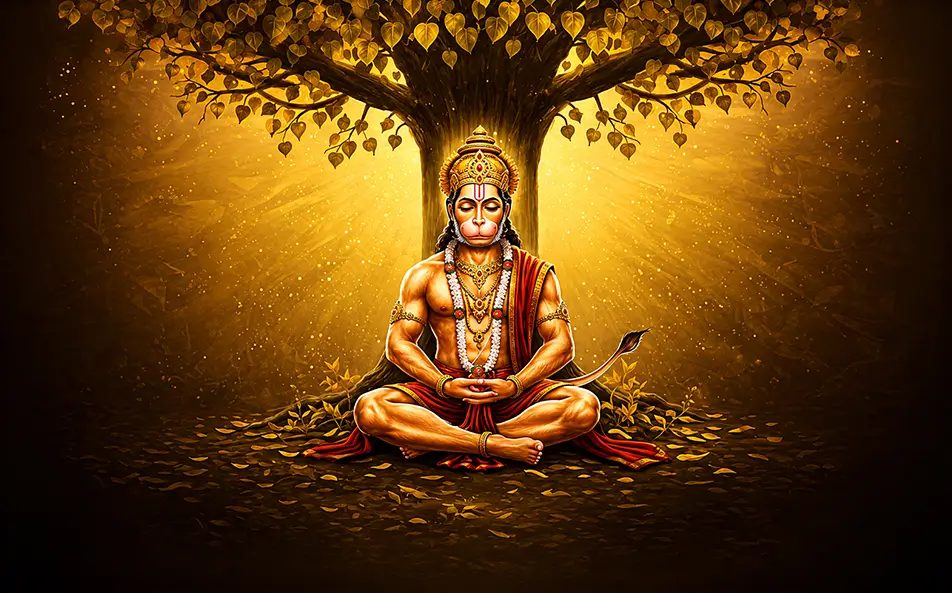
Lord Hanuman represents several qualities simultaneously. He is remembered for extraordinary physical strength, but strength alone does not define him. In the Ramayana, Hanuman is equally characterised by intelligence, loyalty, humility, courage and complete devotion to Rama. Among the most famous episodes associated with him are his journey across the ocean to Lanka, his discovery of Sita, the burning of Lanka and his carrying of the Sanjeevani-bearing mountain to save Lakshmana. For devotees, these stories make Hanuman a symbol of overcoming apparently impossible obstacles. The Chalisa repeatedly returns to the same idea: enormous strength becomes meaningful when combined with wisdom, discipline and devotion.
The spiritual significance of the Hanuman Chalisa goes beyond simply praising Hanuman. Its verses repeatedly focus on qualities devotees seek to develop themselves.
Hanuman is presented as fearless even when confronted by overwhelming challenges. Many devotees therefore recite the Chalisa during periods of uncertainty, stress or fear.
Despite possessing extraordinary abilities, Hanuman remains devoted to Rama. This combination of power and humility is one of the central teachings associated with him.
The hymn praises Hanuman's intelligence, self-control and commitment to duty. Regular recitation is therefore treated by many devotees as a form of spiritual discipline.
Traditional Hindu belief associates Hanuman with protection from fear, harmful influences and adversity. This is a matter of religious faith rather than something that can be scientifically demonstrated, but it remains one of the most important reasons devotees recite the prayer.
Hanuman rarely seeks recognition for his achievements. His actions are presented as service to Rama and to a larger purpose. That makes the Chalisa as much a lesson about character as a prayer for divine help.
Devotees often speak about the power of Hanuman Chalisa, but that idea can be understood on more than one level. In religious tradition, regular recitation is believed to bring courage, peace, protection and Hanuman's blessings. On a practical level, repetitive prayer can also create a structured moment of concentration and reflection.
The verses repeatedly reinforce ideas such as courage, loyalty, wisdom, self-control and perseverance. For someone facing fear or uncertainty, repeatedly focusing on these qualities can itself feel stabilising. The Chalisa should therefore not be treated as a substitute for medical, financial or professional help when such help is needed. Its significance lies primarily in faith, devotion and the emotional strength believers draw from it.
Different devotional traditions follow different practices. Some people recite it once every morning or evening. Others chant it 7, 11, 21 or 108 times during particular religious observances. There is no single universally required number for ordinary recitation. For most devotees, consistency and devotion are considered more important than reaching a particular count. Tuesday and Saturday remain especially popular days for Hanuman worship, though the prayer can be recited on any day.
Doha
Shri guru charan saroj raj neej manu mukur sudhari ।
Baranu raghubar bimal jasu jo dayaku phal chari ॥
Buddhi heen tanu janike sumero pavan kumar ।
Bal buddhi bidya deu mohi harau kales bikar ॥
Chaupayee
Jai Hanuman gyan gun sagar ।
Jai kapis tihu lok ujagar ॥
Ram doot atulit bal dhama ।
Anjaani-putra pavan sut nama ॥
Mahabir bikram Bajrangi ।
Kumati nivar sumati ke sangi ॥
Kanchan baran biraj subesa ।
Kanan kundal kunchit kesa ॥
Hath bajra aur dhvaja biraje ।
Kaandhe munj janeu saje ॥
Sankar suvan Kesari nandan ।
Tej pratap maha jag bandan ॥
Bidyavaan guni ati chatur ।
Ram kaj karibe ko aatur ॥
Prabhu charitra sunibe-ko rasiya ।
Ram Lakhan Sita maan basiya ॥
Sukshma roop dhari Siyahi dikhava ।
Bikat roop dhari Lank jarava ॥
Bhim roop dhari asur sahare ।
Ramachandra ke kaj savare ॥
Laye sanjivan Lakhan jiyaye ।
Shri Raghuvir harashi ur laye ॥
Raghupati kinhi bahut badhaee ।
Tum mam priye Bharat-hi-sam bhai ॥
Sahas badan tumharo jas gaave ।
Asa-kahi Shripati kantha lagave ॥
Sankadik brahmadi munisa ।
Narad-sarad sahit ahisa ॥
Jum Kuber digpaal jaha teh ।
Kabi Kovid kahi sake kahan teh ॥
Tum upkar Sugreevahi keenha ।
Ram milaye rajpad deenha ॥
Tumharo mantra Vibhishan maana ।
Lankeshvar bhaye sab jag jana ॥
Yug sahastra jojan par bhanu ।
Leelyo tahi madhur phaal janu ॥
Prabhu mudrika meli mukh mahi ।
Jaladi langhi gaye achraj nahi ॥
Durgaam kaj jagat ke jete ।
Sugam anugraha tumhre tete ॥
Ram duwaare tum rakhvare ।
Hoat na adyna binu paisare ॥
Sab sukh lahe tumhari sarna ।
Tum rakshak kahu ko darna ॥
Aapan tej samharo aape ।
Teenho lok hank teh kanpe ॥
Bhoot pisaach nikat nahin aave ।
Mahabir jab naam sunave ॥
Nase rog hare sab peera ।
Japat nirantar Hanumant beera ॥
Sankat se Hanuman chudave ।
Man karam bachan dyan jo lave ॥
Sab par Ram tapasvee raja ।
Teen ke kaj sakal tum saja ॥
Aur manorath jo koi lave ।
Sohi amit jeevan phal pave ॥
Charo yug partap tumhara ।
Hai parasiddha jagat ujiyara ॥
Sadhu sant ke tum rakhware ।
Asur nikanandan Ram dulare ॥
Ashta-sidhi nav nidhi ke daata ।
Asabar deen Janki mata ॥
Ram rasayan tumhare pasa ।
Sada raho Raghupati ke dasa ॥
Tumhare bhajan Ram ko paave ।
Janam-janam ke dukh bisrave ॥
Anth-kaal Raghubar pur jaee ।
Jaha janma Hari-bhakht kahaee ॥
Aur devta chitta na dharaee ।
Hanumanth se he sarba sukh karaee ॥
Sankat kate-mite sab peera ।
Jo sumire Hanumat balbeera ॥
Jai Jai Jai Hanuman gosaee ।
Krupa karahu gurudev ki naee ॥
Jo sath baar paath kar koi ।
Chuthee bandhi maha sukh hoee ॥
Jo yaha padhe Hanuman Chalisa ।
Hoye Siddhi Sakhi Gaurisa ॥
Tulsidas sada Hari chera ।
Keeje nath hridaye maha dera॥
Doha
Pavan tanay sankat harana mangal murti roop ।
Ram Lakhan Sita sahit hriday basau sur bhuup ॥
Jai-Ghosh
Bol Bajarangabali ki jai ।
Pavan putra Hanuman ki jai ॥
Everything you need to know
The Hanuman Chalisa is a 40-verse devotional hymn in Awadhi, traditionally attributed to the poet-saint Tulsidas, describing Hanuman's strength, his devotion to Rama and his power to remove fear and obstacles, according to The Hindu.
“Chalisa” means forty. The Hanuman Chalisa is a 40-verse devotional hymn praising Lord Hanuman’s strength, wisdom, courage, humility and devotion to Lord Rama.
Devotees believe that reciting the Hanuman Chalisa brings courage, discipline, peace, protection and strength during difficult times. These benefits are rooted in faith and devotional practice.





Oct 15, 2026
TUI Staff
Oct 15, 2026
TUI Staff
Oct 08, 2026
TUI Staff
Oct 06, 2026
TUI Staff
Oct 15, 2026
TUI Staff
Oct 15, 2026
TUI Staff
Oct 15, 2026
TUI Staff
Oct 14, 2026
TUI Staff

Stay informed with independent, fact-checked journalism on technology, environment, government, economy and more. India’s most trusted digital news platform.




Comments (0)
Be the first to comment!