
Heavy Rains Return to Telangana, Andhra Pradesh: Can They Still Save Damaged Crops?
Rain has returned, but months of crop stress cannot disappear overnight.
 IN
Tue, Sep 15, 2026 | 08:55 PM IST
IN
Tue, Sep 15, 2026 | 08:55 PM IST


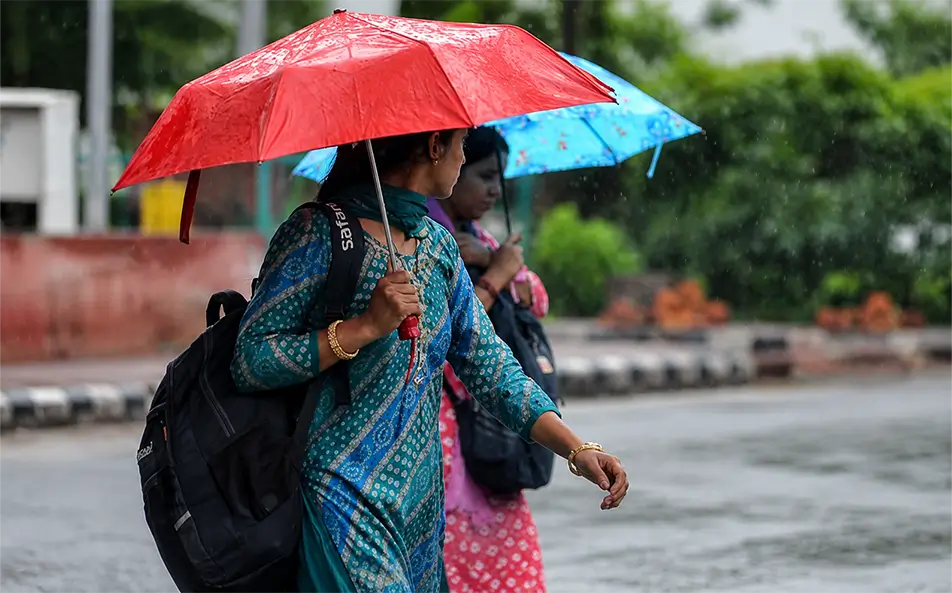
Heavy rains have returned to parts of Telangana and Andhra Pradesh after weeks of weak monsoon activity, bringing urgently needed moisture to farms, reservoirs and water bodies. But the showers have arrived after a prolonged dry spell had already placed large areas of farmland under severe stress. Several locations across the two Telugu states received moderate to very heavy rainfall on September 13 and 14. The change in weather has offered farmers some relief, particularly in rain-fed areas, but officials caution that a few days of rain cannot immediately reverse the damage caused by months of uneven rainfall.
The rain has also carried risks. Four people died in lightning-related incidents in Andhra Pradesh's Palnadu district, highlighting how quickly welcome monsoon showers can turn dangerous.
The latest spell has been particularly intense in parts of Telangana. IMD-linked data cited in reports showed Kondapak in Siddipet receiving 145.3 mm of rain in 24 hours, while Thipparam recorded 114.8 mm and Nangnoor 109.3 mm. Chegunta in Medak received 108 mm, while Husnabad recorded 101.5 mm. Rainfall was even heavier at some locations a day earlier. Kesamudram in Mahabubabad recorded 191.3 mm, Kannepalli in Mancherial received 153.8 mm and Nellikudur recorded 152.3 mm.
Hyderabad also experienced substantial rain, with waterlogging reported in low-lying areas. Begumpet recorded 95.5 mm, while the Gymkhana ESS station measured 95 mm. IMD had issued heavy-rain and thunderstorm warnings for Telangana during the active spell, after a period when rainfall across peninsular India had remained subdued.
The picture was similar across Andhra Pradesh, although rainfall remained highly uneven. Malikipuram in Dr BR Ambedkar Konaseema district recorded 110.25 mm in 24 hours. Ganguru in Krishna district received 98.25 mm, Govindapuram in Palnadu registered 92.5 mm and Narasapuram in West Godavari recorded 88.5 mm. The renewed rainfall in Andhra Pradesh has improved soil moisture in several agricultural areas and replenished local water sources. Farmers who had delayed operations or watched standing crops wilt during the prolonged dry period finally received some relief.
However, the distribution of rainfall in Andhra Pradesh remains critical. One district may receive an intense downpour while nearby rain-fed areas continue to struggle with moisture shortages. IMD had earlier warned that Andhra Pradesh could experience below-normal September rainfall under prevailing El Niño conditions, alongside warmer-than-normal temperatures.
The dry spell did not occur in isolation. The India Meteorological Department had forecast a below-normal southwest monsoon for 2026. Its updated seasonal outlook projected nationwide rainfall at around 90% of the Long Period Average and indicated that central and south peninsular India were particularly likely to receive below-normal rainfall.
The forecast was closely linked to changing Pacific Ocean conditions. IMD had warned before the monsoon that El Nino could emerge during the southwest monsoon season. By June, the agency reported that El Niño conditions were already present over the equatorial Pacific.
El Nino often affects the atmospheric circulation that supports India's monsoon, although its impact varies by year and region. This year's rainfall pattern has reflected that unevenness. India recorded a substantial national rainfall deficit in June, with further shortfalls during August and the first half of September.
The biggest concern is that the latest showers arrived after significant losses had already accumulated. Official assessments cited by Hindustan Times put Andhra Pradesh agriculture under severe pressure. The state had recorded a cumulative rainfall deficiency of around 51% since the beginning of the kharif season. Of approximately 26.50 lakh hectares under crops, officials identified about 2.44 lakh hectares as severely affected by the prolonged dry conditions.
Around 41,474 hectares had reached the drying stage, while crops on another 10,582 hectares had already dried. Nearly 1.92 lakh hectares were experiencing severe moisture stress.
Cotton, red gram, black gram, castor and groundnut have been among the crops most affected, particularly across Palnadu, the erstwhile Prakasam region and Rayalaseema.
Paddy cultivation has also suffered. Government data cited earlier this month showed Andhra Pradesh's paddy acreage was about 1.26 lakh hectares lower than the comparable period last year, as farmers dealt with water shortages and advisories against planting water-intensive crops.
For Andhra Pradesh agriculture, therefore, the current rain is valuable—but it is recovery rain rather than evidence that the entire kharif season has returned to normal.
The showers can revive crops suffering from temporary moisture stress, particularly groundnut, pulses, cotton and other rain-fed crops that have not yet crossed the point of recovery.
But rainfall cannot revive crops that have already dried completely. That means the extent of crop damage will vary considerably from district to district. Fields receiving rain at the right stage may recover, while farms that endured severe moisture stress for weeks could still record substantial yield losses.
Dry conditions had already devastated rain-fed cultivation in parts of Kurnool, Nandyal and Kadapa, where reports estimated affected acreage at roughly 95,000 hectares. Officials will also have to watch for the opposite problem. Sudden intense rainfall after a prolonged dry period can lead to waterlogging, soil erosion and damage to mature crops if water does not drain quickly. The immediate priority is therefore not simply more rainfall, but well-distributed and moderate rainfall over the coming weeks.
For farmers in Telangana, one of the most important benefits has been the replenishment of local water systems. Agriculture officials said the rains had filled tanks and other water bodies while streams and rivulets swelled in several places. That can provide benefits beyond the immediate rainfall event by improving access to irrigation water during the later stages of the cropping season. Standing crops showing early signs of moisture stress may now have a chance to recover. However, officials have cautioned that agricultural recovery depends on whether rainfall continues and, crucially, whether it is distributed across the areas that need it most. A few extremely wet mandals cannot compensate for prolonged shortages elsewhere.
The welcome agricultural impact has been accompanied by serious weather hazards. Four people were killed in lightning incidents in Palnadu district in Andhra Pradesh. Lightning also damaged autorickshaws and coconut and mango trees in other villages, according to the Chief Minister's Office. Coastal Andhra Pradesh had been under IMD warnings for heavy rain, thunderstorms and lightning during the latest spell. In Hyderabad, intense overnight rain caused waterlogging in several low-lying areas. These events demonstrate why the return of the monsoon cannot simply be viewed as good news. Farmers need rain, but intense bursts can create new crop damage, urban flooding and lightning risks.
The next few weeks will determine whether the current spell becomes a genuine agricultural recovery or only temporary relief. For farms where crops remain viable, improved soil moisture could stabilise yields and allow delayed agricultural operations to resume. Tanks and reservoirs receiving additional inflows could also support irrigation later in the season.
But the accumulated rainfall deficit remains significant, particularly in parts of Andhra Pradesh. The wider 2026 monsoon has also been weaker than normal. IMD's seasonal forecast had placed the country's monsoon at about 90% of the Long Period Average, with below-normal rainfall particularly likely across south peninsular India.
For farmers, therefore, Heavy rains are a welcome change after weeks of uncertainty—but not a complete solution. The immediate showers have brought water back to dry fields, revived tanks and eased moisture stress across parts of the Telugu states. What farmers need next is not another isolated cloudburst, but steady and geographically well-spread rain that can help crops reach harvest without creating a fresh round of flooding or crop damage.
Everything you need to know
The rainfall follows an extended dry spell that caused severe moisture stress across agricultural areas. In Andhra Pradesh alone, officials identified around 2.44 lakh hectares as severely affected by prolonged dry conditions.
Several Telangana locations received very heavy rainfall, including Kondapak in Siddipet with about 145.3 mm in 24 hours, while other locations crossed 100 mm.
Not completely. Rain can help crops that are still suffering temporary moisture stress, but fields where crops have already dried cannot be fully revived. Andhra Pradesh continues to report a major seasonal rainfall deficit.
IMD’s updated seasonal forecast projected 2026 monsoon rainfall at around 90% of the Long Period Average, with a high probability of below-normal or deficient rainfall nationally.
Rain and thunderstorms remain possible in parts of the Telugu states in the near term. IMD had issued heavy-rain and thunderstorm warnings for Telangana and coastal Andhra Pradesh during the latest spell.





Sep 04, 2026
TUI Staff
Sep 04, 2026
TUI Staff
Aug 21, 2026
TUI Staff
Aug 06, 2026
TUI Staff
Sep 15, 2026
TUI Staff
Sep 15, 2026
TUI Staff
Sep 14, 2026
TUI Staff
Sep 14, 2026
TUI Staff

Stay informed with independent, fact-checked journalism on technology, environment, government, economy and more. India’s most trusted digital news platform.






Comments (0)
Be the first to comment!