
Delhi Air Pollution 2026: New IITM Lab Finds 35% Secondary Aerosols, But Why Are Its Readings So Low?
Delhi's newest pollution lab reveals hidden chemistry and troubling measurement gaps.
 IN
Mon, Oct 26, 2026 | 04:04 PM IST


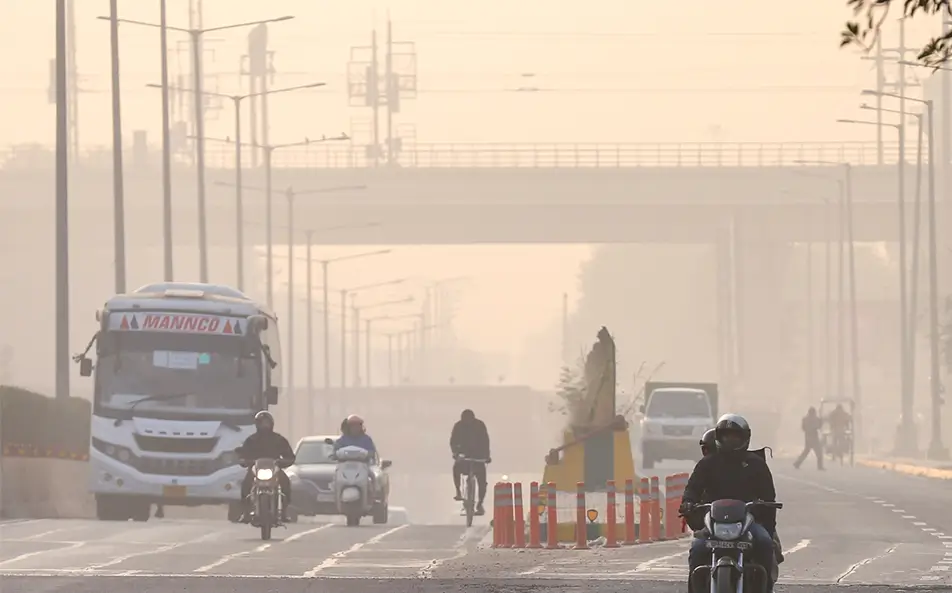
Delhi's winter pollution crisis is more complicated than smoke from vehicles, factories and burning waste. A significant share of the tiny particles that make the capital's air unhealthy forms through chemical reactions after gases enter the atmosphere. A government analysis found that secondary particulate matter accounted for 27% of Delhi's winter PM2.5 pollution, making it the largest individual category in the study. Now, a newly inaugurated atmospheric-chemistry laboratory promises a closer look at what people are breathing, although its preliminary findings have already raised questions about accuracy and the origins of pollutants.
The Integrated Atmospheric Chemistry and Aerosol Toxicity Analysis Laboratory (AATAL) was inaugurated on October 24, 2026, at the Indian Institute of Tropical Meteorology's (IITM) Delhi branch in New Rajendra Nagar.
A meta-analysis covering source-apportionment studies conducted between 2015 and 2025 identified secondary particles as the leading category contributing to the capital's winter PM2.5 burden.
The findings were reviewed by the Commission for Air Quality Management (CAQM) and announced in a Press Information Bureau release dated February 20, 2026.
| Pollution category | Winter PM2.5 contribution |
|---|---|
| Secondary particulate matter | 27% |
| Transport | 23% |
| Biomass burning | 20% |
| Dust | 15% |
| Industry, including power plants | 9% |
The remaining share covers other contributions not itemised in the government's summary. These figures describe findings drawn from earlier studies, rather than a live breakdown for October 2026.Secondary particles form when gases such as nitrogen oxides, sulphur dioxide, ammonia and volatile organic compounds react in the atmosphere. Vehicles, industries, agricultural activities and burning fuels can all release substances involved in these reactions.
This makes Delhi air pollution difficult to control through action against visible smoke alone. Emissions released in one location can contribute to particle formation elsewhere.
The AATAL facility, inaugurated by Union Minister Jitendra Singh, is designed to examine the chemical composition, potential toxicity and sources of fine particulate pollution.
According to the Ministry of Earth Sciences, the laboratory combines advanced chemical-analysis instruments with forecasting and source-apportionment systems. Early measurements reported by The Times of India on October 25 showed the following estimates for Saturday:
| Source or component | Reported contribution |
|---|---|
| Vehicles | 25% |
| Secondary organic aerosols | 18.4% |
| Secondary inorganic aerosols | 16.5% |
| Road dust | 10.9% |
| Waste burning | 5% |
The two secondary-aerosol categories together accounted for 34.9% in that snapshot. Project director Sachin Ghude also suggested that approximately 40% of Delhi's PM2.5 was directly emitted, while roughly 60% formed through atmospheric reactions. However, the 60% estimate, the laboratory's daily percentages and CAQM's historical 27% figure should not be treated as interchangeable. They reflect different assessments, timeframes and classifications.
The laboratory represents a significant improvement in Delhi's monitoring capabilities, but its early readings require caution. A Hindustan Times investigation published on October 25 found that the system had not yet established where some secondary particles originated. It also reported differences between the laboratory's PM2.5 measurements and readings from Delhi's wider monitoring network.
For October 22, the new system reported 55.3 micrograms per cubic metre, compared with a median of 117.1 across 37 Central Pollution Control Board monitoring stations. Measurements from different sites and methods are not automatically equivalent. Nevertheless, the discrepancy raises questions that researchers must address before the data can consistently guide major policy decisions. Officials acknowledged that the laboratory was experiencing initial technical difficulties. Some preliminary readings were also revised.
The CAQM has separately commissioned an updated emissions inventory covering Delhi and the National Capital Region. The project, announced in January 2026, uses a 500-metre-by-500-metre grid and 2026 as its base year. A consortium led by the Automotive Research Association of India, with IIT Delhi, TERI and IITM Pune, is preparing the study.
According to Hindustan Times, the exercise aims to provide updated emissions information for more accurate pollution forecasting and targeted interventions. The completed inventory is expected by June 2027, meaning it is not yet available for the current winter. Separately, the government's AIRWISE forecasting system is designed to provide 72-hour air-quality predictions at a spatial resolution of 400 metres. This is a forecasting capability, not the same as the new emissions inventory.
The challenge is no longer simply identifying which activities produce visible smoke. Authorities must also understand which gases contribute to secondary aerosols and how pollution moves across Delhi-NCR. Reducing emissions from transport, industry, waste burning and agricultural activities remains essential because these sectors can produce both direct particles and the gases that form secondary pollution.
The CAQM has already activated Stage I of the Graded Response Action Plan after Delhi's daily AQI reached 245 on October 21. The new laboratory could eventually help agencies decide which pollution sources require the most urgent attention on a particular day. But the effectiveness of that approach will depend on reliable measurements, clearer identification of secondary-particle origins and a completed emissions inventory. For Delhi air pollution, the latest developments mark progress in understanding the problem, not proof that the city's winter smog is finally under control.
Everything you need to know
A CAQM-reviewed meta-analysis of studies from 2015–2025 identified secondary particulate matter as the largest individual contributor at 27%, followed by transport at 23%, biomass burning at 20%, dust at 15% and industry, including thermal power plants, at 9%. These are historical winter estimates, not current-day readings.
AATAL is the Integrated Atmospheric Chemistry and Aerosol Toxicity Analysis Laboratory inaugurated by Union Minister Jitendra Singh at IITM's Delhi branch on October 24, 2026. It is designed to analyse pollution composition, estimate source contributions and examine potential toxicity.
Hindustan Times reported that the facility recorded PM2.5 at 55.3 µg/m³ on October 22, compared with a middle reading of 117.1 µg/m³ across 37 CPCB stations. The comparison does not by itself prove the laboratory was wrong, but officials acknowledged initial technical difficulties and revised some preliminary figures.
Secondary aerosols are fine particles formed through atmospheric chemical reactions involving gases emitted by vehicles, industry, agriculture and other sources. They contribute to PM2.5 pollution, which can penetrate deep into the lungs and is associated with serious health risks. Their origins can be harder to identify because the gases may travel before forming particles.




Oct 26, 2026
TUI Staff
Oct 22, 2026
TUI Staff
Oct 21, 2026
TUI Staff
Oct 21, 2026
TUI Staff
Oct 26, 2026
TUI Staff
Oct 26, 2026
TUI Staff
Oct 25, 2026
TUI Staff
Oct 23, 2026
TUI Staff

Stay informed with independent, fact-checked journalism on technology, environment, government, economy and more. India’s most trusted digital news platform.


Comments (0)
Be the first to comment!