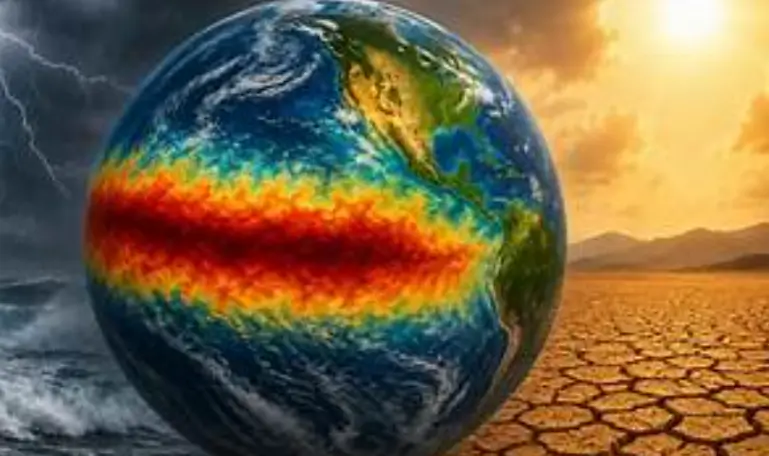
Your AC keeps you cool. But can the planet stay cool too? That question captures the message behind World Ozone Day 2026, observed on September 16.
This year marks 10 years of the Kigali Amendment to the Montreal Protocol, the international agreement aimed at reducing hydrofluorocarbons (HFCs) - powerful greenhouse gases widely used in air conditioners and refrigeration.
For India, the issue is becoming increasingly relevant. As cooling demand grows across homes, offices and businesses, the world faces a new challenge: how do we stay cool without making the planet warmer?
Enjoying this story? Get TUI's free newsletter: the news that matters, straight to your inbox. No spam, unsubscribe anytime. Subscribe free →
What is the International Day for the Preservation of the Ozone Layer?
The International Day for the Preservation of the Ozone Layer is observed every year on September 16. The United Nations General Assembly proclaimed the day in 1994 to commemorate the signing of the Montreal Protocol on Substances that Deplete the Ozone Layer in 1987.
The ozone layer is Earth's natural shield against harmful ultraviolet (UV) radiation from the Sun. Damage to this protective layer can increase risks such as skin cancer and cataracts and affect ecosystems.
The annual observance highlights the importance of protecting the ozone layer while recognising international progress under the Montreal Protocol.
World Ozone Day 2026: Theme and the Kigali Amendment
The World Ozone Day 2026 theme is “Global action for a cooler planet.” The theme marks a decade of sustainable cooling efforts under the Kigali Amendment, adopted in Kigali, Rwanda, in 2016 and perfectly words as the International Day for the Preservation of the Ozone Layer theme.
What Is The World Ozone Day Theme 2026?
The world ozone day theme 2026, “Global action for a cooler planet,” focuses on the connection between ozone protection, climate action and sustainable cooling.
The Kigali Amendment targets the phase-down of hydrofluorocarbons (HFCs). Although HFCs do not directly destroy the ozone layer, many have a high global warming potential.
As air conditioning and refrigeration become increasingly important worldwide, shifting towards lower-impact refrigerants and more efficient cooling technologies is an important part of climate action.
Why September 16 Is Important?
September 16 commemorates the signing of the Montreal Protocol in 1987.
The treaty has become one of the major examples of international environmental cooperation. It established a global framework for phasing out substances responsible for ozone depletion.
In his message for the 2026 observance, UN Secretary-General António Guterres urged countries to implement the Kigali Amendment and accelerate the transition to sustainable cooling, according to the UN Information Service Vienna.
Is The Ozone Layer Recovering?
Yes, the ozone layer is showing signs of long-term recovery, but monitoring remains essential.
The Montreal Protocol has helped phase out more than 99% of the production and consumption of controlled ozone-depleting substances worldwide. Scientific assessments indicate that the ozone layer is on track to return towards 1980 levels around the middle of this century if current policies continue.
However, recovery does not mean that the Antarctic ozone hole has disappeared. In September 2026, the Copernicus Atmosphere Monitoring Service reported that the Antarctic ozone hole had reached a significant size threshold earlier than average, with its area above the long-term average.
Year-to-year changes can occur because atmospheric conditions influence the size and behaviour of the ozone hole.
Why Does The Kigali Amendment Matter To India?
India's growing need for cooling makes the Kigali Amendment particularly significant.
More households and businesses are using air conditioners, refrigerators and other cooling equipment. This means the refrigerants used in these systems have an increasingly important role in India's climate story.
The Kigali Amendment aims to reduce high-global-warming-potential HFCs while encouraging sustainable alternatives.
For India, the transition involves two connected goals:
- Using climate-friendly refrigerants
- Improving the energy efficiency of cooling equipment
The result could be a cooling sector that meets growing demand while reducing its environmental impact.
India's Role In Ozone Protection
India has been observing World Ozone Day nationally through the Ministry of Environment, Forest and Climate Change's Ozone Cell since 1995. Awareness campaigns have focused on ozone protection, the Montreal Protocol and climate-friendly refrigerants.
In 2026, the Ozone Cell also partnered with MyGov for a National Online World Ozone Day Quiz. Announced on August 17, the quiz features 20 questions to be completed within 300 seconds, aiming to increase public awareness about ozone protection and the Montreal Protocol.
What Can We Do To Support Ozone Protection?
Protecting the atmosphere is not only the responsibility of governments and international organisations. Consumers can also make more informed cooling choices.
Simple steps include:
- Choose energy-efficient air conditioners and refrigerators.
- Maintain cooling appliances regularly.
- Use air conditioners at responsible temperature settings.
- Ensure refrigerants are handled correctly during servicing.
- Prefer newer, environmentally conscious cooling technologies where practical.
What does World Ozone Day 2026 teach us?
The World Ozone Day 2026 message goes beyond protecting the ozone layer. It highlights the growing relationship between cooling, energy use and climate change.
The success of the Montreal Protocol demonstrates what sustained international cooperation can achieve. The Kigali Amendment builds on that progress by addressing the climate impact of refrigerants.
For India, this conversation will become even more important as cooling becomes an essential part of everyday life.
The International Day for the Preservation of the Ozone Layer is therefore not simply a reminder of an environmental treaty signed decades ago. It is a reminder that the way we cool our homes, workplaces and cities today can influence the kind of planet we live on tomorrow.
The goal isn't just a cooler room. It's a cooler planet, too.












Comments (0)
Be the first to comment!