
Cyclone Arnab Turns Very Severe: When Will It Hit Andhra Pradesh and Which Areas Are at Risk?
Andhra braces for dangerous winds as the cyclone approaches.X
 IN
Tue, Oct 27, 2026 | 06:03 PM IST


Cyclone Arnab has intensified into a very severe cyclonic storm over the west-central Bay of Bengal, with the India Meteorological Department forecasting landfall near Yanam on the Andhra Pradesh coast during the forenoon of Wednesday, October 28, 2026. Coastal communities face powerful winds, extremely heavy rainfall and the possibility of flooding.
The storm, the first named cyclone of the 2026 North Indian Ocean season, is expected to cross the coast between Bapatla and Visakhapatnam. Authorities in Andhra Pradesh and Odisha have begun precautionary evacuations, deployed rescue teams and announced closures in vulnerable districts.
According to the IMD coastal bulletin, the cyclone is expected to turn northwestwards after moving west-northwestwards across the Bay of Bengal and cross the Andhra Pradesh–Yanam coast close to Yanam on October 28.
The forecast puts sustained winds at landfall at 115–125 kmph, gusting to 140 kmph. Earlier reports mentioning winds of 125–135 kmph with 150 kmph gusts describe the stronger storm over the sea, not necessarily the expected conditions as its centre crosses the coast. Cyclone Arnab was classified as very severe on October 27. The classification describes its intensity, while the exact track, timing and wind speed at landfall remain forecasts that could change.
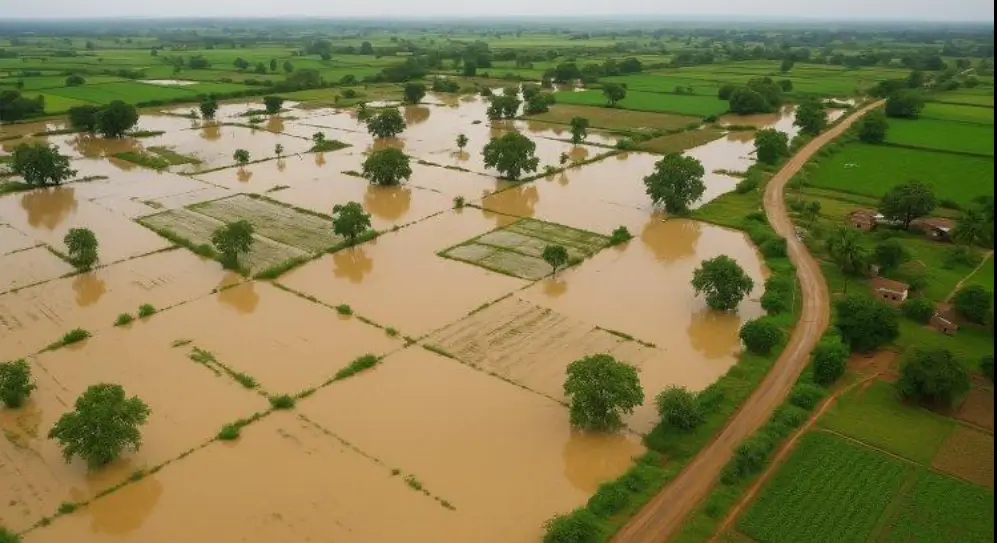
The Arnab cyclone is expected to bring heavy to extremely heavy rainfall to parts of coastal Andhra Pradesh and southern Odisha through October 29. Strong winds could damage temporary structures, trees and power lines, while intense rainfall could flood low-lying roads and settlements. The October 27 weather briefing also highlights rough seas and the need for fishermen to remain ashore. Officials have warned of a storm surge near Kakinada and Yanam, adding to the coastal flooding risk.
A cyclone-related red message is a high-level warning to disaster-management authorities. Residents should still check district-specific rainfall alerts and evacuation orders rather than assume every coastal location faces identical conditions.
The government's preparedness review says emergency shelters, district control rooms and disaster-response teams have been readied, with fishing discouraged along the Andhra Pradesh, Odisha and Yanam coasts from October 26 to 29. In Andhra Pradesh, officials reported moving 4,711 pregnant women from vulnerable areas to health facilities. Schools and other educational institutions in affected districts have been ordered closed for specified dates, while Odisha announced closures in five southern districts on October 28 and 29, according to The Indian Express. The India Meteorological Department has advised residents to follow official bulletins. Those in vulnerable areas should obey evacuation instructions, avoid the shoreline and keep essential medicines, documents and charged phones accessible.
The name did not come from the Indian coast where the storm is expected to arrive. Bangladesh proposed Arnab for the list maintained under the regional naming system coordinated by the World Meteorological Organisation (WMO). Its official pronunciation is Ornab. The question 'how are cyclones named?' has a regional answer: 13 countries on the WMO/ESCAP Panel on Tropical Cyclones contribute names in advance. The Regional Specialised Meteorological Centre in New Delhi assigns the next available name when a qualifying storm develops over the Bay of Bengal or Arabian Sea.
As the World Meteorological Organisation explains, the list is used in sequence; names are intended to be short, distinct and easy to communicate, and are not reused after assignment. A Bangladesh-submitted name can therefore be used for a storm approaching India.
The Arnab cyclone is expected to weaken after moving inland, but dangerous rainfall can continue beyond landfall. Parts of Telangana, Chhattisgarh and other inland areas may also experience adverse weather as the system moves northwards.
For now, Cyclone Arnab has not yet crossed the coast as of the October 27 forecast. The precise crossing time, local rainfall totals and storm impact must be checked against later IMD and district bulletins, particularly as conditions change overnight.
Everything you need to know
The IMD forecasts landfall during the forenoon of Wednesday, October 28, 2026, between Bapatla and Visakhapatnam, close to Yanam on the Andhra Pradesh coast.
The accessible IMD coastal forecast indicates sustained winds of 115–125 kmph, gusting to 140 kmph. The storm may experience stronger winds over the sea before crossing the coast.
Bangladesh proposed the name Arnab under the WMO/ESCAP regional cyclone-naming system. The official pronunciation is Ornab.
Andhra Pradesh and southern Odisha face the most immediate coastal risks. Heavy rainfall may also affect parts of Telangana, Chhattisgarh and other inland regions as the system moves northwards.
Educational institutions in affected Andhra Pradesh districts have announced precautionary closures. Odisha has ordered closures in five southern districts on October 28 and 29. Exact dates and affected institutions should be confirmed through the relevant district administration.





Oct 26, 2026
TUI Staff
Oct 26, 2026
TUI Staff
Oct 22, 2026
TUI Staff
Oct 21, 2026
TUI Staff
Oct 27, 2026
TUI Staff
Oct 27, 2026
TUI Staff
Oct 26, 2026
TUI Staff

Stay informed with independent, fact-checked journalism on technology, environment, government, economy and more. India’s most trusted digital news platform.





Comments (0)
Be the first to comment!