
Tata Sierra EV’s Lifetime Battery Warranty Is Not Really for Life—Here Is the Catch
Lifetime Has Conditions
 IN
Wed, Sep 30, 2026 | 06:56 PM IST
IN
Wed, Sep 30, 2026 | 06:56 PM IST

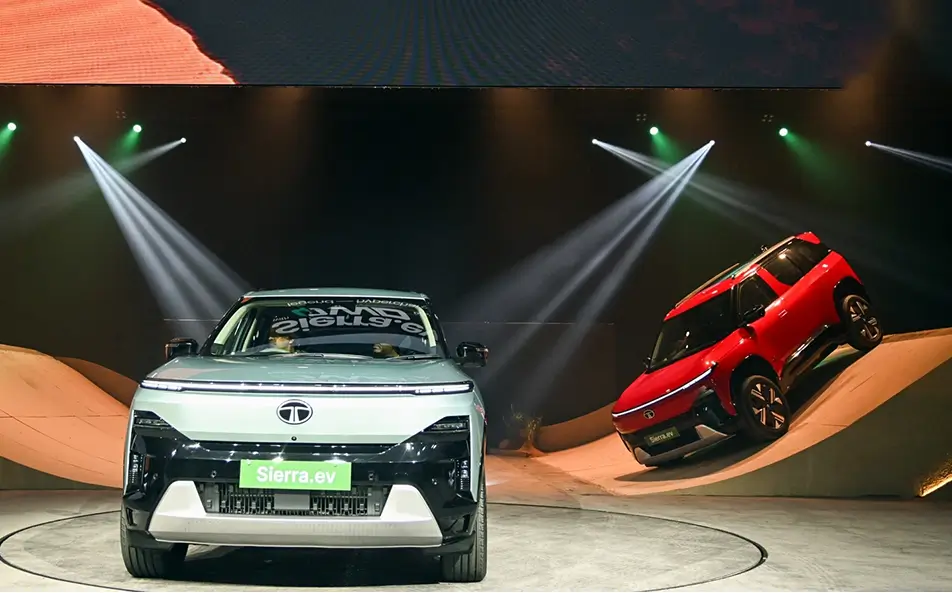
Tata Motors has given its new electric SUV a “lifetime” battery warranty. That sounds simple. The details are not simple. The cover lasts 15 years from first registration, not for as long as the car remains on the road. It gives the widest benefit to the first private owner only. That matters because the battery is the costliest part of an electric vehicle. Buyers worry about its life, capacity loss and resale. The new battery cover answers some of those concerns. It does not remove all of them.
Tata defines lifetime as 15 years from the date of first registration at the local transport office. The first private owner gets battery cover with unlimited kilometres, subject to fair personal use. Commercial use does not receive the same benefit. Taxis, fleet vehicles, test cars, display vehicles and other non-private registrations fall outside the lifetime offer. The word “unlimited” also has a condition. Tata says it assumes normal personal use. Trade or business use may not qualify. A buyer should therefore read the owner’s manual instead of relying only on an advertisement. The biggest change comes when the vehicle is sold. The lifetime part ends with the first owner. Tata’s official terms say a later owner gets battery cover for 10 years or 2 lakh kilometres, whichever comes first, calculated from the original registration date. So a five-year-old used vehicle would not start a fresh 10-year warranty. The clock would already have been running for five years. That is the catch many buyers may easily miss at first glance today. The warranty still has used-car value, but the second owner receives less cover. Tata must also record the transfer.
Electric vehicle batteries lose some capacity with time. That is normal. A warranty does not promise that an old battery will perform exactly like a new one. Tata’s general high-voltage battery terms say the company may repair or replace the pack if its state of health falls below 70% during the warranty period. Tata decides whether to repair cells, repair the pack or replace it. The company also says gradual loss above that threshold does not qualify. A battery at 75% health may give less driving distance than it did when new, but the warranty may not apply. Owners should keep service records and follow charging instructions. Misuse, accidents or unauthorised repairs may fall outside cover. The warranty reduces one major ownership risk. It does not make every battery problem free.
The Tata Sierra EV price starts at ₹18.79 lakh and reaches ₹26.48 lakh, ex-showroom, according to the launch information reported by Hindustan Times. Insurance, registration and state charges will raise the final amount. Buyers can choose between 63 kWh and 75 kWh battery packs. The larger pack carries a claimed MIDC range of up to 665 km and a C75 real-world estimate of up to 530 km. The Tata Sierra EV range will change with speed, traffic, air-conditioning, load, weather and driving style. Highway use at sustained speed usually consumes more power than calm city driving. A family planning a 400 km trip should not treat a laboratory figure as a promise. Charging stops, road conditions and a safety buffer still matter. The longer warranty suits long-term owners. For someone changing cars every four or five years, resale terms may matter more.
The electric model revives a name many Indian buyers remember from the 1990s. The new version is a modern five-seat SUV rather than a copy of the old three-door vehicle. Among the listed Tata Sierra EV features are a voice-assisted panoramic sunroof, 18-inch alloy wheels and a 31.24 cm infotainment touchscreen. The equipment list also includes electronic stability control and an eight-speaker setup on applicable variants. Not every feature comes with every version. Buyers should compare the exact variant rather than assuming the display car represents the base model. The two battery choices also let buyers decide how much range they need. A person driving mainly inside Delhi, Mumbai or Bengaluru may not need the largest pack. Someone travelling often between cities may value the extra distance. The warranty should be one part of that decision. Charging access, home parking, service support, insurance and efficiency matter just as much.
Before paying a booking amount, ask the dealer to show the full battery warranty in writing. Confirm whether the registration will be in an individual’s name. Ask what happens if the car moves into a company name, enters commercial use or is sold. Check how Tata measures battery health and what documents are needed for a claim. Ask whether towing, labour and replacement transport are included when a battery repair takes several days. Used-car buyers should confirm the first registration date and odometer reading. They should also make sure Tata has recorded the ownership change. Suppose the first owner sells the SUV after six years and 90,000 km. The later owner’s cover would run only until the vehicle reaches 10 years from first registration or 2 lakh km, whichever comes first. That leaves four years, not 10. Clear questions before purchase can prevent an argument years later.
At The United Indian, we look past the word “lifetime”. The offer can reduce battery anxiety, but buyers need to know who qualifies, how long the cover lasts and what changes after resale.
Tata Sierra is an important name for the company, and its electric return arrives when Indian buyers are asking harder questions about battery life and resale value. A 15-year first-owner warranty is generous. The fine print still decides what it is worth.
Follow The United Indian for clear car stories that explain prices, range, warranties and what new launches mean for Indian buyers.
Everything you need to know
For the first eligible private owner, Tata defines the lifetime battery warranty as 15 years from the vehicle’s original registration date.
The full lifetime benefit is not transferred. A later owner receives cover for up to 10 years or 2 lakh kilometres from the original registration date, whichever comes first.
The first private owner receives unlimited-kilometre cover, subject to Tata’s fair personal-use conditions. Commercial and fleet use may not qualify.
Normal capacity loss is not automatically covered. Tata may repair or replace the battery if its state of health falls below the warranty threshold and all conditions are met.
They should verify the original registration date, remaining warranty period, odometer reading, service history and whether the ownership transfer has been recorded by Tata.



Sep 30, 2026
TUI Staff
Sep 30, 2026
TUI Staff
Sep 28, 2026
TUI Staff
Sep 24, 2026
TUI Staff
Sep 29, 2026
TUI Staff
Sep 29, 2026
TUI Staff
Sep 28, 2026
TUI Staff
Sep 28, 2026
TUI Staff

Stay informed with independent, fact-checked journalism on technology, environment, government, economy and more. India’s most trusted digital news platform.







Comments (0)
Be the first to comment!