
Which Fire Extinguisher Is Right for Your Home? A Complete Guide for Indian Homes & Offices
The right extinguisher can make all the difference when seconds matter.
 IN
Wed, Sep 30, 2026 | 07:28 PM IST
IN
Wed, Sep 30, 2026 | 07:28 PM IST


A small flame can become a serious fire in minutes. But using the wrong extinguisher can make a bad situation worse.
Water can help control a fire involving paper or wood. But using it on energised electrical equipment can create a serious shock hazard. A pan of burning oil needs a completely different response. And an extinguisher hidden behind boxes is practically useless when every second counts.
That is why fire safety in India is not just about buying firefighting equipment. It is about understanding the risk, choosing the right equipment, keeping it accessible and knowing when to use it - and when to get out.
So, what should an Indian home or office actually keep? Let's break it down.
A fire extinguisher is intended for first-aid firefighting - mainly to tackle a small, early-stage fire before it grows. The Bureau of Indian Standards (BIS) describes extinguishers as a first line of defence and, through IS 2190:2024, provides guidance on their selection, installation, maintenance and testing.
The important word here is first-aid. An extinguisher does not replace smoke alarms, emergency exits, evacuation plans or professional firefighters.
The right choice starts with a simple question:
What could catch fire in this particular space?
Before buying one, understand the major categories. The Types of Fire extinguisher you see in the market are designed for different hazards and fire classes.
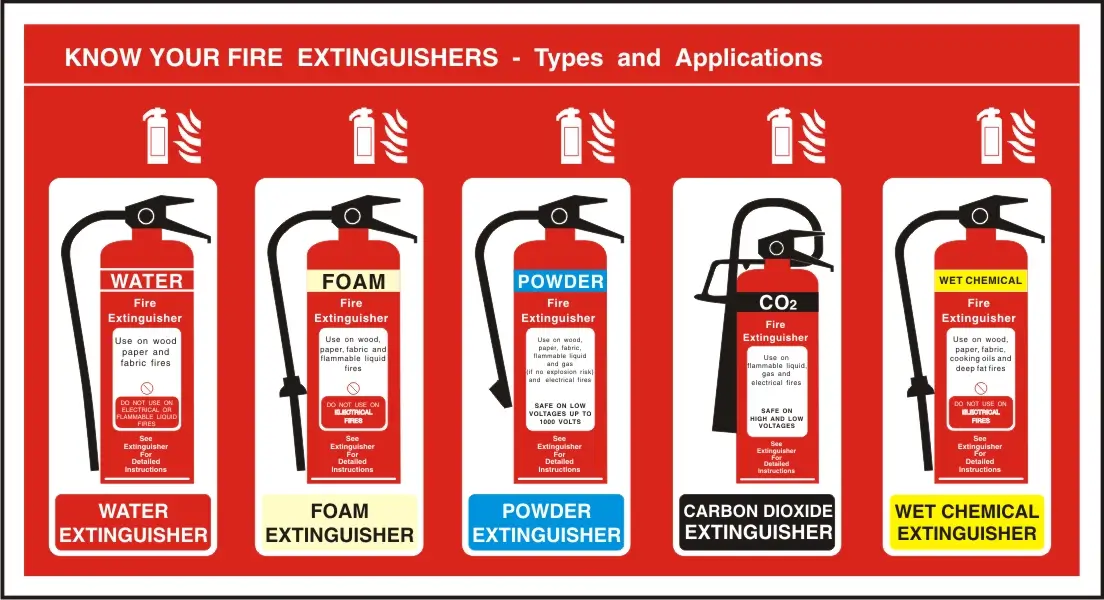
Water-based units are primarily intended for Class A fires involving ordinary combustible materials such as paper, wood, cloth and cardboard.
They work mainly by cooling the burning material.
They should not be used on energised electrical equipment, flammable-liquid fires or cooking-oil fires.
Foam units can be suitable for Class A and Class B fires, depending on their certified rating.
They can help control certain fires involving flammable liquids by forming a layer over the burning surface. However, never assume that every foam unit is suitable for electrical equipment. Check the product's markings before use.
ABC powder is among the most widely used multipurpose options.
"ABC" refers to suitability for Class A, B and C fires, subject to the specific rating of the product. BIS also recognises ABC, BC and D dry chemical powders under IS 4308:2019.
Its advantage is broad coverage. Its drawback is residue. The powder can create a significant cleanup problem and may not be ideal around sensitive electronics.
BC units are intended primarily for Class B and Class C hazards, including certain flammable-liquid and flammable-gas fires.
They do not offer the same Class A coverage as ABC powder.
Carbon dioxide units are commonly used for appropriate electrical and Class B hazards.
They leave no powder residue, which can be useful around computers, control panels and other sensitive equipment. However, suitability depends on the specific product rating, and CO₂ should be used with care in confined spaces.
BIS testing requirements for portable extinguishers include fire-rating suitability and electrical conductivity testing of the discharge, reinforcing why the product's actual certification and rating matter.
These are designed primarily for Class F fires involving cooking oils and fats.
This matters particularly in commercial kitchens and homes where deep frying is common. Throwing water onto burning oil can cause the burning oil to spread rapidly.
Class D extinguishers are intended for combustible-metal hazards involving materials such as magnesium, sodium and potassium. These are generally specialised industrial risks rather than everyday household requirements.
BIS also recognises other categories, including clean-agent and water-mist extinguishers, with their suitability determined by the applicable rating and application.
Img Src : Veer Fire Services
There is no single answer for every household.
An Indian home can have several fire risks: LPG and cooking oil in the kitchen, electrical appliances and wiring, and ordinary combustibles such as curtains, furniture and paper.
For broad household risks, an appropriately rated ABC dry-powder unit may offer useful coverage. But it should not be treated as a universal solution. A kitchen with a significant cooking-oil risk may need dedicated Class F protection.
For a home office with computers, UPS systems and other sensitive electronics, the choice should also consider the extinguisher's rating and the potential impact of residue.
The rule is simple: choose the extinguishing agent according to the hazard, not simply according to price or size.
The Types of Fire extinguisher required in an office can vary from one area to another.
The National Building Code of India provides a wider framework for building safety, including means of escape and fire-safety provisions.
No - not while the equipment is energised.
Delhi Fire Service advises raising an alarm, switching off the power supply to de-energise the affected equipment where safe, and using dry sand, CO₂ or dry-powder extinguishers for electrical fires.
The same caution applies to cooking oil. Never throw water onto burning oil. If it is safe, switch off the heat source and use suitable kitchen-fire protection. If flames are spreading or smoke is becoming overwhelming, evacuate instead.
For a small fire that is safe to tackle, the commonly taught PASS method is:
P - Pull: Remove the safety pin.
A - Aim: Point the nozzle towards the base of the flames.
S - Squeeze: Press the handle.
S - Sweep: Move the nozzle from side to side.
But PASS is not a reason to take unnecessary risks. Only attempt firefighting when the fire is small, the equipment is appropriate and you have a clear escape route behind you.
If the fire is spreading rapidly, leave immediately.
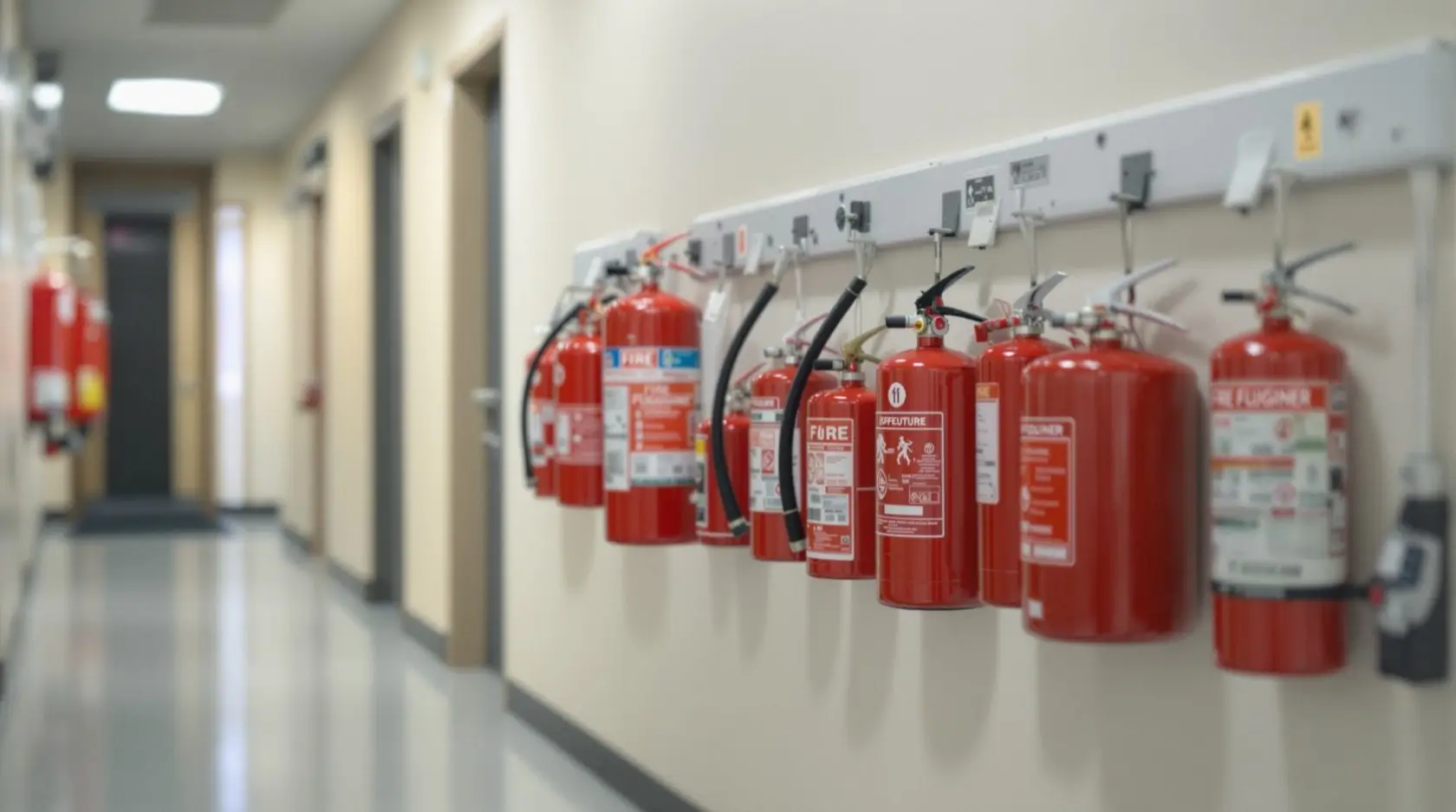
IS 2190:2024 calls for extinguishers to be readily accessible and properly positioned, including along normal travel routes where appropriate. They should remain in their designated locations and be protected from damage.
In practical terms, don't hide one behind furniture or lock it away in a cupboard.
You should be able to reach it quickly without moving dangerously close to the fire.
Img Src : Studio Matrix
Don't choose an extinguisher only because it is cheap or has a large capacity.
Check:
IS 15683:2018 covers performance and construction requirements for portable fire extinguishers. The Government's Fire Extinguishers (Quality Control) Order, 2023 covers portable extinguishers under IS 15683:2018 and wheeled extinguishers under IS 16018:2012. BIS continues to list these standards under its compulsory certification framework.
Good fire safety in India begins before a fire starts.
At home, Delhi Fire Service recommends keeping escape routes and staircases clear, avoiding electrical overloading, keeping combustible materials away from heat sources and following basic LPG precautions.
In offices and industrial premises, fire drills, clear escape routes, electrical safety, proper storage of flammable materials and regular maintenance are equally important.
For larger buildings, the applicable safety arrangements may include alarms, emergency lighting, fire doors, sprinklers, hydrants, fire pumps and evacuation plans, depending on the building and local requirements.
| Fire risk | Commonly suitable option* |
| Paper, wood, cloth | Water / Foam / ABC powder |
| Petrol, diesel and some flammable liquids | Foam / suitable powder / CO₂ |
| LPG and other flammable gases | Suitable ABC/BC powder |
| Energised electrical equipment | CO₂ / suitable non-conductive agent |
| Cooking oil and fats | Wet chemical |
| Combustible metals | Special Class D agent |
*The exact suitability depends on the extinguisher's certified rating, the hazard and the manufacturer's instructions.
Buying an extinguisher is a good start. Knowing which one you need, where it belongs and how to respond when a fire starts is what makes that purchase useful.
And remember the most important rule: property can be replaced; people cannot.
If a fire is growing beyond your control, don't wait to become a firefighter. Raise the alarm, evacuate and call the fire service.
The safest fire is the one you prevent - and the safest response to an uncontrollable fire is to get out.
Everything you need to know
There is no single extinguisher that is ideal for every home. An appropriately rated ABC dry-powder extinguisher can provide broad coverage for Class A, B and C hazards, while kitchens with significant cooking-oil risks may require specialised Class F protection.
The main types include water, foam, ABC dry chemical powder, BC dry chemical powder, CO₂, wet chemical and specialised Class D extinguishers. The right choice depends on the type of fire and the extinguisher's certified rating.
Yes, but only an extinguisher that is appropriately rated for the electrical hazard should be used. Water should not be used on energised electrical equipment because of the risk of electric shock. CO₂ and suitable dry-powder extinguishers are commonly used for appropriate electrical-fire situations.
A wet chemical extinguisher is designed specifically for Class F fires involving cooking oils and fats. Never throw water onto burning cooking oil, as it can cause the burning oil to spread rapidly.
It should be visible, accessible and readily available, ideally positioned along a normal escape/travel route where appropriate. Avoid keeping it behind furniture, inside inaccessible cupboards or anywhere blocked by household items. IS 2190:2024 provides detailed guidance on extinguisher placement and maintenance.





Sep 30, 2026
TUI Staff
Sep 29, 2026
TUI Staff
Sep 28, 2026
TUI Staff
Sep 29, 2026
TUI Staff
Sep 29, 2026
TUI Staff
Sep 28, 2026
TUI Staff
Sep 28, 2026
TUI Staff

Stay informed with independent, fact-checked journalism on technology, environment, government, economy and more. India’s most trusted digital news platform.






Comments (0)
Be the first to comment!