
Samsung Galaxy Z Fold 8: The Good, the Bad and the ₹1.8 Lakh Question
A brilliant tablet in your pocket - but is its ₹1.8 lakh price the real foldable compromise?
 IN
Fri, Sep 25, 2026 | 05:55 PM IST
IN
Fri, Sep 25, 2026 | 05:55 PM IST


₹1,79,999.
That is where Samsung’s newest foldable starts in India. At that price, the Galaxy Z Fold 8 is competing not just with other premium phones, but with the expectations that come with spending nearly ₹1.8 lakh on a smartphone.
And Samsung has done something interesting this time.
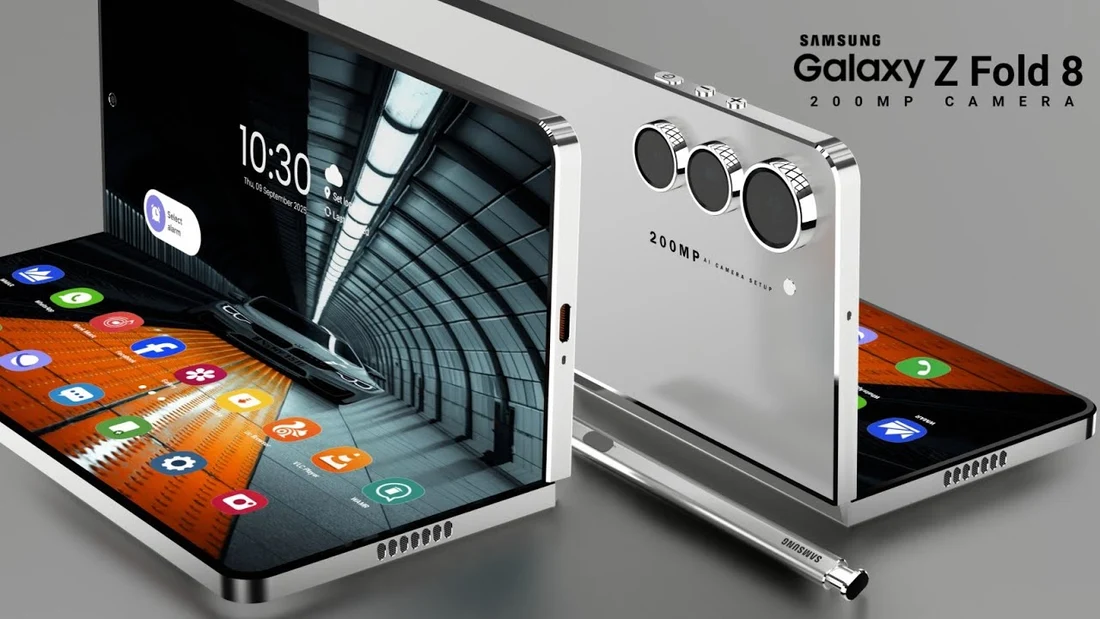
Instead of simply making its familiar book-style foldable thinner and faster, it has changed the shape altogether. The new Fold 8 is wider and more compact when closed, then opens into a 7.6-inch display with a tablet-like 4:3 aspect ratio.
It looks different. It feels different. But does different actually mean better?
That is the real question behind the new Samsung Galaxy Z Fold 8.
The Galaxy Z Fold 8 starts at ₹1,79,999 for 12GB RAM and 256GB storage in India. The 512GB version costs ₹1,99,999, while the 16GB + 1TB variant costs ₹2,39,999, according to Samsung India.
Here are the essentials:
| Feature | Galaxy Z Fold 8 |
| Main display | 7.6-inch QXGA+ 120Hz AMOLED |
| Cover display | 5.5-inch 120Hz AMOLED |
| Processor | Snapdragon 8 Elite Gen 5 for Galaxy |
| RAM | 12GB / 16GB |
| Storage | 256GB / 512GB / 1TB |
| Rear cameras | 50MP + 50MP |
| Battery | 4,800mAh |
| Weight | 201g |
| Folded thickness | 9.7mm |
| Unfolded thickness | 4.5mm |
| Software | One UI 9 based on Android 17 |
| Water resistance | IP48 |
Source: Samsung India and Samsung Newsroom India.
It can be, but only if you will genuinely use the folding screen. For people who read, watch content, multitask and want a phone-tablet hybrid, the Fold 8 makes a stronger case. For buyers who mainly want a great camera phone for everyday tasks, a conventional flagship may offer better value.
And that distinction is important.
Open the phone and its 7.6-inch inner display feels much closer to a compact tablet than a conventional smartphone.
The 4:3 ratio works particularly well for websites, reading and apps. Samsung has designed the new form factor around immersive content consumption, while independent testing found the screen crisp, smooth and bright enough for comfortable outdoor use.
Landscape video also gets slimmer black bars than on squarer foldables.
But there is a catch.
The actual video image isn't dramatically larger than what some previous Fold models offered. The biggest change is how the available screen is shaped and used.
Img Src : Easy Phones
This is arguably the Fold 8's strongest reason to exist.
Samsung's One UI 9 supports multiple split-screen configurations, including up to three apps in a grid, along with floating windows.
You can scroll Instagram while replying to WhatsApp. You can take notes while watching a video. You can compare information without constantly switching between apps.
That is the difference between simply having a bigger screen and having a genuinely useful second workspace.
Samsung has spent years refining software for its Samsung Galaxy Z Series, and that experience shows here.
The Fold 8 uses Qualcomm's Snapdragon 8 Elite Gen 5 for Galaxy, paired with up to 16GB RAM.
Samsung says the processor is customised for Galaxy devices, while independent testing found the Fold 8 among the fastest Android phones available, with plenty of power for gaming and multitasking.
In other words, the unusual design hasn't come at the expense of flagship performance.
The Fold 8 carries a 4,800mAh battery. Samsung rates it for up to 26 hours of video playback under its specified testing conditions.
Independent testing paints an even more encouraging picture. The Guardian recorded around 40 hours between charges, with about eight hours of active mixed use across 5G and Wi-Fi, including browsing, messaging, photography and note-taking. Intensive gaming reduced endurance.
So, despite powering two displays, battery life isn't the Fold 8's biggest concern.
The phone comes with Samsung's latest AI features, including Now Nudge, Now Brief and Google Gemini integration.
Now Nudge can suggest actions based on what is happening on screen, while Gemini can work with supported apps, images and screen context.
But real-world usefulness varies.
The Guardian found Now Nudge more useful, while Now Brief often fell back on routine information such as weather and calendar events.
That makes the AI experience useful rather than revolutionary.
Samsung's new design is also the Fold 8's most controversial feature.
When closed, it is wider and more compact than the traditional narrow book-style foldables. That gives the inner screen a more tablet-like personality, but it can make the phone harder to use one-handed.
The keyboard makes that problem obvious.
When it opens on the cover display, it takes up a large part of the screen, leaving less space for the content you're actually typing into. Apps with their own navigation bars can make the usable area even smaller.
So Samsung may have improved the tablet experience while making the everyday phone experience less natural.
The Fold 8 has two rear cameras: a 50MP main and 50MP ultra-wide. They deliver solid everyday results, with consistent colour between the two cameras.
But there is no dedicated telephoto camera.
The Guardian found the 2x crop zoom reasonably good, but image quality drops quickly at longer digital zoom levels.
For a phone starting at ₹1,79,999, that is a noticeable compromise.
The Fold 8 carries an IP48 rating, but it does not offer the same dust protection as many conventional flagship smartphones. Its flexible inner display also needs more care than standard smartphone glass.
Repair costs are another consideration. Independent testing notes that inner-screen repairs can be expensive, although Samsung offers self-repair options and Care+ protection.
Samsung has also introduced structural improvements aimed at making its latest foldables more durable.
So, yes, foldable technology has matured. But it still comes with a different ownership equation.
This is where the Samsung Galaxy Z Series becomes more interesting.
The Fold 8 makes sense if you:
Think twice if you:
The key isn't whether the Fold 8 is “worth ₹1.8 lakh” in isolation.
It's whether your usage can justify the extra hardware.
The decision gets trickier because Samsung has also introduced the Fold 8 Ultra.
The Ultra starts at ₹1,99,999 in India - only ₹20,000 above the standard Fold 8. It brings an 8-inch main display, a 5,000mAh battery, a 200MP main camera and a dedicated telephoto camera.
The two models therefore represent different ideas.
Fold 8: a new, wider form factor built around immersive content and a tablet-like experience.
Fold 8 Ultra: a more traditional premium Fold focused on productivity, larger workspace and advanced camera hardware.
For someone already willing to spend ₹1.8 lakh, that ₹20,000 difference is worth considering carefully.
The Galaxy Z Fold 8 is not a perfect smartphone. It doesn't need to be.
Its real appeal lies in what happens when you open it. The screen becomes a useful workspace. Multitasking feels natural. Performance is flagship-grade, and battery life is reassuring.
But the compromises are equally real.
The passport-like design can make one-handed use awkward. The camera setup lacks a telephoto lens. Foldable displays still demand more care, and the price puts the device firmly in luxury territory.
For someone who will use that large screen every day, the Fold 8 can justify its premium.
For everyone else, a conventional flagship may be the smarter buy.
The Galaxy Z Fold 8 isn't really asking whether it is the best phone you can buy.
It is asking something more interesting:
Do you want a better phone - or a phone that can become something more when you open it?
Everything you need to know
The Galaxy Z Fold 8 starts at ₹1,79,999 for the 12GB + 256GB variant. The 512GB model costs ₹1,99,999, while the 16GB + 1TB version costs ₹2,39,999.
It can be worth it for users who will regularly use its large inner screen for multitasking, reading, entertainment and productivity. For basic smartphone use, a conventional flagship may offer better value.
No. It has a 50MP main camera and a 50MP ultra-wide camera. The Fold 8 Ultra adds a dedicated telephoto camera.
Samsung rates the 4,800mAh battery for up to 26 hours of video playback. In The Guardian's mixed-use testing, the phone lasted around 40 hours between charges. These are different test conditions and should not be treated as equivalent figures.
Its biggest change is the new wider, more compact form factor and 4:3 inner display. Samsung says the new design is built around immersive content consumption and weighs 201 grams.


Sep 24, 2026
TUI Staff
Sep 22, 2026
TUI Staff
Sep 21, 2026
TUI Staff
Sep 25, 2026
TUI Staff
Sep 25, 2026
TUI Staff
Sep 25, 2026
TUI Staff
Sep 24, 2026
TUI Staff

Stay informed with independent, fact-checked journalism on technology, environment, government, economy and more. India’s most trusted digital news platform.



Comments (0)
Be the first to comment!