
Quad Energy Ministers to Meet on G20 Sidelines : Could India Get Access to US Oil Reserves at the G20 summit?
Could US oil storage become India's next safety net?
 IN
Sat, Oct 17, 2026 | 06:29 AM IST
IN
Sat, Oct 17, 2026 | 06:29 AM IST


A possible US storage deal could give India another layer of protection when global oil supplies come under pressure.
What happens when a shipping route thousands of kilometres from India is disrupted?
Oil prices can rise. Freight costs can climb. Airlines, factories and transport operators feel the squeeze. And eventually, the impact can reach household budgets.
That is why the upcoming meeting of energy ministers from India, Japan, Australia and the United States matters.
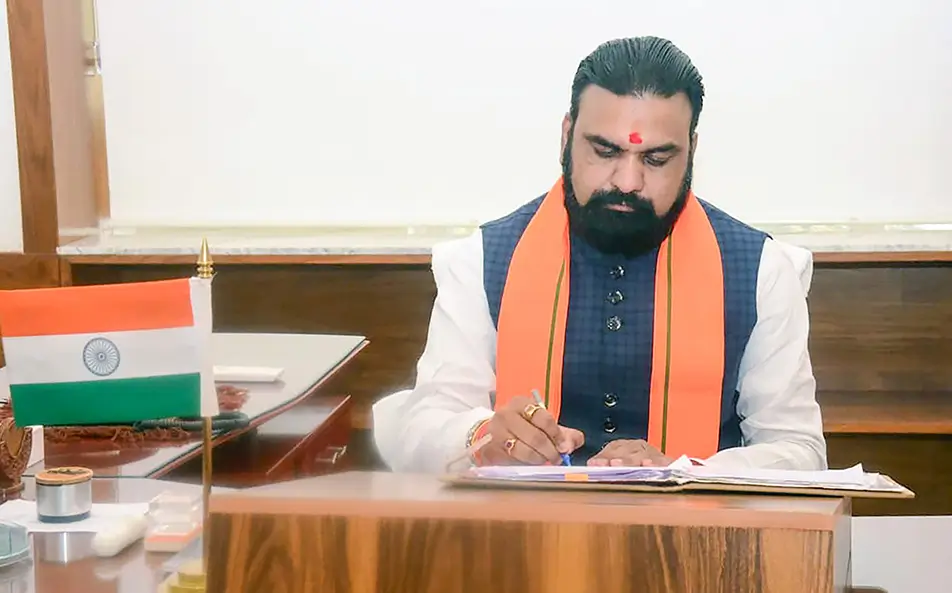
The four Quad countries are expected to meet in Houston in the second week of September, on the sidelines of the G20 energy ministerial. Hindustan Times reports that the meeting will mark the first gathering of the Quad’s Fuel Security Forum, with Union Power Minister Manohar Lal Khattar expected to represent India.
The biggest talking point could be even more significant: the US is reportedly considering leasing Strategic Petroleum Reserve storage space to India and Japan.
No agreement has been confirmed yet. But if the proposal moves forward, it could give India another tool to deal with a future oil-supply shock.
And that is the real story behind this meeting.
The answer starts with West Asia and the vulnerability of global energy routes.
The Strait of Hormuz is a critical maritime route for global energy trade. Recent disruption and uncertainty around the waterway have shown how quickly a regional conflict can create pressure across international energy markets.
As per the G20 news, The Quad addressed this risk at its Foreign Ministers’ Meeting in New Delhi on May 26, 2026. Its official statement highlighted disruptions affecting oil, gas, petrochemicals and downstream products such as fertilisers. It also stressed the need for safe navigation and uninterrupted commerce through the Strait of Hormuz.
TUI has also tracked the uncertainty around Hormuz and what it means for global oil trade.
For India, the issue is especially important because its economy remains highly exposed to international crude prices and supply disruptions.
In simple terms: if the world's oil routes become less reliable, India's energy bill becomes harder to predict.
The Quad Fuel Security Forum is a new mechanism created under the Quad Initiative on Indo-Pacific Energy Security.
The four G20 countries agreed to explore cooperation in areas such as:
The Quad also wants to work with other Indo-Pacific countries to strengthen regional energy resilience.
This is important because the forum is not simply about buying more oil.
It is about preparing for the moment when normal supplies are suddenly disrupted.
Possibly, but there is no confirmed deal yet.
According to Hindustan Times, Washington is interested in the possibility of leasing space in its Strategic Petroleum Reserve to India and Japan. Technical assistance for strengthening domestic reserves could also be discussed.
A Strategic Petroleum Reserve (SPR) is an emergency stockpile of crude oil maintained to cushion a country against major supply disruptions.
Think of it as an energy emergency fund.
It is not designed to replace the oil that refineries and companies use every day. Its purpose is to give governments a buffer when normal supplies are suddenly threatened.
If India gains access to additional overseas storage, it could diversify where its emergency crude is held.
But there is an important distinction.
Access to US storage would not mean India gets unlimited access to American oil. The details would depend on the eventual agreement, including ownership of the crude, storage capacity, access conditions and logistics during an emergency.
For now, the proposal remains a possibility reported ahead of the Houston meeting.
India is already building its own safety net.
The country operates strategic petroleum reserve facilities at Visakhapatnam, Mangaluru and Padur, with total capacity of about 5.33 million tonnes, according to Reuters.
India is also expanding that capacity.
ONGC plans to build a new 1.75-million-tonne strategic petroleum reserve at Mangaluru, equivalent to roughly 13 million barrels. Reuters reported that the project is part of India's effort to strengthen its resilience against global oil-supply disruptions.
This is not just about stockpiling oil.
It is about buying India time.
If international supplies are suddenly disrupted, an emergency reserve can help the country manage the shock while alternative supplies and shipping routes are arranged.
The possible US arrangement would not be India's first attempt to use international partnerships to strengthen its strategic reserves.
In May 2026, India and the UAE announced a strategic collaboration between Indian Strategic Petroleum Reserves Ltd (ISPRL) and the Abu Dhabi National Oil Company (ADNOC).
The agreement allows for potential ADNOC crude storage of up to 30 million barrels in India's strategic petroleum reserves. It also provides for exploring storage of crude in Fujairah, UAE, that could form part of India's strategic reserve.
This is an important shift.
India's approach is increasingly built around several layers:
Domestic reserves + overseas storage + diversified suppliers + strategic partnerships.
That matters because no single source can fully protect a large oil-importing economy from a global crisis.
The Quad's four members bring very different energy strengths.
| Quad country | Why it matters |
| India | Large energy market and expanding strategic reserves |
| Japan | High dependence on imported energy and strong resilience capabilities |
| Australia | Major energy producer and regional supplier |
| United States | Major energy producer with extensive strategic-storage infrastructure |
The Quad's official energy statement points to Japan's POWERR Asia initiative, India's support for energy security in South Asia, and Australia's efforts in Southeast Asia and the Pacific.
That makes the grouping potentially useful during a regional energy shock.
One country may have storage. Another may have supplies. Another may have technology or infrastructure. The value lies in connecting those capabilities.
Not yet.
There is no indication that India, Japan, Australia and the US are creating a single shared oil pool or giving a central Quad body control over their strategic reserves.
But the Quad's agenda is clearly becoming broader.
At its May meeting, the grouping also advanced initiatives on critical minerals, maritime surveillance and port infrastructure, alongside energy security.
That points to a wider idea of security.
A country can be vulnerable not only because of a military threat. It can also be vulnerable when an essential shipping route is disrupted, a critical mineral becomes unavailable or fuel supplies suddenly tighten.
The meeting will be worth watching for a few specific outcomes.
1. A US storage arrangement
Will the reported proposal to provide storage access to India and Japan move closer to reality?
2. Technical cooperation
Could the Quad help members improve how they build, manage and use strategic reserves?
3. Emergency coordination
Could the four countries develop a more coordinated response to future energy disruptions?
4. Wider Indo-Pacific support
The Quad's official plan includes working with regional partners to improve energy resilience.
5. A more connected energy strategy for India
For India, overseas storage could complement its domestic reserve expansion rather than replace it.
Here is the part that often gets lost in diplomatic coverage like G20 news.
A strategic oil reserve does not automatically mean cheaper petrol or diesel.
Its purpose is different.
The reserve is there to soften the impact of a major supply shock. If crude supplies are suddenly disrupted, emergency stocks can give the government more room to manage the situation.
That can matter for everything from transport and manufacturing to aviation and household expenses.
TUI's earlier reporting has also examined how West Asia tensions can affect India's oil-supply strategy and why diversifying crude sources matters.
The broader principle is simple:
India cannot control every geopolitical crisis. But it can prepare better for the economic shock that follows.
The upcoming G20 summit - linked energy meeting is therefore about much more than a possible storage deal.
The Quad is trying to build several layers of protection against future energy shocks.
That includes stronger strategic reserves, diversified supply chains, emergency coordination, market intelligence and cooperation with energy-producing and consuming countries.
For India, access to US storage could become another useful layer—if the reported proposal is eventually agreed.
But the larger strategy is already visible.
India is building reserves at home. It is exploring storage partnerships abroad. It is diversifying energy relationships. And it is working with major economies to reduce its exposure to sudden disruptions.
The goal is not to make India immune to an oil crisis.
That is impossible.
The goal is to make sure that when the next geopolitical shock hits an important energy route, India has enough options to keep its economy moving.
Everything you need to know
The Quad Fuel Security Forum is a new cooperation mechanism involving India, Japan, Australia and the United States. It is designed to coordinate high-level discussions on energy resilience, strategic petroleum systems and responses to disruptions in global energy markets.
A US storage arrangement for India and Japan has been reported as a possibility ahead of the Houston meeting. However, no final agreement has been publicly confirmed.
India's existing strategic petroleum reserve facilities at Visakhapatnam, Mangaluru and Padur have a combined capacity of about 5.33 million tonnes.
The Strait of Hormuz is a major energy-trade route. Disruption there can affect global oil markets, shipping and supply costs, making it an important concern for India as a major crude-oil importer. The Quad has specifically highlighted the need for safe navigation and uninterrupted commerce through the waterway.
The meeting brings together four major Indo-Pacific economies to discuss how they can respond to energy disruptions. For India, the focus on strategic reserves and possible overseas storage could strengthen its ability to manage future oil-supply shocks.


Oct 14, 2026
TUI Staff
Oct 08, 2026
TUI Staff
Oct 06, 2026
TUI Staff
Oct 15, 2026
TUI Staff
Oct 15, 2026
TUI Staff
Oct 15, 2026
TUI Staff
Oct 14, 2026
TUI Staff

Stay informed with independent, fact-checked journalism on technology, environment, government, economy and more. India’s most trusted digital news platform.



Comments (0)
Be the first to comment!