
National Board for Wildlife Approved 96.5% Decided Projects in 10 Years, Raising Scrutiny Questions
Wildlife Scrutiny Under Question
 IN
Fri, Sep 18, 2026 | 05:34 PM IST
IN
Fri, Sep 18, 2026 | 05:34 PM IST

The Standing Committee of the National Board for Wildlife approved 96.5% of the development proposals on which it reached a final decision over the past decade, according to an analysis of official meeting records by Hindustan Times.
Since 2016, 2,448 development and infrastructure proposals have been placed before the committee across 52 meetings. It deferred 572 proposals, approved 1,810 and rejected 66. The 96.5% approval rate is therefore calculated from the 1,876 proposals that received a final approval-or-rejection decision.
The figure has renewed debate over whether India’s highest statutory wildlife scrutiny mechanism is filtering damaging proposals effectively or approving most projects after imposing conditions.
The National Board for Wildlife is a statutory body constituted under the Wild Life (Protection) Act, 1972. Its Standing Committee exercises powers delegated to it by the full board. The law allows the committee to include the board’s vice-chairperson, member-secretary and up to 10 other nominated members. The full board is chaired by the Prime Minister. Its Standing Committee is headed by the Union environment minister and includes senior ministry officials and nominated experts.
The committee examines certain proposals affecting national parks, sanctuaries, tiger reserves, wildlife corridors and eco-sensitive areas. However, it does not independently grant every approval required for a road, mine, railway or power project. A project may also require separate forest, environmental and state-level permissions. The environment ministry told Hindustan Times that the Standing Committee recommends proposals under the wildlife law, while Chief Wildlife Wardens act in consultation with state governments and the committee.
The decade-long analysis found that the NBWL Standing Committee rejected only 66 of the 1,876 proposals it finally decided. In 2018, 2021 and the first committee meeting of 2026, every proposal that received a final decision was approved. None was rejected. Even in 2020, which recorded the lowest annual approval rate in the analysis, the committee cleared 82 of the 92 decided proposals. That works out to an approval rate of approximately 89%.
Deferrals show that the committee does not immediately approve every proposal placed before it. A deferred project may be sent back for additional studies, documents, site inspections or comments from government agencies. However, deferral is not the same as rejection. The 96.5% figure applies only after deferred proposals are excluded and the final decisions are examined.
The pattern continued at the committee’s 91st meeting, held in Coimbatore on July 9, 2026.
Of the 107 development and infrastructure proposals placed before the committee, 99 were recommended for approval. Four were deferred, two were returned to state authorities and two were kept in abeyance pending Supreme Court decisions. No proposal was rejected outright. The approved proposals involved areas connected with several tiger reserves, sanctuaries and eco-sensitive zones. These included Biligiri Ranganatha Temple Tiger Reserve, Palamau, Ranthambore, Buxa, Melghat and Pilibhit.
One proposal involved 411.48 hectares in the Satna-Panna tiger corridor for a pumped-storage project. Another involved 18.462 hectares in the Satpura-Melghat tiger corridor for a railway line. The committee also approved a road involving 2.18 hectares of the Kambalakonda Wildlife Sanctuary as a special case. Its minutes noted that new roads inside sanctuaries are generally impermissible but cited the road’s peripheral location and larger public interest.
A Legal Initiative for Forest and Environment analysis found that the committee approved 39 projects covering 409.75 hectares inside national parks and wildlife sanctuaries during 2018. These projects included roads, railway infrastructure, mining and other development activities. The analysis separately identified 18 approved projects spread across 2,581.76 hectares in tiger habitats.
That total included projects located within notified tiger reserves as well as projects situated within 10 kilometres of reserve boundaries. The study counted both forest and non-forest areas, so the entire 2,581.76 hectares should not be presented as land located inside tiger reserves. The distinction matters when reporting how infrastructure affects forest land in India. Protected areas, reserve buffers, corridors, eco-sensitive zones and ordinary forest areas can be governed through overlapping but different approval processes.
A Centre for Financial Accountability policy brief cited a Lok Sabha response stating that 682 of the 687 projects examined between August 2014 and February 2019 were cleared. The brief described that as a 99.82% approval rate. However, dividing 682 by 687 produces a rate of approximately 99.27%.
The corrected percentage is still extremely high and supports the broader finding that wildlife project approvals have remained close to universal during several periods.
The same organisation reported that the Standing Committee met 23 times between 2015-16 and 2019-20 and granted wildlife clearance to 680 projects.
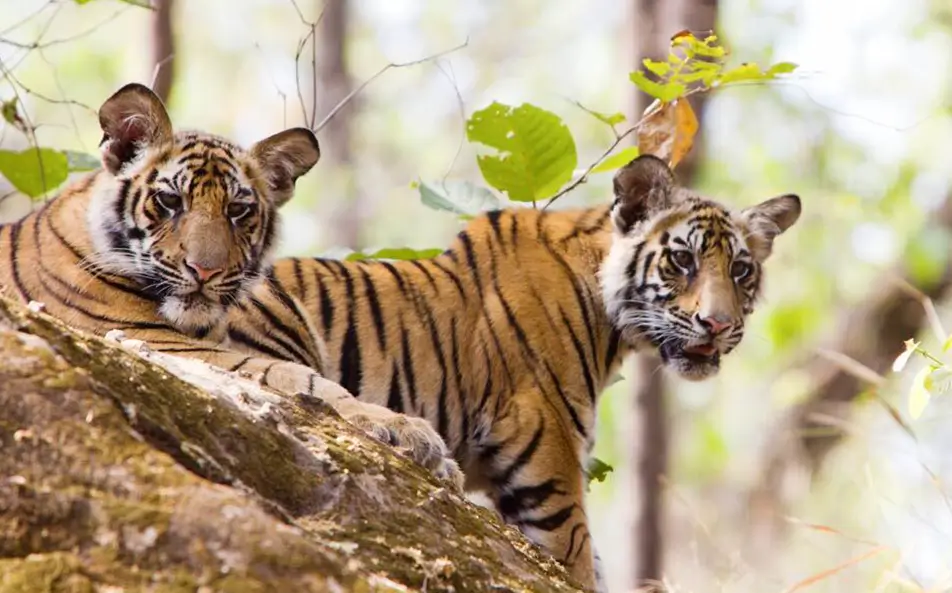
The Standing Committee occupies an important position between infrastructure planning and wildlife conservation. Its decisions can affect animal movement, habitat connectivity, forest fragmentation and human activity in and around protected areas. The consequences may continue long after a road, railway, mine or energy project is completed. A high approval rate does not by itself prove that every decision was environmentally unsound. Some proposals involve public utilities, drinking-water connections, existing infrastructure or projects modified to reduce ecological damage. However, approving 1,810 of 1,876 decided proposals places a greater burden on the committee to show that its decisions are based on recorded scientific reasoning rather than routine clearance.
The Union environment minister, other committee members and supporting agencies must therefore explain not only why projects are approved but also how their conditions will protect habitats after construction begins. The next question is not simply whether the NBWL continues approving most proposals. It is whether its meeting records demonstrate meaningful, project-specific scrutiny—and whether the conditions attached to approvals are monitored and enforced.
Everything you need to know
According to an analysis of official meeting records published in 2026, the Standing Committee of the National Board for Wildlife considered 1,876 development proposals across 52 meetings since 2016, approving 1,810 of them, a rate of 96.5%, per Hindustan Times.
Yes, 66 proposals were rejected out of 1,876 considered since 2016. However, in 2018, 2021 and the first meeting of 2026, the committee approved every single proposal it considered, with no rejections in those meetings.
2020 saw the lowest clearance rate in the analysis, with the committee approving 82 of 92 projects considered, about 89%, still a high rate compared to typical regulatory scrutiny.



Sep 16, 2026
TUI Staff
Sep 15, 2026
TUI Staff
Sep 04, 2026
TUI Staff
Sep 04, 2026
TUI Staff
Sep 17, 2026
TUI Staff
Sep 17, 2026
TUI Staff
Sep 17, 2026
TUI Staff

Stay informed with independent, fact-checked journalism on technology, environment, government, economy and more. India’s most trusted digital news platform.







Comments (0)
Be the first to comment!