
National Handloom Day 2026: History, Significance, Theme, and Why We Must Celebrate It?
Every Thread Tells a Story. Every Weave Preserves a Legacy.
 IN
Mon, Sep 21, 2026 | 07:43 PM IST
IN
Mon, Sep 21, 2026 | 07:43 PM IST


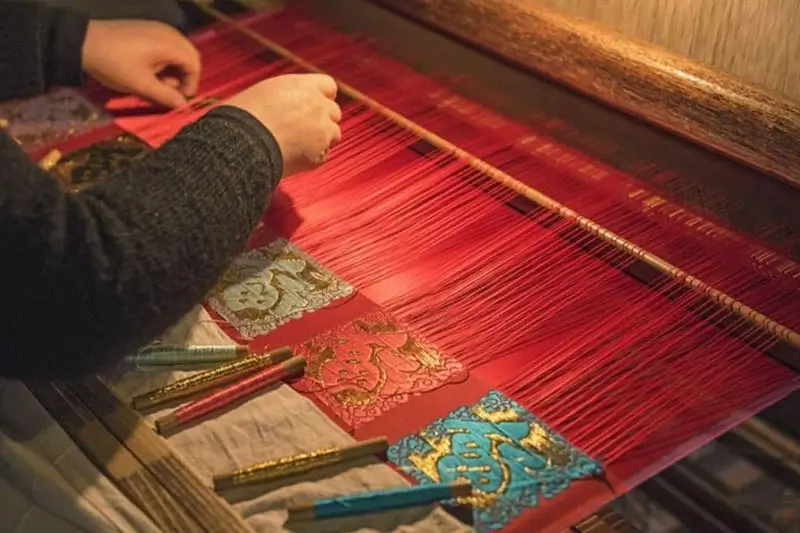
Every handwoven fabric has a story to tell. It speaks of generations of craftsmanship, cultural pride, and the countless skilled hands that transform simple threads into timeless works of art. Yet, in an era dominated by fast fashion and machine-made textiles, these stories often go unnoticed.
Observed every year on 7 August, the occasion is a reminder of India's rich weaving heritage and the millions of artisans who continue to keep these traditions alive. Introduced by the Government of India in 2015, the day commemorates the Swadeshi Movement of 1905, when Indians chose locally made products over imported goods as a symbol of self-reliance and national pride.
More than a celebration of textiles, the Day honours the people behind the loom, supports sustainable livelihoods, and encourages us to appreciate the cultural legacy woven into every handcrafted fabric.
National Handloom Day is celebrated annually on 7 August to recognise India's centuries-old handloom tradition and acknowledge the contribution of handloom weavers to the country's cultural and economic landscape.
The date marks the launch of the Swadeshi Movement on 7 August 1905, a landmark moment in India's freedom struggle. As Indians boycotted foreign goods and embraced indigenous products, handloom textiles became a powerful symbol of self-reliance, resilience, and national identity.
Today, the observance carries the same spirit. It encourages citizens to support indigenous handloom products, preserve traditional weaving techniques, and strengthen the livelihoods of artisan communities across the country.
According to the Ministry of Textiles, National Handloom Day was instituted to celebrate India's weaving traditions while recognising the socio-economic contribution of millions of handloom workers across the country.
India's relationship with handloom dates back thousands of years. Archaeological evidence from the Indus Valley Civilisation suggests that spinning and weaving were practised as early as 2500 BCE. Ancient texts such as the Rigveda, Ramayana, and Mahabharata also mention India's remarkable textile traditions, highlighting the country's expertise in cotton and silk weaving.
Over centuries, these weaving techniques evolved into distinct regional traditions. Whether it is the intricate Banarasi silk of Uttar Pradesh, the elegant Kanchipuram silk of Tamil Nadu, the colourful Patola of Gujarat, the graceful Chanderi of Madhya Pradesh, or the vibrant Pochampally Ikat of Telangana, every weave reflects the history, geography, and artistic identity of its region.
But preserving handloom is about much more than safeguarding beautiful fabrics. It means protecting cultural heritage, sustaining traditional knowledge, and ensuring that skills passed down through generations continue to thrive in modern India.
It also aligns with a growing global shift towards slow fashion - a movement that values sustainability, craftsmanship, and conscious consumption over mass production.
Img Src : Gartex
While handloom products are admired for their beauty, the real strength of the sector lies in the people behind them.
According to the Fourth All India Handloom Census (2019–20), India is home to nearly 35.22 lakh handloom weavers and allied workers, spread across 31.45 lakh handloom households. Remarkably, over 72% of this workforce comprises women, making the handloom sector one of the country's largest women-led traditional industries.
The sector also plays a vital role in rural India, with nearly 90% of handlooms located in villages, supporting livelihoods for families that have depended on weaving for generations.
Beyond employment, handloom contributes significantly to India's exports. During 2025–26, Indian handloom exports were valued at approximately ₹1,330 crore, with countries such as the United States, UAE, France, the United Kingdom, and Spain among the leading markets.
Every authentic handloom purchase therefore goes beyond supporting a craft - it contributes to rural employment, women empowerment, cultural preservation, and India's growing global reputation for sustainable textiles.
Recognising the importance of this heritage industry, the Government of India has introduced several initiatives to improve the lives of handloom weavers and make the sector more competitive.
The National Handloom Development Programme (NHDP) supports artisans through improved infrastructure, better weaving equipment, design development, skill enhancement, cluster development, and marketing assistance. Complementing this is the Raw Material Supply Scheme (RMSS), which helps weavers access yarn at subsidised rates while reducing transportation costs.
Financial inclusion has also received attention through the Weaver MUDRA Scheme, offering concessional loans to artisans. Welfare initiatives such as Pradhan Mantri Jeevan Jyoti Bima Yojana (PMJJBY), Pradhan Mantri Suraksha Bima Yojana (PMSBY), and scholarships for the children of handloom workers provide an added layer of social security.
To improve identification and access to government benefits, eligible artisans can now register through the e-Pehchan Portal.
At the same time, the sector is embracing digital transformation. Platforms such as Indiahandmade enable verified artisans to sell directly to consumers, while participation on the Government e-Marketplace (GeM) has expanded institutional buying opportunities.
Consumers can also identify authentic products through certifications like the Handloom Mark, India Handloom Brand, and Geographical Indication (GI Tags), which help distinguish genuine handcrafted textiles from machine-made alternatives.
Celebrating such an occasion doesn't require grand gestures. Small, conscious choices can make a meaningful difference.
You can start by purchasing authentic handloom products directly from artisan cooperatives, government emporiums, or verified online platforms. Choosing handloom over fast fashion not only supports skilled weavers but also encourages environmentally responsible consumption.
Learning about India's regional weaving traditions, visiting handloom exhibitions, gifting handcrafted textiles during festivals, and sharing artisan stories on social media are equally meaningful ways to spread awareness.
This year's celebrations also reflect a growing emphasis on expanding market access for artisans. On the occasion of National Handloom Day 2026, Gujarat Chief Minister Bhupendra Patel urged citizens to prioritise buying indigenous handloom products, describing them as symbols of India's rich cultural heritage and the backbone of the rural economy. His appeal echoed a broader national effort to strengthen rural livelihoods while taking Indian handloom to global markets.
Unlike many national observances, this does not have a formally announced annual theme every year. Instead, each year's celebrations revolve around the evolving priorities of the handloom sector.
In 2026, the focus is clear: supporting rural artisans, expanding global market access, promoting sustainable and handmade textiles, encouraging innovation, and preserving India's weaving heritage for future generations.
Recent initiatives such as design collaborations, handloom hackathons, digital marketplaces, and fashion showcases demonstrate that India's handloom sector is successfully blending centuries-old traditions with modern creativity. It is proof that heritage and innovation can grow together.
National Handloom Day is not simply about celebrating India's textiles - it is about celebrating the people who weave them.
Behind every handloom fabric is a story of patience, skill, resilience, and tradition. These artisans are preserving an invaluable part of India's identity while contributing to rural livelihoods, women empowerment, and sustainable development.
As consumers, our choices have the power to shape this future. Every time we choose an authentic handloom product, we invest in craftsmanship over mass production, sustainability over waste, and heritage over imitation.
On this day, let's celebrate not just the beauty of handwoven fabrics, but the hands, hearts, and histories that make them possible.
Everything you need to know
National Handloom Day is celebrated every year on 7 August to honour India's rich handloom heritage, recognise the contribution of weavers, and promote indigenous handwoven products. It was introduced by the Government of India in 2015.
National Handloom Day is observed on 7 August to commemorate the launch of the Swadeshi Movement in 1905, which encouraged Indians to boycott foreign goods and support locally made products, making handloom a symbol of self-reliance and national pride.
The first National Handloom Day was celebrated on 7 August 2015 after being announced by the Government of India to celebrate the country's weaving traditions and honour the handloom community.
National Handloom Day highlights the importance of preserving India's textile heritage, supporting over 35 lakh handloom weavers and allied workers, promoting sustainable fashion, and strengthening rural livelihoods.
You can celebrate National Handloom Day by purchasing authentic handloom products, supporting local artisans, visiting handloom exhibitions, learning about India's regional weaves, and choosing sustainable, handcrafted textiles over mass-produced alternatives.




Sep 21, 2026
TUI Staff
Sep 21, 2026
TUI Staff
Sep 21, 2026
TUI Staff
Sep 21, 2026
TUI Staff
Sep 21, 2026
TUI Staff
Sep 21, 2026
TUI Staff
Sep 21, 2026
TUI Staff
Sep 21, 2026
TUI Staff

Stay informed with independent, fact-checked journalism on technology, environment, government, economy and more. India’s most trusted digital news platform.




Comments (0)
Be the first to comment!