
Why Can Courts Stop the Government? Class 9 NCERT Explains the Power of an Independent Judiciary
Courts Rights Democracy
 IN
Fri, Sep 25, 2026 | 09:39 AM IST
IN
Fri, Sep 25, 2026 | 09:39 AM IST

A school textbook can shape the first serious ideas a student forms about public institutions. Courts are usually seen through major verdicts, political arguments or dramatic scenes in films. A civics chapter has a quieter job. It must explain why the institution exists and how it fits within government. The new political science section in class 9 ncert describes the courts as impartial and independent. It presents them as protectors of citizens’ rights and guardians of the spirit of the Constitution. The explanation appears under separation of powers in a chapter about democracy. That wording matters. Independence does not mean judges stand outside the law. It means courts must be able to decide cases without taking instructions from governments, political parties or other powerful interests. Many of us remember drawing three boxes in a school notebook for the legislature, executive and courts. Parliament makes laws. Governments carry them out. Courts settle disputes. The real lesson begins when students understand that these bodies also check one another. Simple on paper. Important in practice.
The revised lesson outlines several functions of the Judiciary. It says courts can review executive actions and examine constitutional amendments. They can also invalidate laws found to violate constitutional provisions. Judicial review is therefore presented as part of the balance built into the political system. The book connects courts with democratic values and the rights of different sections of society. This moves the discussion beyond judges settling disagreements between two private individuals. Courts may hear disputes involving citizens, states or the central government. They may examine whether an official decision violates a right and interpret unclear parts of the law. The chapter refers to Public Interest Litigation as a way to improve access to justice. PIL can allow an issue affecting a wider group to reach the courts, including people who may not be able to approach the legal system easily on their own. For a student, this makes rights practical. A right written in a book has limited value when the affected person has no realistic route to seek protection. The lesson therefore links justice with access, not only with laws and courtrooms. Justice is not just about receiving a fair order. It is also about reaching the institution that can provide one.
The previous political science textbook discussed courts in a chapter called Working of Institutions. It taught that an independent and powerful judicial system was necessary for a functioning democracy. The earlier explanation said judges should not work under directions from the executive or legislature. It also described safeguards connected with appointments and removal, dispute resolution and the power of courts to check arbitrary government action. The structure of the new lesson is different, but its central idea remains familiar. Elected governments receive authority from citizens. That authority is still limited by law. Courts help enforce those boundaries. Independence and accountability may sound like opposite ideas. They are not. A judge must be protected from political pressure while deciding a case. At the same time, courts must follow legal procedure, give reasons for decisions and use powers granted by the constitutional framework. Independence protects decision-making. It does not create unlimited authority. Good ncert books should leave room for that discussion rather than asking students to memorise a flattering sentence. Young readers can understand that an institution may be essential and still open to questions about delay, access and accountability.
The wording has drawn interest partly because of an earlier dispute involving a Class 8 social science textbook. That book contained a section on corruption in the judicial system. After the matter reached the Supreme Court, copies were withdrawn and NCERT issued an apology. The court initially directed governments and educational institutions to distance themselves from three experts connected with the chapter. It later modified that direction after accepting their explanation that preparation was a collective exercise and that they had not intended to portray the courts negatively. The Ministry of Education also formed an oversight committee led by former Supreme Court judge Justice Indu Malhotra. The new Class 9 volume, however, had been prepared before that controversy began. It would therefore be inaccurate to present every line in the new chapter as a direct response to the dispute. Even so, the sequence shows why textbook language receives close attention. These are not ordinary publications. A weakly framed paragraph can reach millions of students and remain in classrooms for years. There is also a risk in moving too far towards praise. Education should explain institutions, not simply celebrate them. Students should learn why independence matters, how review powers work and what limits apply to every branch of government.
The strongest lesson is not that courts are always correct. It is that a democratic system needs a place where laws and government decisions can be tested against constitutional principles. This idea matters beyond an examination. It helps students understand why a court may stop an executive order, examine legislation or hear a petition filed for people who have little influence. It also explains why governments may disagree with judgments but are expected to follow them unless changed through lawful processes. The constitutional system distributes authority instead of placing it in one pair of hands. Legislatures make laws. Executives implement policy. Courts interpret the law and decide whether power has crossed its boundaries. No branch works entirely alone. A thoughtful classroom can go further. What protects judicial independence? How can case delays be reduced? What makes courts affordable and reachable? How should judges be selected? These questions do not weaken respect for institutions. They make civic education more useful.
At The United Indian, we look beyond one phrase in a school chapter. The larger issue is how young citizens are taught to understand courts, rights and limits on government authority.
An independent court system and informed citizens are both necessary for public trust. Textbooks should explain the authority of courts as well as the legal framework within which that authority operates.
Follow The United Indian for clear education stories that explain textbook changes, public institutions and the debates shaping what Indian students learn.
Everything you need to know
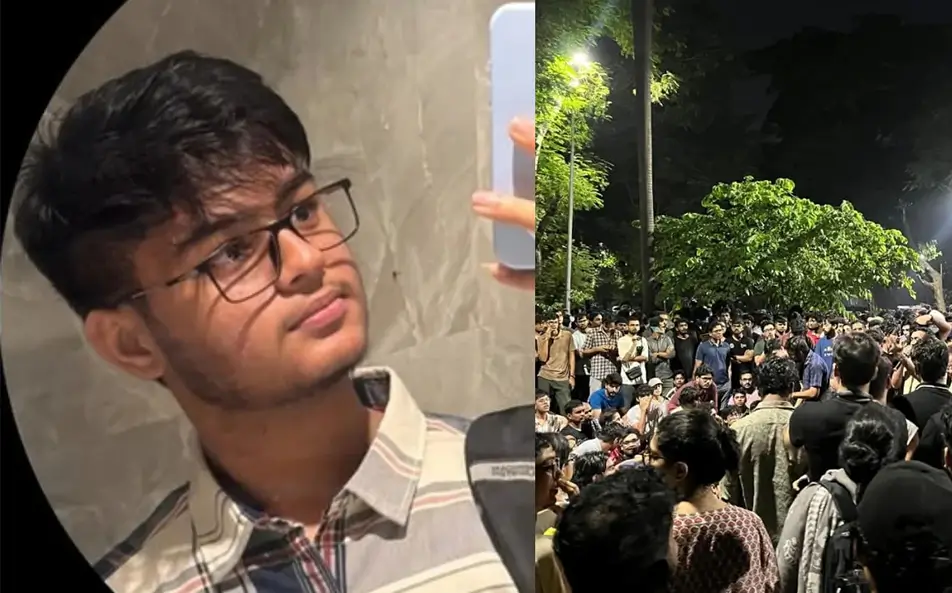
Police say the 22-year-old was allegedly attacked after an argument inside a Mumbai local train and later died from his injuries.
The dispute allegedly began when passengers asked a man standing near an open train door to close it because rainwater was entering the compartment.
The Government Railway Police arrested Roshan Suvarna. The allegations against him have not yet been proven in court.
Investigators reportedly examined footage from more than 400 CCTV cameras and used technical information and local intelligence to locate him in Panvel.
The incident has renewed demands for stronger train patrols, faster emergency assistance and better security monitoring across Mumbai’s suburban railway network.



Sep 24, 2026
TUI Staff
Sep 23, 2026
TUI Staff
Sep 22, 2026
TUI Staff
Sep 21, 2026
TUI Staff
Sep 24, 2026
TUI Staff
Sep 23, 2026
TUI Staff
Sep 22, 2026
TUI Staff
Sep 21, 2026
TUI Staff

Stay informed with independent, fact-checked journalism on technology, environment, government, economy and more. India’s most trusted digital news platform.




Comments (0)
Be the first to comment!