
Smoking in Public Places: 5.7 Lakh Fined in India, Karnataka Leads Enforcement
One Law, Uneven Enforcement
 IN
Wed, Sep 23, 2026 | 08:31 AM IST
IN
Wed, Sep 23, 2026 | 08:31 AM IST

More than 5.7 lakh people were fined across India for violating public-smoking rules in 2025-26, with authorities collecting over ₹5.1 crore in penalties, according to data tabled in the Rajya Sabha. The figures, reported by The Times of India, show a striking difference in enforcement between states. Karnataka alone issued 1,59,041 challans, while five states and Union Territories reported no challans at all. The numbers underline an old challenge with smoking in public places: India has had a national prohibition for more than two decades, but enforcement varies sharply depending on where a person lives.
Karnataka recorded the highest number of challans in 2025-26, issuing 1,59,041 and collecting more than ₹1.4 crore. Rajasthan came second with 99,789 challans, followed by Andhra Pradesh with 55,850, Tamil Nadu with 47,941 and Uttarakhand with 40,545. Together, these five states accounted for roughly 4.03 lakh challans—about seven in every 10 of the more than 5.7 lakh reported nationally. That concentration shows why the national total needs context. A large share of enforcement activity came from a relatively small group of states rather than being evenly distributed across India.
The national prohibition comes from Section 4 of the Cigarettes and Other Tobacco Products Act, commonly known as COTPA. The provision prohibits smoking in public places, subject to limited exceptions for designated smoking areas in certain large hotels, restaurants and airports. Section 21 of the central law provides a fine of up to ₹200 for violating Section 4.
That remains the general penalty for smoking in public places in India under the central statute.
However, there is an important state-level exception. Karnataka amended the law applicable within the state in 2025. Its amendment broadened Section 4 to cover the use of tobacco products in public places, including smoking and spitting, and increased the maximum penalty from ₹200 to ₹1,000. The earlier claim that the ₹200 cap has remained unchanged everywhere in India should therefore be removed.
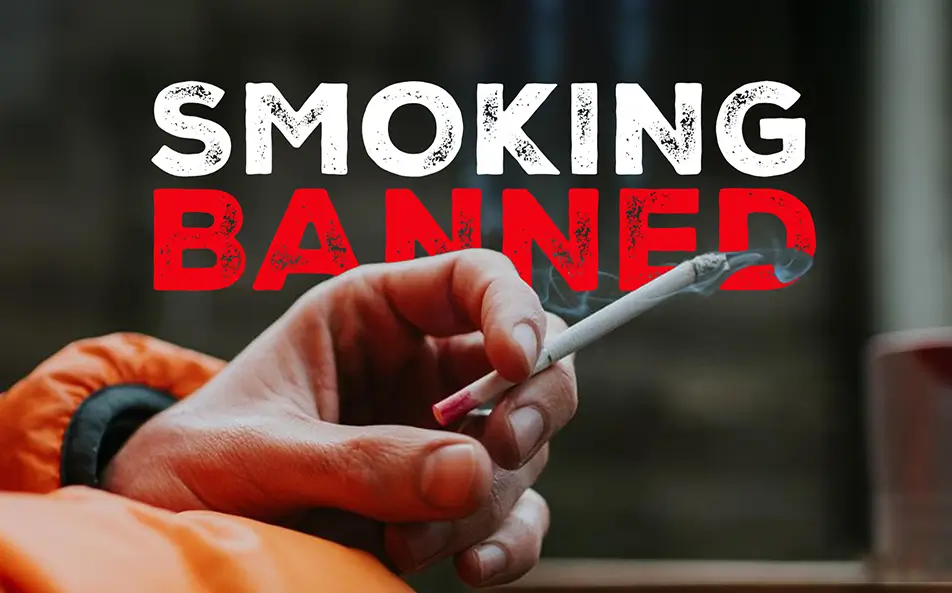
The parliamentary data showed no challans or fines for Assam, Chandigarh, Manipur, Puducherry and Telangana during 2025-26. That does not necessarily mean nobody violated the ban or that authorities conducted no enforcement activity. The figures are based on information reported through the government system. A zero entry can demonstrate a large gap in recorded enforcement, but the available data alone cannot establish whether that gap resulted from no action being taken, incomplete reporting or another administrative reason.
It is therefore safer to say these jurisdictions reported zero challans, rather than concluding that the law existed “only on paper.”
Delhi reported 574 challans and approximately ₹2.5 lakh in penalties during the same financial year. That figure is dramatically below Karnataka’s total, but a direct comparison also needs caution. Karnataka is an entire state with a much larger population and geographical area, while Delhi is a Union Territory and National Capital Territory. Raw challan totals do not account for population, smoking prevalence, enforcement staffing or the number of inspections conducted. Still, a difference of 574 versus more than 1.59 lakh shows how uneven recorded implementation of the prohibition can be.
Using the rounded national figures, the average collection works out to roughly ₹90 per reported challan. But that figure should be treated only as an approximation because the parliamentary totals were reported as “more than” 5.7 lakh challans and “more than” ₹5.1 crore. It is also complicated by state-specific laws such as Karnataka’s higher penalty.
The central penalty for smoking in public places in India remains up to ₹200 under Section 21 of COTPA. Whether that amount provides a strong deterrent is a policy question rather than something the Rajya Sabha numbers alone can establish. The Ministry has previously said that implementing the public-smoking prohibition primarily rests with states and Union Territories, while the Centre issues rules, advisories and enforcement guidance.
India’s tobacco burden is large, but the figures need to be compared carefully. The Global Adult Tobacco Survey conducted in 2016-17 estimated that 26.68 crore Indians aged 15 and above used tobacco in some form. But that number included smokeless tobacco products as well as cigarettes and other smoked products. The same survey estimated approximately 9.95 crore adult smokers. Public-smoking challans therefore should not be measured directly against all 26.68 crore tobacco users. They capture only detected violations of rules against smoking in public places, not overall tobacco consumption.
The Centre has repeatedly said implementation of the Cigarettes and Other Tobacco Products Act largely depends on state and Union Territory authorities. The National Tobacco Control Programme lists enforcement squads across states, but their numbers vary considerably. Karnataka, for example, was listed with hundreds of enforcement squads, while some smaller jurisdictions had only a handful. Local police, municipal authorities, health departments and other authorised officers may all play roles in enforcement. That decentralised structure can produce very different outcomes even though the underlying national prohibition is the same.
The strongest takeaway is not simply that India fined 5.7 lakh people. It is that recorded enforcement is highly concentrated. Karnataka, Rajasthan, Andhra Pradesh, Tamil Nadu and Uttarakhand generated roughly 71% of the reported challans, while five states and Union Territories recorded none. That gap deserves scrutiny, but the data cannot by itself tell us whether it reflects different smoking behaviour, stronger enforcement, better reporting systems or a combination of all three. The law is clear. The more difficult question is how consistently that law is enforced from one state to another.
Everything you need to know
More than 5.7 lakh people were fined for smoking in public places across India in 2025-26, with authorities collecting over Rs 5.1 crore in penalties, according to data tabled in the Rajya Sabha and reported by The Times of India.
Karnataka recorded the highest number of challans at 1,59,041 and also collected the most in fines, over Rs 1.4 crore, followed by Rajasthan, Andhra Pradesh, Tamil Nadu and Uttarakhand.
Under Section 4 and Section 21 of the Cigarettes and Other Tobacco Products Act (COTPA), smoking in public places is prohibited and violators can be fined up to Rs 200.





Sep 21, 2026
TUI Staff
Sep 21, 2026
TUI Staff
Sep 19, 2026
TUI Staff
Sep 19, 2026
TUI Staff
Sep 22, 2026
TUI Staff
Sep 21, 2026
TUI Staff
Sep 21, 2026
TUI Staff
Sep 21, 2026
TUI Staff

Stay informed with independent, fact-checked journalism on technology, environment, government, economy and more. India’s most trusted digital news platform.







Comments (0)
Be the first to comment!