
Pankaj Tripathi’s Ohh My Dog Is More Than a Film About a Pet. Here’s What He Wants Audiences to Learn
Pankaj Tripathi explains why empathy, authenticity and local stories can cross borders
 IN
Wed, Sep 23, 2026 | 08:51 PM IST
IN
Wed, Sep 23, 2026 | 08:51 PM IST


What if a film about a dog is actually asking us to look at ourselves?
That is the interesting question sitting underneath Ohh My Dog.
The new family entertainer starring Pankaj Tripathi is built around a child, a dog and a bond that slowly changes the way they see each other. But for Tripathi, the film carries a message that goes beyond a cute pet story.
It is about fear. Understanding. And, most importantly, empathy.
While discussing the film with Hindustan Times, Tripathi also spoke about something much bigger: why Indian films are increasingly finding audiences outside the country. His answer may sound surprising - they are going more local.
And that idea connects beautifully with what Ohh My Dog is trying to say.
Tripathi believes that many people who are uncomfortable around animals are not necessarily against them. They may simply be afraid because they don't understand them.
His hope is that Ohh My Dog encourages audiences to look at animals differently.
That means going beyond the obvious "dogs are cute" conversation.
Animals have their own behaviour, fears and boundaries. Living with them also means understanding their needs rather than treating them like accessories or possessions.
At its heart, the film asks viewers to replace fear with familiarity.
And that is a message children can understand easily - perhaps even better than adults.
The simple idea behind Tripathi's message is this: understanding can be the first step towards empathy.
Directed by Amit Rai, Ohh My Dog places a child and a dog at the centre of its story. The film released in theatres on August 7, 2026, after its original July 31 release was pushed by a week because of the crowded theatrical calendar.
The film isn't simply using a dog as a cute screen attraction.
Its story revolves around the relationship between humans and animals, with themes of friendship, loyalty, rescue and trust. Early audience reactions after release have also focused on the warmth of that human-animal bond.
That makes the film accessible even to people who don't own pets.
You don't have to be a dog lover to understand friendship.
You don't have to own an animal to understand attachment.
And you certainly don't need to speak the same language to understand fear, affection or trust.
That last point is important because it leads directly to Tripathi's larger argument about Indian storytelling.
In his Hindustan Times conversation, Tripathi described empathy as a core value of Indian emotion. He also pointed towards India's extraordinary cultural diversity - its festivals, traditions, regions and communities - as a natural source of stories.
His point is simple: when filmmakers present these things honestly, audiences outside India can connect with them too.
Why?
A story does not have to lose its identity to cross a border.
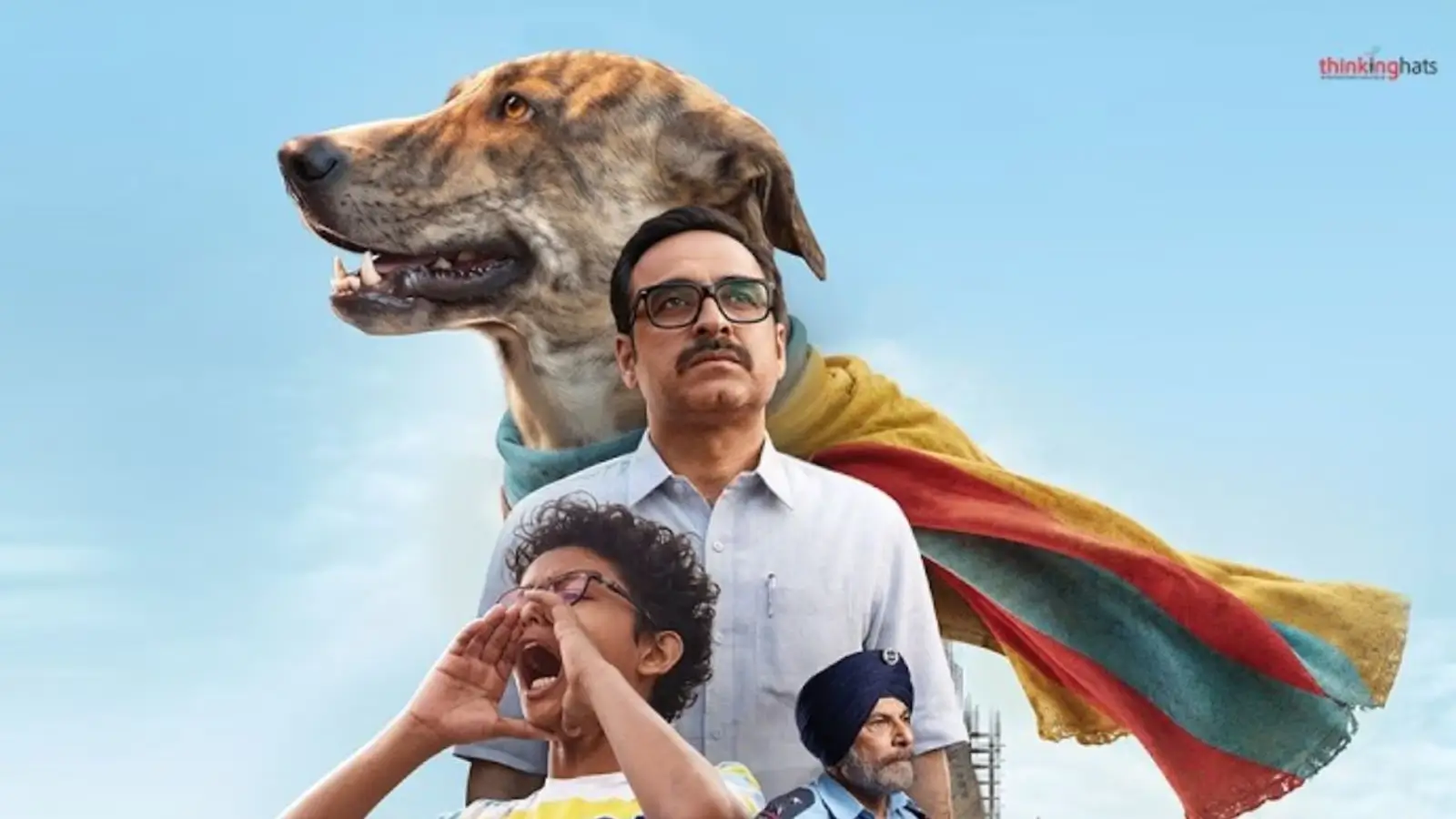
Img Src : Money Control
One of the most interesting observations from Tripathi's interview was his comment:
"Pehle writers Mumbai se Bharat ko samajhte the."
He was referring to a time when some writers tried to understand the larger India while working from Mumbai.
The point isn't really about Mumbai.
It is about perspective.
Mainstream Hindi cinema has often focused on metropolitan lives, urban aspirations and stories designed for city audiences. Smaller towns and rural India were certainly present, but they did not always receive the same attention.
Tripathi believes that the picture has changed.
In the Hindustan Times interview, he specifically mentioned filmmakers such as Anurag Basu from Bhilai, Imtiaz Ali from Jamshedpur and Tigmanshu Dhulia from Allahabad, saying they came to Mumbai after experiencing literature, culture and the wider world.
What did they bring with them?
And that can change the way a story feels on screen.
Here is the apparent contradiction:
Why would becoming more local help a film become more global?
Because audiences don't necessarily want every film to look familiar.
Sometimes, they want to discover something.
That is why rooted storytelling can be so powerful.
Consider some of the Indian films that have attracted international attention in recent years.
RRR took Telugu cinema's scale and energy to a worldwide audience. The Elephant Whisperers brought an intimate story of people and elephants to the global stage. And Payal Kapadia's All We Imagine as Light, centred on the lives of two nurses in Mumbai, won the Grand Prix at the 2024 Cannes Film Festival.
These films are very different.
But none of them needed to hide their Indian identity.
That is the point Tripathi is making.
Local detail creates curiosity. Universal emotion creates connection.
The growing international visibility of Indian cinema isn't limited to film festivals.
Major award shows have also given Indian films important global moments.
At the 95th Academy Awards in 2023, RRR's "Naatu Naatu" won the Oscar for Best Original Song. The Elephant Whisperers also won the Academy Award for Best Documentary Short Film.
Then came another major moment at Cannes.
All We Imagine as Light became the first Indian film in three decades to compete for the Palme d'Or and eventually won the Grand Prix, one of the festival's top honours. The official Cannes record confirms its 2024 Grand Prix win.
These wins do not mean that every Indian film has suddenly become an international success.
They do show something else.
Indian stories are getting more opportunities to be seen, discussed and discovered outside India.
And once audiences discover one story, they may become curious about another.
That is how a wider cinematic ecosystem grows.
At first, the connection may seem odd.
What does a family film about a dog have to do with Cannes, Oscars or the global rise of Indian cinema?
More than you might think.
Both rely on an emotion that doesn't need translation.
Ohh My Dog works with ideas such as companionship, fear, loyalty and empathy. These are not uniquely Indian emotions. But they can still be explored through an Indian story and Indian characters.
That is the same balance Tripathi sees in Indian cinema.
Keep the setting rooted. Let the emotion travel.
The film's director Amit Rai has also spoken about choosing Ohh My Dog after the success of OMG 2, despite having opportunities to pursue a bigger commercial project. He said his priority was the story rather than the budget or star power.
That choice adds another layer to the conversation.
Sometimes, a film doesn't need to be bigger.
It simply needs to have something worth saying.
If you strip away the film promotion and the larger conversation around cinema, Tripathi's message is surprisingly simple.
Don't fear what you don't understand.
Understand animals before judging them.
Understand cultures before making assumptions about them.
And perhaps understand a story on its own terms before deciding whether it can connect with you.
That is also why his comments about Ohh My Dog fit so naturally with his views on Indian cinema.
Both are about looking beyond the surface.
A dog is not just a pet.
A local story is not just a "small" story.
And an Indian film does not have to imitate another country's cinema to find an audience there.
The global journey of Indian cinema isn't necessarily about becoming more Western or more "international".
It may be about becoming more honest.
More regional.
More rooted.
More comfortable with the many Indias that exist beyond the usual metropolitan lens.
That may be the most interesting part of Tripathi's observation.
A film about a dog can start a conversation about empathy.
A story from a smaller town can reach someone thousands of kilometres away.
A regional culture can become a global discovery.
And a deeply Indian emotion can make complete sense without translation.
Maybe the road from local to global was never really a straight line.
Sometimes, the road to the world begins by going home.
Everything you need to know
Ohh My Dog is a family film centred on the bond between a child and a dog. The film explores friendship, trust, fear and empathy towards animals.
Pankaj Tripathi said Indian cinema is reaching global audiences by becoming more rooted in local cultures, traditions and authentic Indian emotions.
Pankaj Tripathi believes empathy helps people understand what they fear or don't know. In the context of Ohh My Dog, he hopes audiences develop greater understanding towards animals.
He was referring to a period when some writers tried to understand India's diverse realities from a largely Mumbai-centric perspective. He believes more filmmakers now bring experiences from smaller towns and different regions into mainstream cinema.
Indian films are increasingly reaching international audiences through film festivals, streaming platforms and global award shows. Rooted stories combined with universal emotions have helped several Indian films connect with viewers worldwide.



Sep 23, 2026
TUI Staff
Sep 23, 2026
TUI Staff
Sep 23, 2026
TUI Staff
Sep 19, 2026
TUI Staff
Sep 23, 2026
TUI Staff
Sep 22, 2026
TUI Staff
Sep 21, 2026
TUI Staff
Sep 21, 2026
TUI Staff

Stay informed with independent, fact-checked journalism on technology, environment, government, economy and more. India’s most trusted digital news platform.



Comments (0)
Be the first to comment!