
Stock Market Today: Sensex Ends Higher as RBI Holds Repo Rate at 5.25%, Nifty Stays Flat
Rate Pause, Market Caution
 IN
Sat, Sep 19, 2026 | 09:15 PM IST
IN
Sat, Sep 19, 2026 | 09:15 PM IST

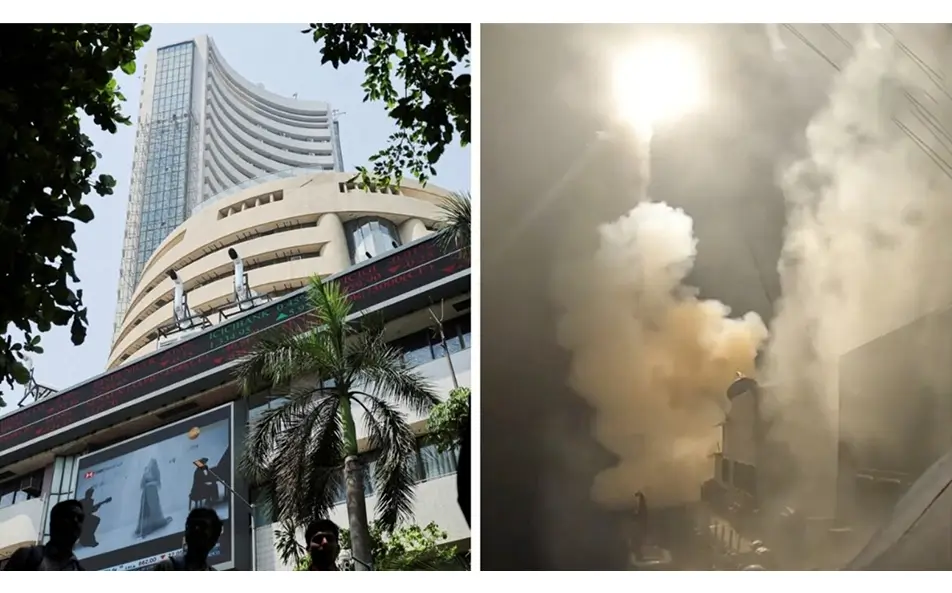
Indian equity benchmarks traded cautiously on Wednesday, August 5, 2026, before ending with modest gains after the Reserve Bank of India kept its benchmark interest rate unchanged. At 9:37 am, the Sensex was up 0.44% at 78,775. The Nifty was almost unchanged, falling 0.02% to 24,610.20 as investors waited for the central bank’s policy announcement.
The RBI later held the repo rate at 5.25%, retained its neutral stance and indicated that future decisions would depend on inflation, oil prices, growth and other incoming economic data.
The cautious early trade partly reflected expectations surrounding the RBI MPC meeting. A Reuters poll showed that 68 of 72 economists expected the central bank to leave the repo rate unchanged. However, the difference between the two benchmark indices was not driven only by monetary policy.
Hindustan Times and Reuters reported that the Sensex and Nifty had been showing unusual divergence following the introduction of a new closing auction mechanism for shares with futures and options contracts. The system changed how official closing prices are determined and created short-term uncertainty among traders. The early Sensex today gain should therefore be described as a combination of positive market sentiment, index-specific movements and pre-policy caution—not simply as a reaction to expectations of unchanged interest rates.
The RBI’s six-member Monetary Policy Committee unanimously voted to keep the repo rate at 5.25%. It also retained the neutral monetary policy stance, giving the central bank flexibility to raise, lower or maintain rates depending on future economic conditions. The decision marked the fourth consecutive meeting at which the repo rate remained unchanged. The rate had last been reduced in December 2025, when the RBI cut it by 25 basis points from 5.50% to 5.25%. It has remained at that level throughout the policy meetings held so far in 2026.
The earlier draft incorrectly stated that the RBI had reduced rates by a cumulative 100 basis points before pausing. The central bank reduced the repo rate from 6.50% to 5.25% during 2025, representing a total reduction of 125 basis points. The cuts included:
The RBI is now assessing how those reductions are affecting borrowing, consumption, credit growth and inflation before making another move.
The policy announcement contained a slightly stronger economic outlook than the previous review. The RBI raised its GDP growth forecast for the 2026-27 financial year from 6.6% to 6.7%. It also lowered its average inflation projection from 5.1% to 5%. Governor Sanjay Malhotra said headline inflation had risen above the central bank’s 4% target largely because of higher fuel prices. However, wider price pressures remained contained. The RBI also lowered its core inflation forecast, which excludes food and fuel, from 4.7% to 4.3%. These revisions suggest that the central bank sees domestic growth as relatively resilient while remaining cautious about oil prices, the monsoon and geopolitical risks.
Indian shares retained modest gains after the policy announcement. By the end of the session, the Sensex had gained 0.19% to close at 78,581. The Nifty finished only slightly higher and remained above the 24,600 level. The earlier draft’s post-policy Nifty figure of 24,652.7 should not be used. That number relates to an older market report from October 2025 rather than the August 2026 policy announcement. The muted closing performance shows that the unchanged rate decision had largely been priced in before the announcement. Higher crude-oil prices and uncertainty surrounding the new closing auction mechanism also prevented the benchmarks from holding all their intraday gains.
An unchanged repo rate means the RBI has neither added to nor reduced borrowing costs through the policy rate at this meeting. Home-loan, vehicle-loan and business-loan customers should not assume that their EMIs will automatically change immediately. The effect depends on whether a loan carries a fixed or floating rate, the benchmark used by the lender and the timing of the loan’s interest-rate reset. Borrowers may still see the delayed effects of the rate reductions made during 2025 as banks and other lenders adjust their lending and deposit rates.
Banks, non-banking financial companies, automobile manufacturers and property companies are often considered rate-sensitive because interest costs can influence loan demand and business activity. However, a rate hold does not affect every rate-sensitive sector in the same way. On August 5, the Nifty Bank index declined 0.3%. HDFC Bank fell 0.9%, while ICICI Bank lost 0.3%. Reuters cited analysts who said an extended period of unchanged or lower rates could pressure bank margins while offering support to some non-bank lenders. It would therefore be inaccurate to claim that the RBI pause automatically benefited all bank and financial stocks.
The next major market signals are likely to come from:
The latest stock market today movement shows that investors were not surprised by the rate decision. The more important information came from the RBI’s assessment of inflation and economic growth. For now, the central bank has chosen stability. The repo rate remains at 5.25%, the Sensex ended modestly higher, and the Nifty remained close to the level at which it began the session.
Everything you need to know
Indian benchmarks ended with modest gains after the RBI kept the repo rate unchanged at 5.25%, according to the draft and current policy reports.
The RBI Monetary Policy Committee kept the repo rate unchanged at 5.25% and maintained a cautious, data-dependent approach.
The draft explains that the divergence was linked to index-specific movements, pre-policy caution and uncertainty around the new closing auction mechanism.
Borrowers should not expect automatic EMI changes immediately. The impact depends on loan type, lender benchmark and interest-rate reset timing.
Investors should track inflation data, crude-oil prices, monsoon progress, corporate earnings, bank credit growth and foreign investor flows.




Sep 19, 2026
TUI Staff
Sep 19, 2026
TUI Staff
Sep 16, 2026
TUI Staff
Sep 16, 2026
TUI Staff
Sep 19, 2026
TUI Staff
Sep 19, 2026
TUI Staff
Sep 17, 2026
TUI Staff
Sep 17, 2026
TUI Staff

Stay informed with independent, fact-checked journalism on technology, environment, government, economy and more. India’s most trusted digital news platform.







Comments (0)
Be the first to comment!