
Should You Buy Stocks, Gold or Silver in September? Don’t Skip This Before Making Your Next Investment
Quality Stocks, Not Blind Bets
 IN
Sun, Oct 18, 2026 | 04:41 PM IST
IN
Sun, Oct 18, 2026 | 04:41 PM IST

This article is for educational and informational purposes only and does not constitute financial advice.
What are the top shares to buy in India in September 2026? And after the massive rally in precious metals, is it worth investing in gold and silver now? There is no single stock guaranteed to deliver returns this month. But the current market does offer a clearer way to build a shortlist. India's economy grew 7.8% in the April-June quarter, corporate earnings among Nifty 50 companies recently recorded their strongest growth in 10 quarters, and foreign investors put $3.1 billion into Indian equities during August — their strongest monthly buying in almost two years. At the same time, crude oil near $95, the Iran-US conflict and elevated global bond yields remain significant risks.
That combination favours companies with strong balance sheets, visible earnings growth and pricing power rather than purely speculative small-cap bets. Based on the latest quarterly results and sector trends, ICICI Bank, Reliance Industries, Bharti Airtel and Larsen & Toubro stand out as stocks worth researching for September. This is an educational market analysis, not personalised financial advice. The correct stock and allocation depend on an investor's time horizon, risk tolerance and existing portfolio.
The domestic backdrop remains relatively supportive. India's June-quarter GDP expanded 7.8%, comfortably ahead of the 7.1% consensus estimate in a Reuters poll. Investment, manufacturing and domestic demand were major contributors. Corporate earnings have also improved. Reuters reported that average profit growth among Nifty 50 companies reached approximately 18% in the June quarter, the highest in 10 quarters. Reliance Industries and Bharti Airtel were among the companies contributing strongly to that improvement.
The RBI, meanwhile, kept the repo rate unchanged at 5.25% on August 5 and maintained a neutral stance. It projected FY27 growth at 6.7% and inflation at around 5%, signalling that the central bank is not rushing into another major policy move while energy prices remain uncertain. There is also more liquidity in India's banking system after banks attracted enormous foreign-currency deposits under RBI schemes designed to support the rupee. Reuters reported banking-system liquidity at a record ₹9.7 trillion surplus on September 3.
That creates a constructive setup for selected financial stocks.
Rather than treating these companies as automatic buys at any price, investors can use them as a research shortlist.
| Stock | Why it stands out | Main risk |
|---|---|---|
| ICICI Bank | Strong loan growth, improving asset quality and profit growth | Deposit growth trailing loans |
| Reliance Industries | Diversified exposure to Jio, retail, energy and new-energy projects | Oil volatility and large capex requirements |
| Bharti Airtel | Rising ARPU, strong data demand and profit growth | Premium valuation and telecom competition |
| Larsen & Toubro | Record-scale order book and infrastructure exposure | Execution delays and project-cycle risks |
Among India's major private lenders, ICICI Bank currently has one of the cleaner combinations of growth, profitability and asset quality. Its June-quarter standalone profit increased 15.9% year-on-year to ₹14,805 crore, beating estimates. Net interest income rose 12.7%, while its domestic loan portfolio expanded nearly 19%.
Its gross NPA ratio improved to 1.38%, while net NPAs stood at just 0.35%. ICICI Bank has also benefited from the recent wave of foreign-currency deposits. The bank mobilised around $17.9 billion under the RBI's special foreign-currency deposit scheme by August 31. That additional funding could help support balance-sheet growth at a time when liquidity has become increasingly valuable.
The main issue to monitor is deposit growth. Deposits increased 14% compared with loan growth of nearly 20%, meaning the bank cannot indefinitely expand lending faster than its funding base. Still, among large financial stocks, ICICI Bank currently offers one of the more convincing fundamental cases.
Reliance Industries remains difficult to evaluate as a single business because investors are effectively buying exposure to several businesses at once. There is energy. There is Reliance Retail. There is Jio. There is consumer goods. And increasingly, there is new energy.
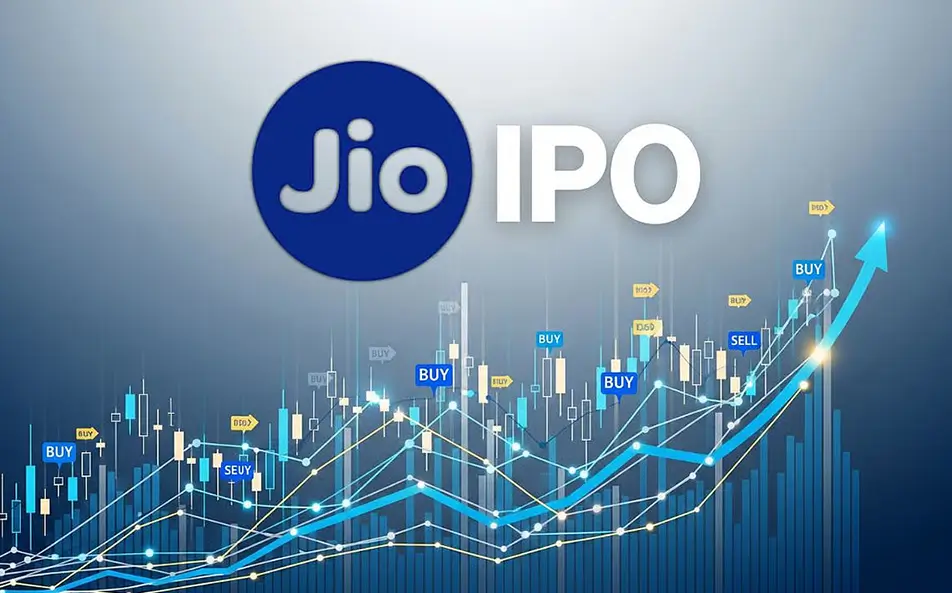
The company's June-quarter results beat analysts' profit expectations, helped by strong performance across oil-to-chemicals, telecom and retail. Oil-to-chemicals earnings rose 17.2%, while Jio Platforms' core earnings grew 15.1%. Jio had around 533 million subscribers, with average revenue per user reaching ₹215.6. Reliance has also said its new-energy projects remain on track for phased commissioning during the current financial year. Another catalyst investors continue to watch is a potential Jio Platforms IPO.
The downside is complexity. Higher crude can benefit parts of Reliance's refining business while hurting other sections of the Indian economy, and the company's enormous investment programme requires consistent execution. But for someone searching for a diversified large-cap Indian business rather than a short-term trade, Reliance remains difficult to ignore.
Bharti Airtel has one of the clearest earnings stories among major Indian consumer-facing businesses. Its June-quarter consolidated net profit jumped more than 37% to ₹8,167 crore, while revenue increased over 18% to ₹58,539 crore. More importantly, average revenue per user — one of the industry's key profitability metrics — increased from ₹250 to ₹264.
The company's opportunity is no longer simply adding more mobile users. Growth increasingly comes from encouraging existing users to consume more data, migrate from 2G to 4G and 5G, move towards postpaid plans and adopt premium services.
Data consumption per user rose 9.6% in the June quarter, while overall traffic increased about 11%. Airtel is also expanding its broadband and homes business.
The risk is valuation. A high-quality growth story can still become a bad investment if investors pay too much for it. So Airtel may be better suited to staggered accumulation than chasing the stock after a sharp rally.
If India's investment cycle continues, Larsen & Toubro remains one of the most direct large-cap ways to participate. L&T's total order book stood at approximately ₹7.79 trillion at the end of June 2026, up 27% from a year earlier. About 45% of that order book comes from infrastructure and utilities, 28% from conventional energy and 19% from green energy.
Importantly, the business is geographically diversified.
Around 48% of its order book is domestic and 52% international. That means L&T is exposed not only to Indian government infrastructure spending but also to energy and construction investment across international markets, including the Middle East. The biggest risks are execution, project delays, cost inflation and a slowdown in government or private capital expenditure. But if India's investment and infrastructure cycle remains strong, L&T deserves a place on a September watchlist.
Not necessarily. A strong company and a good entry price are two separate questions. A stock can report excellent earnings and still fall because investors had already priced in even stronger growth. That is why buyers should check valuation, recent price movement, company filings and upcoming results before placing an order.One practical approach in volatile markets is to invest gradually rather than commit the entire intended amount on one day.
This matters particularly in September because geopolitical developments around Iran, crude oil and US interest rates can move Indian markets sharply even when nothing has changed fundamentally inside the company being purchased.
Yes—but gold and silver serve different purposes from equities, and investors should not chase them simply because prices have risen. Gold has had an extraordinary year. On September 3, international spot gold traded around $4,422 per ounce. In India, 24K gold was trading at approximately ₹1,52,000–₹1,54,000 per 10 grams, or roughly ₹15,200–₹15,400 per gram, depending on the city and market benchmark.
Gold's appeal is strongest as portfolio insurance. Geopolitical uncertainty, currency weakness, inflation concerns and financial-market stress can all increase demand for it.
The drawback is simple: gold does not generate earnings, dividends or cash flow. After a major rally, its short-term price can also correct sharply. So is it worth investing in gold? For investors who currently have little or no exposure, gradually building a modest long-term allocation can make sense. Buying aggressively because prices recently hit records is a different and much riskier strategy.
Silver is more complicated. On September 3, international silver was trading around $65.79 per ounce. In India, silver prices were approximately ₹2,30,000–₹2,38,000 per kilogram, equivalent to about ₹230–₹238 per gram, depending on the market and location. Silver increased strongly during August and remains supported by both investment demand and industrial uses. That gives it potentially greater upside than gold during strong commodity cycles. But it also makes silver more volatile. Gold is primarily viewed as a monetary and safe-haven asset. Silver behaves partly like a precious metal and partly like an industrial commodity.
During strong economic periods, industrial demand can help. During downturns, that same exposure can hurt. So investors choosing between the two should think of gold as the more defensive asset and silver as the higher-risk commodity allocation.
The answer depends on what the money is supposed to accomplish. Equities such as ICICI Bank, Reliance Industries, Bharti Airtel and L&T provide exposure to businesses that can grow earnings over years. Gold provides diversification and protection against certain economic and geopolitical shocks. Silver provides some of that precious-metal exposure but with considerably more price volatility.
They therefore do not have to be competing choices. A diversified portfolio can own equities for long-term growth while maintaining some precious-metal exposure for diversification. The mistake is treating September's strongest-performing asset as automatically the best investment for the next five years.
Three variables matter particularly this month. The first is crude oil. India imports most of its crude requirements, and a prolonged period near or above $95 can increase inflation, weaken corporate margins and pressure the rupee. The second is US interest rates. Gold, silver and emerging-market equities are all reacting sharply to changes in Federal Reserve expectations.
The third is earnings. Company-specific earnings remain more useful for long-term investors than daily price targets from social media. Before acting on any recommendation, check the latest NSE or BSE filing and confirm that whoever is providing formal investment advice is appropriately registered under SEBI rules.
There is no guaranteed top share to buy. But current fundamentals give investors a reasonable starting point.
ICICI Bank stands out for banking growth and asset quality.
Reliance Industries offers diversified exposure across telecom, retail and energy.
Bharti Airtel combines rising telecom monetisation with strong earnings growth.
Larsen & Toubro provides exposure to India's infrastructure and capital-expenditure cycle. And outside equities, gold remains useful primarily as a diversification and protection asset, while silver offers higher potential volatility and risk. The better September strategy is therefore not to search for one magical stock, gold price or silver trade. It is to research quality assets, understand why you are investing and know how much loss you can realistically afford.
Financial Risk Disclaimer:
stock-market returns are never guaranteed. Past performance, strong earnings or favourable analyst expectations do not ensure future gains. Invest only after assessing your own financial situation and risk tolerance.
High-risk and frequent trading can also lead to serious financial losses. In one recent case covered by The United Indian, a software developer lost more than ₹2 crore after speculative stock trading became increasingly compulsive. Read the full story here: Software Developer Loses ₹2 Crore Trading Stocks: Lessons From a Trading Addiction.
Everything you need to know
There is no guaranteed top share to buy. Based on current earnings and sector trends, ICICI Bank, Reliance Industries, Bharti Airtel and Larsen & Toubro look like strong research candidates, but investors should check valuation and risk before investing.
ICICI Bank reported strong June-quarter performance, with loan growth of 19.6% year-on-year and a gross NPA ratio of 1.38%, making it one of the stronger large private-bank setups.
Reliance remains a major diversified large-cap stock because investors get exposure to energy, retail, Jio and new-energy projects. Jio’s June-quarter ARPU rose to ₹215.6, with subscribers crossing 533 million.
Gold can still work as portfolio insurance during geopolitical stress, inflation pressure and currency weakness. But investors should avoid buying aggressively after a sharp rally. As of September 3, spot gold traded around $4,422 per ounce, while Indian 24K gold rates were around ₹1.52 lakh to ₹1.54 lakh per 10 grams.
Silver may offer higher upside than gold in strong commodity cycles, but it is usually more volatile because it depends on both investment demand and industrial use. As of September 3, international silver traded around $65.79 per ounce, while Indian benchmarks were around ₹2.30 lakh to ₹2.38 lakh per kilogram.






Oct 16, 2026
TUI Staff
Oct 16, 2026
TUI Staff
Oct 16, 2026
TUI Staff
Oct 16, 2026
TUI Staff
Oct 17, 2026
TUI Staff
Oct 17, 2026
TUI Staff
Oct 15, 2026
TUI Staff
Oct 15, 2026
TUI Staff

Stay informed with independent, fact-checked journalism on technology, environment, government, economy and more. India’s most trusted digital news platform.




Comments (0)
Be the first to comment!