
Parking Lots Around the World: How Different Countries Are Making Parking Smarter
How cities worldwide are turning parking into smart infrastructure
 IN
Sun, Oct 25, 2026 | 07:12 PM IST
IN
Sun, Oct 25, 2026 | 07:12 PM IST


Imagine reaching a busy market or office district and knowing where you will park before you arrive. No circling.
That shift is already happening in cities around the world. Parking is becoming a managed urban service, using digital payments, sensors, automation, better pricing and greener design.
Parking affects more than drivers. When vehicles circle for spaces or spill onto roads and footpaths, they add to congestion and can make walking and cycling harder. India’s IRC:SP:12-2015 guidelines link parking management with urban growth, rising vehicle ownership, road safety and efficient urban transport.
Well-managed parking can improve how limited street space is shared. The goal is not simply to build more spaces. It is to make existing capacity easier to find, use and manage.
Smart systems reduce uncertainty between arriving and parking. Well-designed parking lots can guide drivers efficiently instead of forcing them to circle.
Digital payment is one of the simplest changes. Apps can replace paper tickets and let drivers start, extend or end sessions remotely. Sensors and cameras can show occupancy, while digital signs can guide drivers towards available spaces.
Boom gates are becoming part of connected parking systems. They can work with ticketing, RFID, cameras, digital payments and access-control software instead of serving only as entry barriers. Delhi's Parking Management Area Plan guidelines, for example, include automated boom barriers, RFID, electronic guidance systems, vacancy displays and online reservations among possible parking technologies.
Automated parking can also move vehicles into compact storage spaces. In dense areas, this can reduce the land needed for conventional surface parking.
Japan offers a useful example of parking design responding to land constraints. Mechanical and automated systems allow vehicles to be stored vertically or in compact arrangements rather than spreading every vehicle across a large surface area.
Japan is also examining automated valet parking technologies, including vehicle-transport robots.
Where land is scarce or expensive, using space vertically can make more sense than expanding surface capacity.
Singapore shows how parking can become almost invisible to the driver. Its system also shows how parking lots can be managed as a digital service rather than a static space.
Its Parking.sg app lets motorists pay by phone instead of displaying traditional paper coupons. Drivers enter their vehicle number, select the car park code and choose a duration. Charges are calculated by the minute. Users can receive an alert before expiry or extend the session remotely. If they leave early, unused time can be refunded.
This means drivers do not have to return to a vehicle simply to add more time.
Singapore is also developing roadside electronic parking, intended to let motorists start and end parking sessions through their vehicle’s on-board unit.
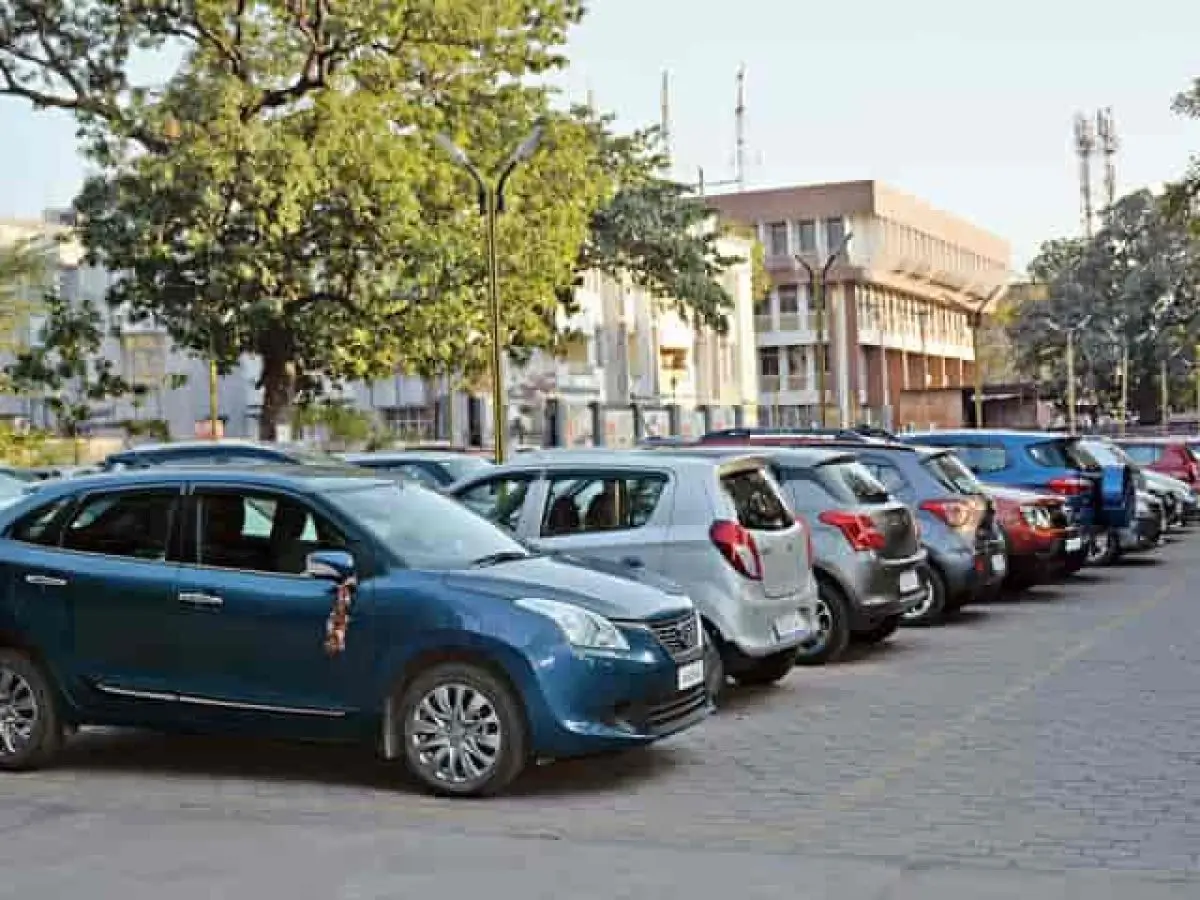
Img Src : Get My Parking
Some cities are questioning an old assumption: that new buildings should always provide a fixed minimum number of parking spaces.
Austin, Texas, took a major step in 2023 by eliminating minimum motor-vehicle parking requirements, while retaining accessible-parking requirements. The city noted that parking occupies developable land and can add to development costs.
The idea is not to remove parking everywhere. It is to let local demand, transport options and project design influence supply.
Land used for a rarely occupied space cannot simultaneously serve housing, shops, public space or landscaping.
India faces a different challenge. Growing vehicle ownership, dense commercial areas and limited road space make parking management especially important.
The Indian Roads Congress has guidelines covering parking systems, demand, restrictions and management. Delhi’s Parking Management Area Plan approach treats parking as part of a larger street-management system, bringing together parking, pedestrians, non-motorised transport, pricing, signage and technology.
A Government of India PPP case study on Delhi’s Karol Bagh multi-level parking project illustrates the pressure on urban parking. It reported that, as of January 2022, Delhi had 13.4 million registered vehicles, while public parking space was available for about 50,000 cars. The project used an automated puzzle parking system on MCD land and aimed to reduce roadside parking pressure.
For Indian cities, smarter car parkings can include digital payments, occupancy information, better enforcement, shared parking and pricing that encourages turnover.
Boom gates can also support organised car parkings by controlling entry and exit while connecting with digital payment and access systems. Delhi's parking guidelines specifically identify automated barriers and technology-enabled parking management as possible tools.
For Indian cities, smarter parking lots could become an important part of managing growing vehicle demand without giving every road more space to parked cars.
A parking area can create environmental problems when it relies heavily on asphalt and concrete. Impervious surfaces prevent rainwater from soaking into the ground and can increase stormwater runoff.
The US EPA recommends integrating green infrastructure into parking design. Permeable pavement, bioretention areas, bioswales and tree planting can help manage runoff, reduce heat and improve the experience of people walking through the area.
The EPA’s Edison project is testing permeable pavement and rain gardens to study stormwater performance. The facility uses porous asphalt, pervious concrete and permeable interlocking pavers alongside rain gardens.
The question is no longer only “Where can we fit more vehicles?” It is “How can the space work better for vehicles, people and the environment?”
There is no single global parking model that India can copy. Cities have different land prices, travel patterns and transport systems.
Key lessons include:
The future of parking is less about creating endless space and more about managing limited space intelligently.
The best system makes each space easier to find, easier to use and less damaging to the city around it.
Everything you need to know
Smart parking lots use technologies such as sensors, cameras, digital payments, occupancy systems and automated access to make parking easier to manage.
Japan uses compact mechanical and automated parking systems to make better use of limited urban space. It is also exploring automated valet parking technologies.
Singapore's Parking.sg app allows motorists to pay for parking through their phones, receive expiry alerts and extend parking sessions remotely.
Yes. Indian cities are increasingly exploring digital payments, parking management plans, automated barriers, occupancy information, multi-level parking and technology-enabled enforcement.
Parking consumes valuable urban land and can contribute to congestion and stormwater problems. Cities are therefore focusing on better management, efficient design and greener parking infrastructure.






Oct 21, 2026
TUI Staff
Oct 19, 2026
TUI Staff
Oct 19, 2026
TUI Staff
Oct 19, 2026
TUI Staff
Oct 25, 2026
TUI Staff
Oct 23, 2026
TUI Staff
Oct 23, 2026
TUI Staff
Oct 22, 2026
TUI Staff

Stay informed with independent, fact-checked journalism on technology, environment, government, economy and more. India’s most trusted digital news platform.






Comments (0)
Be the first to comment!