
India vs Japan Live Streaming: When, Where and How to Watch Suzuki Cup 2026
Japan’s biggest cricket match yet could introduce the sport to an entirely new audience.
 IN
Mon, Sep 21, 2026 | 06:16 PM IST
IN
Mon, Sep 21, 2026 | 06:16 PM IST


For a country where baseball and football dominate the sporting conversation, Japan Cricket is about to receive an opportunity it has never had before. Japan will face reigning T20 world champions India in a historic one-off international at Sano International Cricket Ground on September 22. The Suzuki Cup will mark the first men’s international meeting between the two countries and Japan’s first game against a full member of the International Cricket Council.
The significance stretches well beyond the result. The fixture arrives while Japan is hosting the 2026 Asian Games, where cricket is gaining unprecedented local visibility. It also gives the japan national cricket team a rare chance to measure itself against one of the sport’s strongest sides before beginning its own Games campaign. For the Japan Cricket Association, getting India to Sano is therefore not simply about staging one high-profile match. It is about putting cricket in front of Japanese sports fans who may have never seriously watched the game before.
The growth of Japan Cricket has been steady rather than spectacular. According to Hindustan Times, registered participation has risen from roughly 3,000 players to around 8,800 over the past 12 years, while the Japan Cup has expanded from about 12 teams in 2014 to more than 80 today. The challenge is turning that grassroots growth into mainstream attention.
Japan Cricket Association chief operating officer Alan Curr has pointed to the importance of major sporting events in giving cricket legitimacy inside a country with an established sporting culture.
The India vs Japan T20I provides precisely that kind of platform. India bring global recognition, star players and an enormous cricket audience. Japan bring a growing domestic programme, home conditions and the novelty of facing an elite cricket nation for the first time. Even a one-sided result could produce something valuable if the match attracts new spectators, junior players and commercial partners.
The India vs Japan match will be played as the Suzuki Cup at Sano International Cricket Ground in Tochigi Prefecture. The Japan Cricket Association has confirmed:
Date: September 22, 2026
Venue: Sano International Cricket Ground
Gates open: 11:00 AM JST
Match starts: 1:00 PM JST
Format: T20 International
The match starts at 1:00 PM JST (9:30 AM IST). In India, the match is reported to be live-streamed on FanCode and telecast on the Star Sports Network.
The fixture is being promoted as part of celebrations linked to 75 years of diplomatic relations between India and Japan. Suzuki Motor Corporation is the title partner, while the event is also supported by Japan’s Ministry of Foreign Affairs, the Embassy of India and Sano City. Interest has been strong enough for the JCA to release an additional limited batch of cancelled tickets in the days before the match. For anyone searching Japan vs India cricket, Tuesday’s fixture is not a routine bilateral game. It is a first for Japanese men’s international cricket.
The japan national cricket team has improved, but opportunities to face cricket’s biggest countries remain rare. Japan is an ICC Associate member and normally competes against other developing cricket nations rather than teams with the resources and depth of India. Recent performances have nevertheless offered signs of progress. Japan have recorded notable results against Associate opposition and, in a September 19 T20I against Hong Kong, reduced a significantly more experienced batting side to 36/5 before eventually losing by four wickets. Benjamin Ito-Davis took 3/11 in four overs.
Facing India takes that learning experience to another level. India’s pace, spin, power-hitting and fielding standards will expose weaknesses quickly. But that is precisely the type of information an emerging national team needs. A competitive cricket programme cannot develop only by playing opponents at the same level.
India are not treating the fixture purely as an exhibition. The BCCI has named Shreyas Iyer as captain of the squad that will play Japan and subsequently compete at the Asian Games.
India’s updated squad includes:
Shreyas Iyer (captain), Abhishek Sharma, Sanju Samson, Ishan Kishan, Shivam Dube, Tilak Varma, Axar Patel, Washington Sundar, Ravi Bishnoi, Jasprit Bumrah, Arshdeep Singh, Vaibhav Sooryavanshi, Yash Thakur and Vipraj Nigam.
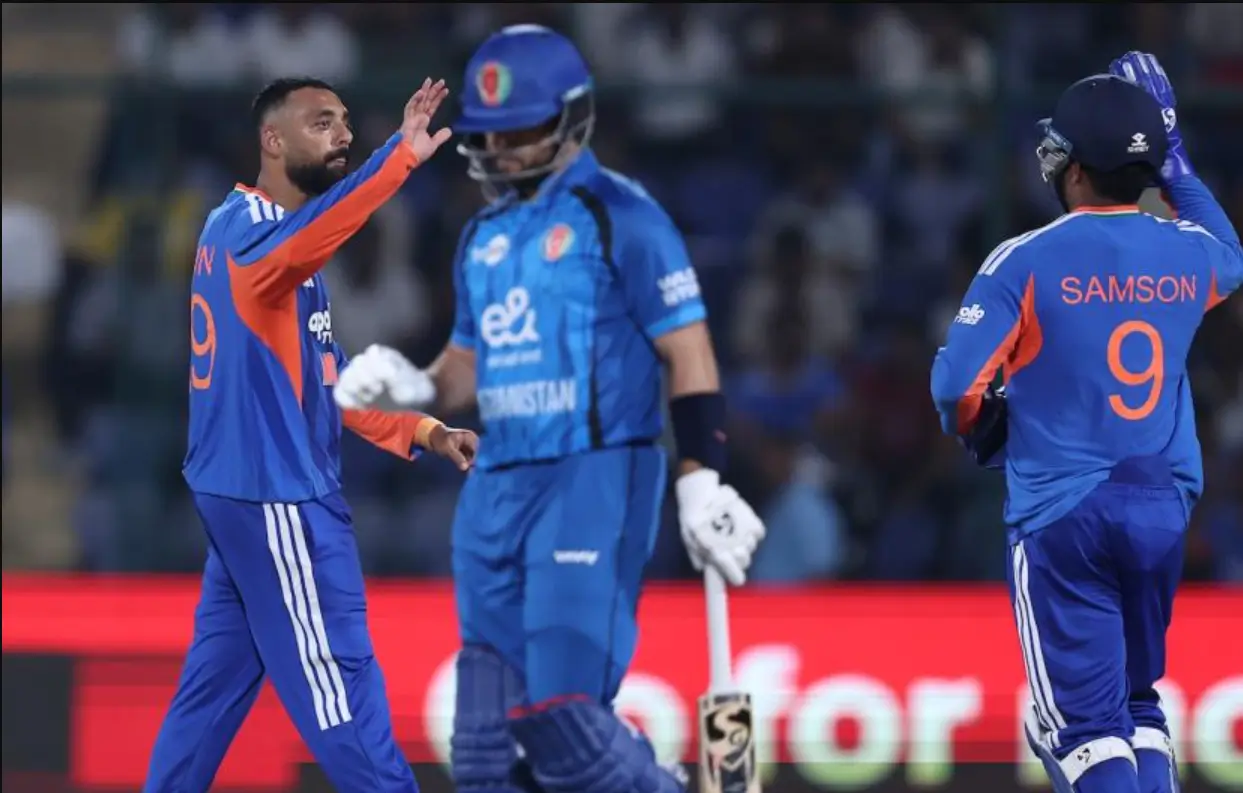
Varun Chakaravarthy was ruled out because of a side strain, with Vipraj Nigam replacing him. Nitish Kumar Reddy was withdrawn from the Games squad to play the West Indies ODI series instead. India arrive in Japan after completing a 3-0 T20I sweep against Afghanistan.
For the hosts, that makes the india vs Japan cricket fixture an unusually demanding assignment just before their continental campaign begins.
The timing is one of the reasons the match became possible. Both nations are preparing for men's cricket at the Aichi-Nagoya Asian Games, allowing India to use Sano as part of its preparation while giving Japan a rare bilateral fixture against elite opposition. The Games also matter enormously for cricket’s profile in Japan. Multi-sport competition brings the game into the same national conversation as established Olympic disciplines. That can introduce cricket to spectators who would never deliberately seek out an Associate-level bilateral series.
Japan’s women have already experienced that effect.
They faced India in the Asian Games quarter-final on September 18. Japan were bowled out for 57, and India completed an eight-wicket victory, but the JCA said the crowd response and attention around the match could help inspire new fans. The men’s Japan vs India cricket match now provides an even larger promotional opportunity.
After playing India on September 22, Japan have almost no time to reset. The men's team has been drawn in Group A alongside Afghanistan and Nepal.
Japan face Afghanistan on September 24 and Nepal on September 26. The top two teams in the group advance to the quarter-finals, where teams such as India, Pakistan, Bangladesh and Sri Lanka enter the competition. That creates a demanding sequence:
September 22: India at Sano
September 24: Afghanistan at the Asian Games
September 26: Nepal at the Asian Games
The india vs Japan cricket contest is therefore both a landmark occasion and a genuine high-level warm-up. There is little recovery time afterwards, making workload and travel management important for the hosts.
The Sano International Cricket Ground has an important role in the country’s development plans. The venue has been upgraded over several years, and preparations for the India game have included temporary spectator seating, hospitality areas, ticket infrastructure and additional event operations. Sano also provides something Japanese cricket urgently needs: a recognisable home.
The Japan Cricket Association’s current 2023-27 strategy aims to make cricket a sport that is visibly flourishing in the country by attracting more fans, players and commercial partners while competing more regularly on the international stage. The governing body has also expanded its “City of Cricket” model beyond its original Kanto base, including development work in Osaka and Miyagi. Facilities matter because increased participation cannot be sustained without grounds, coaches, competitions and pathways for young players.
Another factor behind Japan’s improvement is the emergence of players with Japanese heritage who developed their cricket in countries where the game is more established.
Some grew up in Australia, England or New Zealand before becoming involved with Japanese cricket. That gives the national programme access to players who already understand high-level cricket structures while also representing Japan through family connections. The trend accelerated after Japan qualified for its first Under-19 World Cup in 2020, a breakthrough that increased awareness of the national pathway.
Japan’s current men’s Games squad, captained by Kendel Fleming, contains a mix of established internationals and newer players. Ten members of the squad also played at the previous Asian Games in Hangzhou. Building that talent pool will be essential if Japan wants the Japan vs India cricket experience to become the beginning of a higher competitive level rather than a one-off spectacle.
Growth does not mean cricket is close to challenging baseball. One structural problem is Japan’s school-sports system. Many students specialise early in a single sport through organised school clubs. Cricket remains available in relatively few schools, making it difficult to compete with established sports for talented children during the years when sporting preferences are formed.
That is why visibility matters so much. A child who has never seen cricket is unlikely to choose it. A child who watches the india vs japan cricket match, sees the Games or encounters cricket through school and community programmes at least knows the option exists. Major events cannot replace grassroots development, but they can make that development easier.
Everything you need to know
The historic India vs Japan T20I will be played on September 22, 2026, at the Sano International Cricket Ground in Tochigi, Japan. The match starts at 1:00 PM JST (9:30 AM IST). In India, the match is reported to be live-streamed on FanCode and telecast on the Star Sports Network.
It is the first-ever international cricket match between India and Japan, and the first time ICC associate member Japan has faced a full-member nation at home. The Japan Cricket Association sees it, alongside the Asian Games, as a game-changer for raising cricket's profile domestically.
Both India and Japan move on to the Asian Games 2026 men's cricket tournament in Aichi-Nagoya, held from 24 September to 3 October 2026. India go directly into the quarterfinals, while Japan must navigate the group stage.



Sep 21, 2026
TUI Staff
Sep 21, 2026
TUI Staff
Sep 19, 2026
TUI Staff
Sep 18, 2026
TUI Staff
Sep 21, 2026
TUI Staff
Sep 21, 2026
TUI Staff
Sep 21, 2026
TUI Staff
Sep 21, 2026
TUI Staff

Stay informed with independent, fact-checked journalism on technology, environment, government, economy and more. India’s most trusted digital news platform.

Comments (0)
Be the first to comment!