
‘Ghor Paap’: PM Modi Breaks Silence on NEET Paper Leak Amid Student Protest Fury
Words Meet Student Anger
 IN
Tue, Oct 20, 2026 | 12:19 PM IST
IN
Tue, Oct 20, 2026 | 12:19 PM IST

PM Narendra Modi has called the NEET-UG 2026 leak a “ghor paap”, or grave sin, and urged strict punishment for those responsible. He made the remarks at the NDA Parliamentary Party meeting on July 21, 2026, where Union Parliamentary Affairs Minister Kiren Rijiju briefed reporters on the Prime Minister’s comments.
The timing matters. Modi’s remarks came a day after Delhi protests over the student exam row led to violent clashes between Cockroach Janta Party supporters and police near Parliament. Student anger over the exam leak also continued to dominate the Monsoon Session.
For lakhs of aspirants, the question now is simple: will the promise of strict punishment lead to real accountability, or will the issue remain stuck between court hearings, arrests and political blame?
According to ThePrint, Modi described the NEET paper leak as a grave sin and said the issue was not political but about the future of India’s youth. The government said it acted immediately after reports of the leak surfaced and that 13 people were arrested and sent to jail.
The re-examination was also given priority so that students’ futures were not affected. The government said the re-test was conducted successfully and results were declared without delay.
Indian Express reported that Modi asked for those involved in the racket to receive the strictest possible punishment, with support from the country’s top lawyers. The report also said Modi called for a “foolproof system” and strict measures against paper leaks to prevent such cases in the future.
Modi framed the leak as a national issue, not just a central or state-level problem. He said states and political parties must work together to prevent exam fraud and protect students’ trust in the system.
The government’s argument is that it acted quickly: arrests were made, the exam was cancelled, the re-test was held and results were declared. But protesters say that is not enough.
The CJP has demanded the resignation of Union Education Minister Dharmendra Pradhan, accountability for the police crackdown, and compensation for families of students whose deaths it links to the NEET issue. Reuters reported that CJP’s demands include Wangchuk’s release, Pradhan’s resignation and compensation of ₹1 crore each for affected families.
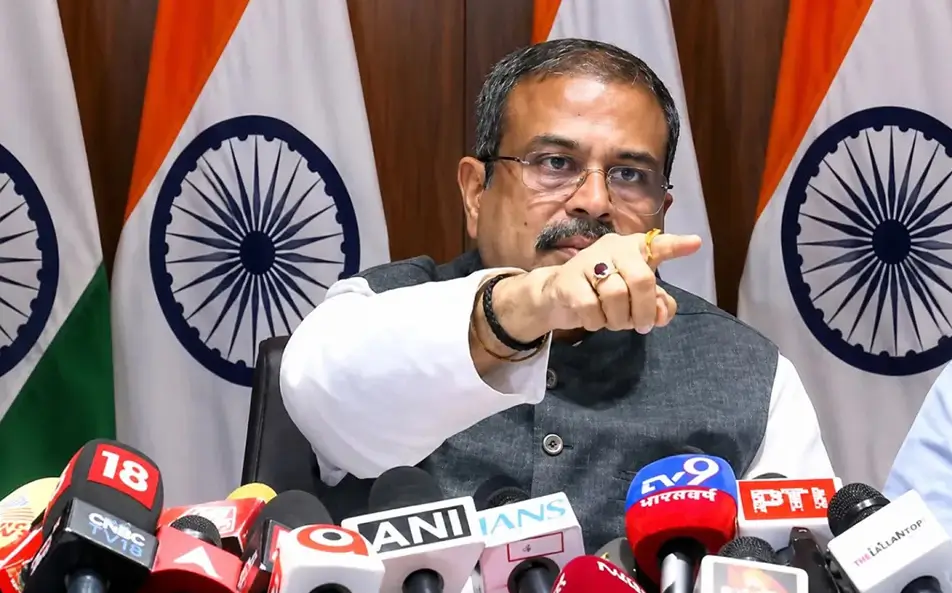
That gap is now the centre of the political fight. The government is pointing to arrests and a promise of legal action. Protesters are pointing to a minister still in office, families still waiting for closure and students who say they no longer trust the exam system.
Modi’s remarks came after the CJP’s Chalo Sansad march on July 20 ended in clashes near Parliament. Reuters reported that nearly 180 people were injured, including 118 security and police personnel and about 60 protesters, according to police. Reuters also said it could not independently verify the injury numbers.
Police accused protesters of unruly and violent behaviour and said they violated prohibitory orders. CJP leaders gave a different account, alleging that police used batons and tear gas against protesters.
The clash escalated the issue beyond the exam leak itself. It turned the row into a wider confrontation over student protests, policing and the government’s willingness to negotiate.
The legal battle is now crucial. Moneycontrol reported that the Supreme Court is set to hear petitions related to the NEET-UG 2026 case, with petitioners seeking the dissolution of the National Testing Agency and a CBI probe into alleged irregularities.
That hearing may decide whether the case expands beyond the 13 people already arrested. It may also determine how much pressure falls on the NTA, the Education Ministry and the broader exam system.
For now, Modi’s “ghor paap” remark gives the government its strongest public line yet: the leak was unacceptable and the guilty must be punished. But for students and protesters, the real test is not the language used at a party meeting. It is whether accountability reaches beyond arrests and into the system that allowed the leak to happen.
The Delhi protests have now turned a student exam scandal into a national political confrontation. If Parliament takes up the issue seriously, the debate may move from the street to the floor of the House. If not, the Delhi protests could keep growing as a symbol of student anger and distrust.
Everything you need to know
PM Modi called the NEET-UG 2026 paper leak a 'ghor paap' or grave sin at the NDA Parliamentary Party's Mangal Milan meeting on July 21, 2026, and urged lawyers to unite to ensure the strictest punishment for those involved.
According to Kiren Rijiju, 13 people were arrested and jailed as soon as reports of the paper leak emerged.
The Cockroach Janta Party (CJP) delegation has demanded the unconditional release of Sonam Wangchuk, the resignation of Education Minister Dharmendra Pradhan, and Rs 1 crore compensation for families of NEET aspirants who allegedly died by suicide after the leak.


Oct 19, 2026
TUI Staff
Oct 19, 2026
TUI Staff
Oct 17, 2026
TUI Staff
Oct 17, 2026
TUI Staff
Oct 19, 2026
TUI Staff
Oct 19, 2026
TUI Staff
Oct 17, 2026
TUI Staff
Oct 17, 2026
TUI Staff

Stay informed with independent, fact-checked journalism on technology, environment, government, economy and more. India’s most trusted digital news platform.








Comments (0)
Be the first to comment!