
Khatushyamji : 1027 to Today - The Complete Story & Timeline of Khatu Shyam Ji Temple
Khatushyamji : Where a Battlefield Promise Still Draws Millions, a Thousand Years Later
 IN
Wed, Oct 28, 2026 | 03:08 AM IST
IN
Wed, Oct 28, 2026 | 03:08 AM IST


Every morning, lakhs of people line up in a small Rajasthan village to keep a promise that isn't even theirs to keep. Krishna made it on the battlefield of the Mahabharata. Devotees are still showing up to honour it at Khatushyamji.
That's what makes this history worth knowing. Few temples in India carry a documented timeline this long, or draw a following this large. Once you see how a battlefield vow turned into one of Rajasthan's biggest pilgrimage sites, it's easier to understand why people still travel here from across the country.
- Deity: Khatu Shyam Ji (believed to be Barbarika, grandson of Bhima)
- Location: Khatu village, Sikar district, Rajasthan
- Temple founded: 1027 CE
- Major renovation: 1720 CE, under Diwan Abhai Singh of Mewar
- Main festival: Falgun Mela (February–March)
- Nearest railway station: Ringas/Reengus, ~17 km away
- Nearest airport: Jaipur, ~80 km away
Khatushyamji is both a deity and a town. The town sits in Sikar district, Khatu Shyam Ji Rajasthan. The deity is Barbarika, son of Ghatotkacha and grandson of Bhima. Before the Kurukshetra war began, Barbarika sacrificed his head to Krishna as guru dakshina. Krishna made him a promise in return: people would worship him in the Kali Yuga under Krishna's own name, Shyam. That single exchange is the reason this temple exists at all.
Every khatu shyam story starts here, long before Rajasthan enters the picture. Barbarika could have ended the Kurukshetra war within minutes. Krishna, disguised as a Brahmin, tested his resolve and asked for his head instead. Barbarika agreed without hesitation. Krishna rewarded that sacrifice with a promise: eternal worship, in his own name, once the Kali Yuga began.
Centuries passed before that promise took physical shape. [Rajasthan Tourism] records that King Roop Singh Chauhan dreamed of a relic buried near his kingdom. He ordered his people to dig at the spot - a site now known as Shyam Kund. They found what devotees still believe is Barbarika's head. The temple's Wikipedia entry confirms this discovery marks the founding of the original Khatu Shyam Ji Mandir in 1027 CE.
This temple didn't grow through conquest or promotion. Families passed the story down. Pilgrims went home and told their neighbours. Generation by generation, Khatu Shyam Ji became a Kuladevata - a family deity - for households across Rajasthan and Haryana. Many families still follow this tradition today.
By the late 1600s, devotion to Khatu Shyam Ji had outgrown oral tradition. In 1675, Durga Das Mathur wrote the Shyam Pacchisi, 25 devotional couplets in Braj Bhasha. This poem is evidence that worship here had already become an organised, documented movement well before the modern era.
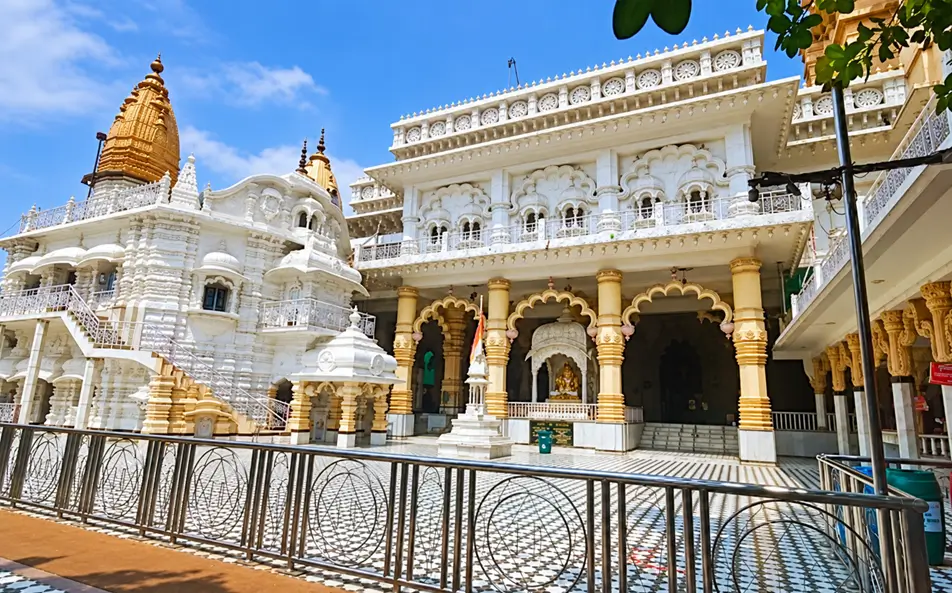
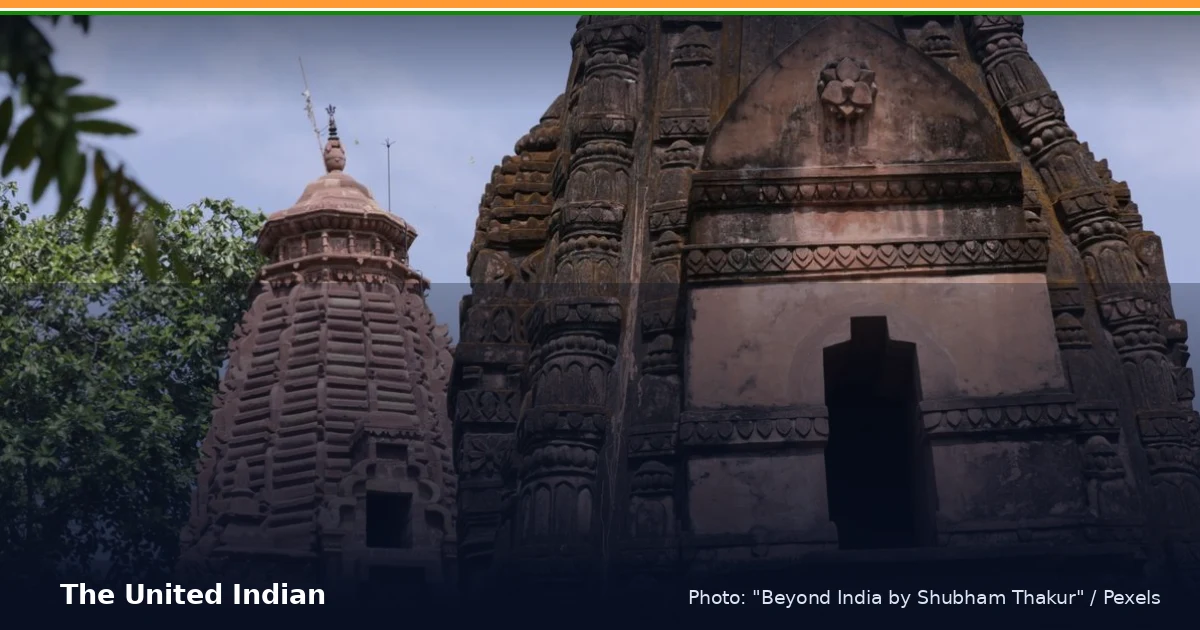
This is the moment that shaped the temple people visit today. In 1720, Diwan Abhai Singh of Mewar renovated the shrine. Workers rebuilt it in white Makrana marble, following traditional Rajasthani architecture, according to the temple's own history page. Mewar's involvement matters here: a ruling house of that stature doesn't renovate a purely local shrine. By 1720, Khatushyamji had already become a regional centre of faith.
History and devotion collided again in 1779. Local chiefs fought Mughal forces at Khatu to defend the region, in what's recorded as the Battle of Khatu Shyamji. By this point, the temple wasn't just a place of worship - it had become part of the region's identity, something people were willing to fight for.
Two flag traditions capture this devotion best, and both centre on the Falgun Mela.
Devotees carry the Nishaan Yatra flag on foot, 17 km from Reengus to the temple. They walk with a saffron, orange, or red triangular flag, singing bhajans and dancing along the way.
The Surajgarh flag tells an older story. Devotees carry this white flag, marked with a blue horse, 152 km on foot from the Haryana–Rajasthan border. People have raised it for over 300 years. Tradition ties it to resisting Mughal and later British attempts to interfere with temple practices.
Khatu Shyam Ji Temple welcomes lakhs of devotees every single day. That number climbs into the millions during Falgun Mela and Janmashtami. Rajasthan's Devasthan Department manages the site today. Pilgrims still travel here from across India and call Khatu Shyam Ji their family deity, exactly as generations before them did.
A Thousand Years, One Faith
A promise made on a battlefield. A relic buried for centuries. A temple rebuilt by Mewar. Flags carried on foot for over a hundred kilometres. Put it all together, and one thread runs through it: a promise that refused to fade. A thousand years later, the crowds haven't thinned. If anything, they've grown.
Jai Shri Shyam.
Everything you need to know
Devotees believe he is Barbarika, grandson of Bhima, worshipped as a Kaliyug incarnation of Krishna.
You'll find it in Khatu village, Sikar district, Rajasthan - about 80 km from Jaipur and 17 km from Ringas/Reengus.
Barbarika sacrificed his head to Krishna before the Kurukshetra war. Krishna blessed him to be worshipped under his own name in the Kali Yuga. Devotees discovered his relic at Shyam Kund, and the temple was built there in 1027 CE.
Plan around the Falgun Mela in February - March for the biggest celebration, though the temple welcomes devotees year-round.



Oct 27, 2026
TUI Staff
Oct 26, 2026
TUI Staff
Oct 26, 2026
TUI Staff
Oct 21, 2026
TUI Staff
Oct 27, 2026
TUI Staff
Oct 26, 2026
TUI Staff
Oct 26, 2026
TUI Staff
Oct 25, 2026
TUI Staff

Stay informed with independent, fact-checked journalism on technology, environment, government, economy and more. India’s most trusted digital news platform.

Comments (0)
Be the first to comment!