
Kanwar Yatra 2026 Begins: Routes, Bamboo Poles, Ganga Water and Traffic Restrictions Explained
Faith on Foot
 IN
Sun, Sep 13, 2026 | 07:33 PM IST
IN
Sun, Sep 13, 2026 | 07:33 PM IST

The Kanwar Yatra 2026 began on July 30, sending lakhs of saffron-clad devotees across North India with Ganga water balanced on decorated Bamboo poles. The annual journey runs through the holy month of Sawan and ends around Sawan Shivratri on August 11, when devotees offer the water at Shiva temples.
On the surface, it is a simple act of devotion. But the yatra also affects people far beyond the pilgrims. Roads are diverted, highways are restricted, police forces are stretched, and cities across Uttar Pradesh, Uttarakhand and Delhi-NCR have to adjust to one of North India’s largest annual religious movements.
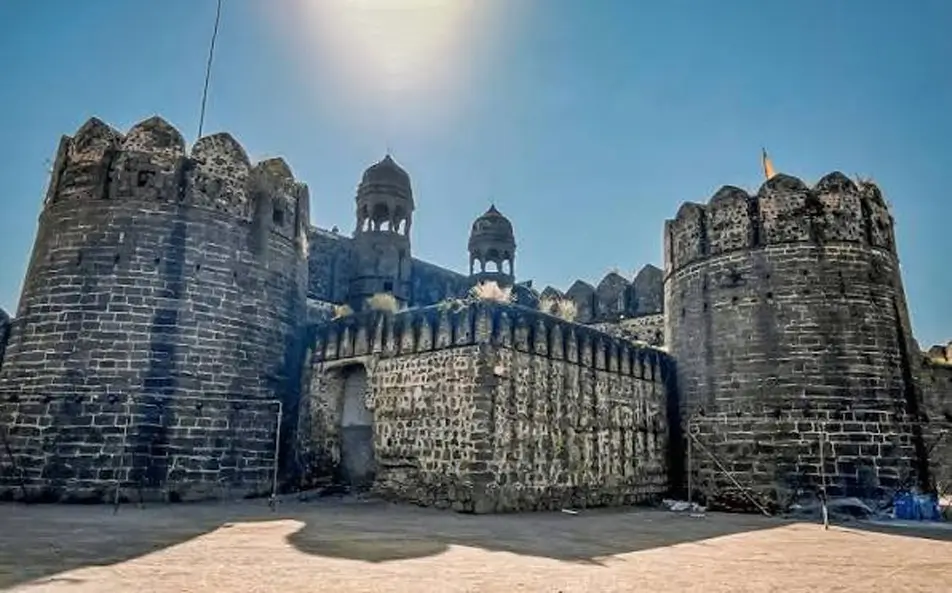
The practice of carrying a kanwar is not only old in legend; it also has historical markers. Hindustan Times reported that a seventh- or eighth-century sculpture at Kalinjar Fort in Uttar Pradesh’s Banda district shows a figure carrying a kanwar, suggesting that the practice has ancient roots.
The word “kanwar” refers to the pole balanced across the shoulders, with loads hanging from both ends. What began as a practical way to carry water over long distances has now become a visible devotional symbol, often decorated with flowers, lights, flags and images of Lord Shiva.
The yatra is most commonly linked to the Samudra Manthan, or the churning of the ocean. In that legend, Shiva drinks the deadly halahal poison to protect creation. Devotees offer water to Shiva as a symbolic act of cooling and devotion during Sawan.
This is why the yatra is not only a walk. It is treated as a vow. Many devotees collect Ganga water from Haridwar, Gaumukh, Gangotri or Sultanganj and carry it back to temples near their homes. Times of India notes that the water is carried in kalash containers suspended from both ends of a bamboo pole.
Bamboo poles are central to the visual identity of the journey. They hold the water containers on both sides, keeping balance while pilgrims walk long distances. Hindustan Times also notes that Hindu tradition gives the kanwar a deeper symbolism: the two pots are associated with Brahma and Vishnu, while the bamboo pole itself is linked to Shiva.
That is why the object matters. It is not just a carrier. It is part of the ritual language of the journey.
The main kanwar yatra route depends on where devotees collect the water and where they return. In North India, Haridwar remains one of the most important starting points. Pilgrims then walk back toward Delhi, western Uttar Pradesh, Haryana and Rajasthan.
Other important routes include the tougher mountain stretches toward Gangotri and Gaumukh, and the eastern route from Sultanganj in Bihar to Baidyanath Dham in Deoghar, Jharkhand. Times of India describes the Sultanganj-Deoghar stretch as roughly 105 km.
The route is marked by bhagwa flags, devotional music and chants of Har Har Mahadev. For many pilgrims, the hardship of walking in rain, heat and crowd pressure is part of the vow itself.
The Kanwar Yatra is now also a major administrative exercise. Economic Times reported that Delhi Police, Ghaziabad Police, Meerut Police and Uttarakhand authorities have issued vehicle bans, one-way diversions and no-entry zones to manage an estimated crore-plus devotees moving toward Haridwar, Gaumukh, Gangotri and Neelkanth Mahadev.
NDTV reported that heavy vehicles on the Delhi-Haridwar National Highway and Ganga Canal road were restricted from July 30, while all vehicles will be banned on these routes from August 4 to 12.
That is where devotion meets daily life. For pilgrims, the road becomes a sacred path. For commuters, it becomes a route of delays, diversions and longer travel times. For police and local administrations, it becomes a test of crowd control, sanitation, emergency response and traffic planning.
The 2026 yatra comes with heavy route planning in Delhi-NCR and western Uttar Pradesh. Economic Times listed restrictions in Ghaziabad, Meerut, Delhi-Meerut Expressway stretches and the Delhi-Dehradun Expressway region, with peak pressure expected closer to August 11.
That planning matters because the yatra is no longer a small village-level ritual. It is a mass movement that touches highways, city borders, local markets and emergency services.
The Kanwar Yatra is remembered for its saffron crowds, devotional chants and water-filled kalash. But it also tells a bigger story about how old rituals survive inside modern India.
A practice linked to ancient sculpture and Shaivite tradition now moves through expressways, police barricades, CCTV-monitored routes and traffic-control rooms.
That contrast is what makes the yatra powerful and complicated at the same time. It is faith on foot, carried on Bamboo poles, but managed by a modern state built around roads, rules and public order.
Everything you need to know
Kanwar Yatra 2026 began on July 30 and will continue through the holy month of Sawan.
The yatra is expected to end around Sawan Shivratri on August 11, when devotees offer Ganga water at Shiva temples.
Devotees carry Ganga water as an offering to Lord Shiva, especially during Sawan, which is considered sacred for Shiva worship.
The bamboo pole, called a kanwar, helps devotees carry water containers on both sides. It is also treated as a devotional symbol.
Traffic restrictions are usually seen across parts of Uttar Pradesh, Uttarakhand, Delhi-NCR, Haridwar routes, the Delhi-Haridwar highway and Ganga Canal road, depending on local advisories.





Sep 11, 2026
TUI Staff
Sep 11, 2026
TUI Staff
Sep 10, 2026
TUI Staff
Sep 10, 2026
TUI Staff
Sep 11, 2026
TUI Staff
Sep 11, 2026
TUI Staff
Sep 11, 2026
TUI Staff
Sep 10, 2026
TUI Staff

Stay informed with independent, fact-checked journalism on technology, environment, government, economy and more. India’s most trusted digital news platform.




Comments (0)
Be the first to comment!