
How Dr. Kamal Ranadive Changed Cancer Research in India
Kamal Ranadive helped India study cancer at the cellular level while creating opportunities for future women scientists!
 IN
Mon, Oct 26, 2026 | 12:30 AM IST
IN
Mon, Oct 26, 2026 | 12:30 AM IST


India’s fight against cancer did not change because of one dramatic breakthrough. It moved forward because scientists built laboratories, trained research teams and asked questions that mattered to Indian patients. Dr. Kamal Ranadive was one of the people who built that foundation.
She returned from advanced training in the United States, established India’s first tissue-culture laboratory and studied how heredity, hormones and viruses could influence tumours.
Dr. Kamal Jayasing Ranadive brought modern cell-culture methods into Indian laboratories. Her teams studied breast tumours, leukaemia and oesophageal cancer. Her wider work also supported women scientists and rural healthcare.
Her importance lies not in one isolated discovery, but in the system she helped create. She developed laboratory capacity, mentored researchers and connected scientific questions with India’s public-health needs.
Born Kamal Samarath on 8 November 1917 in Pune, she grew up in a family that valued education. Her father taught biology at Fergusson College and encouraged her to study science when few Indian women entered research careers.
She studied botany and zoology at Fergusson College before specialising in cytology, the study of cells. She later earned a doctorate from the University of Bombay in 1949, according to the Google Doodle biography and material preserved by the Indian Academy of Sciences.
Ranadive travelled to the United States for postdoctoral training at Johns Hopkins University. There, she worked with cell biologist George Gey and learned advanced tissue-culture techniques.
Tissue culture allows scientists to grow living cells outside the body under controlled conditions. Researchers can then observe how cells multiply, change and respond to hormones, viruses or chemicals.
Instead of remaining abroad, she returned to the Indian Cancer Research Centre in Mumbai. Asia Research News confirms her Johns Hopkins training and her decision to continue her work in India.
At the Mumbai institute, Ranadive established what several biographical sources describe as India’s first tissue-culture laboratory.
The achievement involved more than equipment. The laboratory needed culture materials, trained staff and repeatable procedures. It gave Indian scientists a place to study living cells, compare normal and abnormal growth, and examine how biological factors affected tumours.
This achievement is documented by Asia Research News and the Google Doodle profile.
The laboratory made advanced experiments possible within India and reduced dependence on overseas institutions for basic studies.
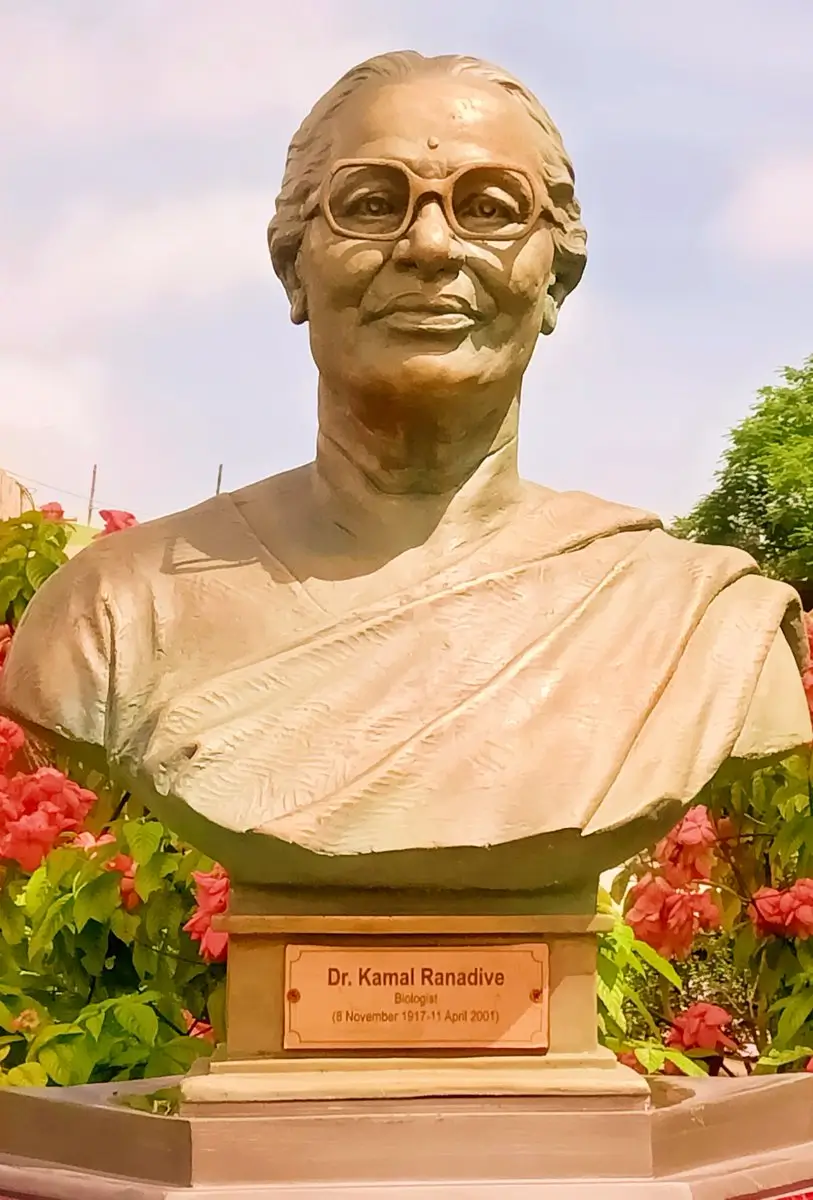
Img Src : Twitter
Ranadive used animal models to study mammary tumours, leukaemia and oesophageal cancer. Such models help in cancer research as one can observe how disease develops under controlled conditions.
Her teams examined the influence of hormones and certain viruses. She also explored whether inherited susceptibility could affect breast-cancer risk.
Some profiles say she was the first scientist to discover a genetic component of breast cancer. That wording is too broad. A more accurate statement is that she was among the early Indian researchers to propose a link between heredity and breast cancer. The Google biography uses this careful framing.
Her work encouraged scientists to see cancer as a disease shaped by several interacting factors, not one simple cause.
Ranadive focused on risks linked to Indian habits and environments. Work associated with her examined tobacco, betel nut and ingredients used in paan, which were relevant to oral and oesophageal disease.
The Indian Women Scientists’ Association credits her with studies of precancerous changes and environmental carcinogenesis.
This local focus showed that research priorities should reflect the communities scientists serve.
Yes. Ranadive studied Mycobacterium leprae, the bacterium responsible for leprosy. Her work contributed to wider efforts linked with leprosy-vaccine development.
It would be inaccurate to say she invented the vaccine alone. Asia Research News and Google Doodles describe her role as a contribution to vaccine-development research.
In 1973, Kamal Jayasing Ranadive and 11 colleagues founded the Indian Women Scientists’ Association.
The organisation offered scholarships, scientific networks, hostel facilities and childcare support. These measures addressed practical barriers that often forced women to leave research careers.
Ranadive also encouraged Indian scholars working abroad to return and use their expertise at home. Her mentorship mattered because scientific progress depends on people as much as laboratories.
Ranadive received the Padma Bhushan in 1982 for her contribution to medicine. The honour also appeared in the Google Doodle profile and Brigham Young University’s feature.
The Padma Bhushan Award recognised her scientific contribution, but her public service continued after retirement.
In 1989, she began working with rural communities in Maharashtra. She supported health and nutrition education for women and children and helped train women as community healthcare workers, according to Asia Research News.
The Padma Bhushan Award remains an important part of her public recognition, but it does not fully capture her impact. She also built institutions, supported women and carried scientific knowledge beyond major research centres.
Kamal Ranadive changed Indian science by building the conditions in which future discoveries could happen. She introduced advanced laboratory methods, trained researchers and made biomedical science more responsive to Indian needs.
Her story challenges the idea that progress comes only from one genius or one invention. It often comes from years of patient work, team-building and institution-building.
Google marked her 104th birth anniversary with a Doodle on 8 November 2021. The tribute renewed public interest, but her deeper legacy lives in the laboratories, research communities and support systems she helped create.
The life of Dr. Kamal Ranadive shows that a scientist can leave an impact far beyond published studies. She helped India build the ability to investigate disease for itself.
Everything you need to know
She is best known for establishing India’s first tissue-culture laboratory and advancing studies of breast tumours, leukaemia and oesophageal cancer.
No. She did not discover a specific breast-cancer gene. She was among the early Indian researchers to examine the relationship between heredity and breast-cancer susceptibility.
Her work on Mycobacterium leprae contributed to wider vaccine-development efforts, but she did not create a vaccine independently.
Her legacy combines laboratory innovation, medical research, mentorship, women’s advancement and community health.


Oct 21, 2026
TUI Staff
Oct 19, 2026
TUI Staff
Oct 19, 2026
TUI Staff
Oct 19, 2026
TUI Staff
Oct 25, 2026
TUI Staff
Oct 23, 2026
TUI Staff
Oct 23, 2026
TUI Staff
Oct 22, 2026
TUI Staff

Stay informed with independent, fact-checked journalism on technology, environment, government, economy and more. India’s most trusted digital news platform.





Comments (0)
Be the first to comment!