
Indian Army Chief Dhiraj Seth Gets Nepal’s Honorary General Rank: The 1950 Tradition Behind It
It isn't a promotion. It's a military tradition that began in 1950.
 IN
Sat, Oct 03, 2026 | 04:47 AM IST
IN
Sat, Oct 03, 2026 | 04:47 AM IST


Imagine serving as India's top military commander and then being given an honorary General’s rank by a neighbouring country. That is exactly what happened in Kathmandu on August 17, 2026.
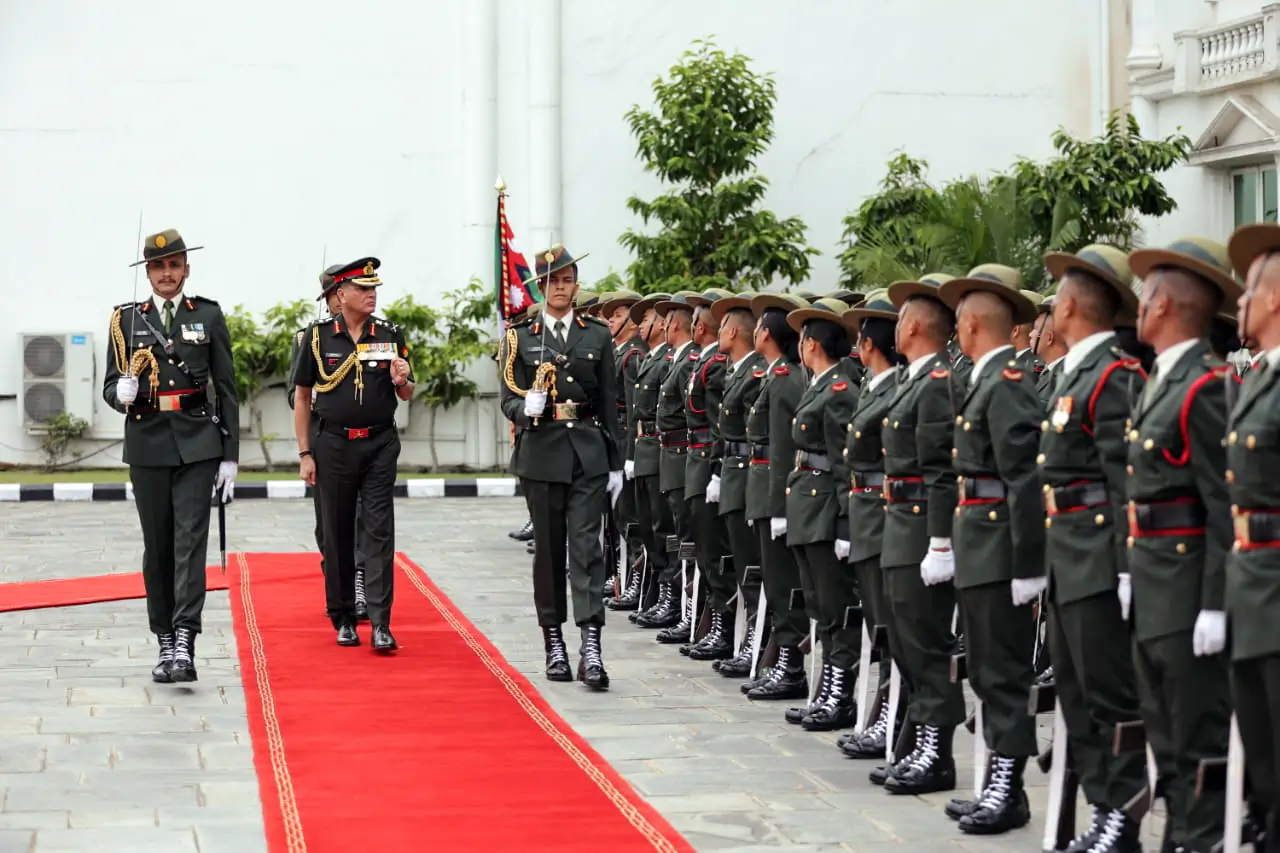
General Dhiraj Seth, the Chief of Army Staff, was conferred the Honorary Rank of General of the Nepali Army by Nepal President Ram Chandra Paudel at Sheetal Niwas. The ceremony was not simply another diplomatic event. It revived a tradition that goes back to 1950 and reflects the unusually close relationship between the armed forces of India and Nepal.
But there is an obvious question here: Why does Nepal give India's Army Chief a General’s rank?
And no, it is not a promotion or a new command.
Before becoming General and taking charge as the Chief of Army Staff on June 30, 2026, Lieutenant General Dhiraj Seth was serving as the Vice Chief of the Army Staff. The Ministry of Defence appointed him as the next Army Chief on June 13, 2026.
He was commissioned into the Armoured Corps in December 1986 after graduating from the National Defence Academy, Khadakwasla. During a career spanning nearly four decades, he commanded an Armoured Regiment, an Armoured Brigade and a Counter-Insurgency Force in Jammu and Kashmir. He also commanded the Sudarshan Chakra Corps and served as General Officer Commanding of Delhi Area. Later, he headed South Western Command and Southern Command.
So, when the former Lieutenant General Dhiraj Seth arrived in Nepal as the country's new Army Chief, the visit carried both military and diplomatic significance.
Let's clear up the biggest misconception first.
General Dhiraj Seth has not joined Nepal's military and does not become an operational commander of its forces.
The honorary rank is a ceremonial distinction. It represents mutual respect, military friendship and the longstanding institutional relationship between the two countries.
The tradition is reciprocal. India and Nepal confer honorary General ranks on the serving chiefs of each other's armies. The Embassy of India in Kathmandu describes it as a tradition dating back seven decades, with General K.M. Cariappa becoming the first Indian Army Chief to receive the honour in 1950.
In simple terms, the title is symbolic - but the relationship it represents is very real.
This is where the story gets more interesting.
The roots of the practice go back to 1950, when then Indian Army Chief General K.M. Cariappa visited Nepal. The Indian Embassy records that he was the first Indian Army Chief to receive the honorary title of General of the Nepali Army.
The tradition has continued across generations.
General M.M. Naravane received the honorary rank in Nepal in 2020, while General Manoj Pande received it in 2022. In 2024, the exchange continued when General Upendra Dwivedi received the honorary Nepali rank and Nepal Army Chief General Ashok Raj Sigdel was subsequently conferred the honorary General rank of the Indian Army.
And now, in 2026, General Dhiraj Seth has become the latest Indian Army Chief to receive the honour.
That continuity is what makes the ceremony more than a formal military ritual.
Img Src : DD India
The answer lies in the depth of their military relationship.
India and Nepal share long-standing defence links built around senior-level military visits, training, professional exchanges, equipment support and other forms of cooperation. The honorary rank acts as a visible symbol of those ties.
The relationship also extends beyond military headquarters. The two countries have deep people-to-people connections, while Nepali citizens have historically served in the Indian military's Gurkha regiments.
This makes military diplomacy between the neighbours rather distinctive.
A ceremonial honour may last a few minutes. The institutional relationship behind it has lasted for decades.
The honorary rank was only one part of General Seth's official visit.
He travelled to Nepal at the invitation of his counterpart, General Ashok Raj Sigdel, and met him at the Nepal Army Headquarters in Kathmandu. The two discussed matters of mutual interest and ways to strengthen bilateral military relations.
General Seth also received and inspected a Guard of Honour at the headquarters and laid a wreath at the Army Pavilion in Tundikhel.
Another notable part of the visit was the handover of military and medical assistance. Reports identified the items as including a B-ISOM Cube, medicines and vehicles, which Seth handed over to General Sigdel.
He also met Indian Ambassador to Nepal Naveen Srivastava, with discussions focused on strengthening broader India-Nepal relations.
So, the visit combined ceremony with practical military engagement.
The biggest takeaway is continuity.
There is no indication that the honorary rank itself represents a new defence treaty or military alliance. Instead, it reinforces an existing relationship based on familiarity, trust and regular interaction.
For the Indian Army, such exchanges are part of a wider military-diplomatic relationship with Nepal. For Nepal, honouring India's serving Army Chief continues a tradition that has survived changing governments and shifting regional circumstances.
The message is simple: the two armies continue to place value on their relationship.
And the reciprocal nature matters. Nepal honours India's Army Chief, while India honours Nepal's Army Chief. That makes the tradition less about one country conferring a favour on another and more about mutual recognition.
The phrase “honorary General” may sound like another title added to an already impressive military career. But its real significance lies elsewhere.
It connects General Dhiraj Seth's 2026 visit to a tradition that began with General K.M. Cariappa in 1950.
It connects today's Chief of Army Staff with generations of commanders who have maintained military links with Nepal.
And it highlights how defence relations can sometimes be built through something as simple - and as powerful - as a tradition repeated over decades.
For readers, the important point is this: General Dhiraj Seth did not receive Nepal's honorary rank because he is taking a command there. He received it because the armies of India and Nepal have a relationship worth formally honouring.
More than 75 years after the tradition began, that message remains remarkably relevant.
Everything you need to know
The honorary rank recognises the longstanding military relationship between India and Nepal. It is part of a reciprocal tradition that traces its origins to 1950, when the two countries began honouring each other's Army Chiefs.
No. The honorary General rank is ceremonial. It does not give Dhiraj Seth operational command over the Nepali Army or make him a serving officer in Nepal's military establishment.
The tradition traces its origins to 1950. General K.M. Cariappa was the first Indian Army Chief to receive the honorary General rank of the Nepali Army, according to the Embassy of India in Kathmandu.
Nepal President Ram Chandra Paudel conferred the honorary General rank on General Dhiraj Seth during a ceremony at Sheetal Niwas in Kathmandu on August 17, 2026.
The honour reinforces the longstanding military-to-military relationship between India and Nepal. It reflects mutual respect, trust and continued defence cooperation between the two countries.



Sep 23, 2026
TUI Staff
Sep 23, 2026
TUI Staff
Sep 19, 2026
TUI Staff
Sep 18, 2026
TUI Staff
Oct 01, 2026
TUI Staff
Oct 01, 2026
TUI Staff
Oct 01, 2026
TUI Staff
Oct 01, 2026
TUI Staff

Stay informed with independent, fact-checked journalism on technology, environment, government, economy and more. India’s most trusted digital news platform.

Comments (0)
Be the first to comment!