
Delhi SIR Explained: Name Mismatch, Age Gap and 11 Reasons Voters Are Getting Notices
Millions remain on Delhi’s draft voter roll but must now clarify discrepancies before the final list.
 IN
Mon, Sep 21, 2026 | 05:11 PM IST
IN
Mon, Sep 21, 2026 | 05:11 PM IST


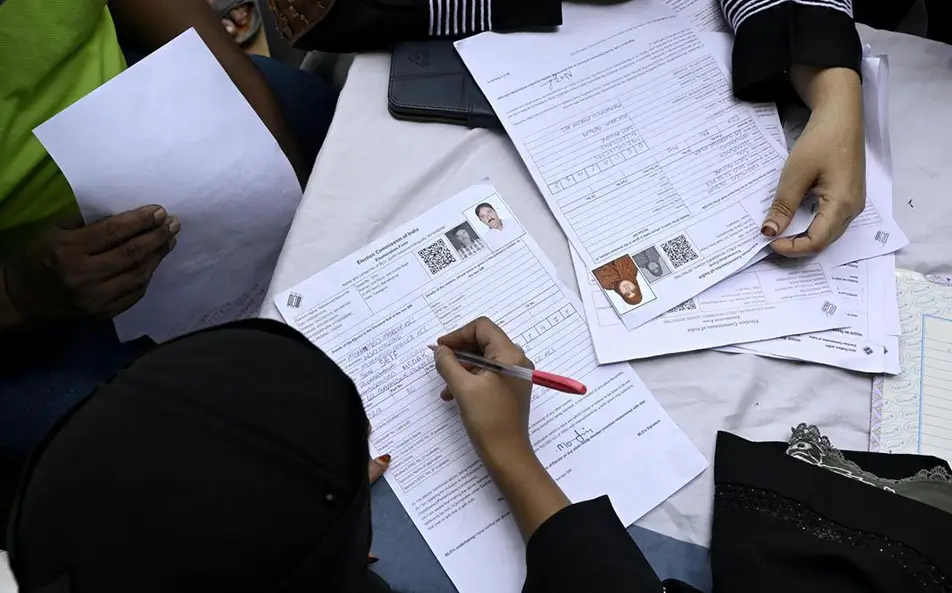
Around 3.31 million Delhi voters have been issued verification notices after discrepancies were identified during the ongoing Special Intensive Revision of the Capital’s electoral rolls.
The notices cover a wide range of issues. Some electors could not be linked to records from the previous intensive revision, while others were flagged for differences in names, unusual age gaps between family members or other inconsistencies in the electoral database.
Importantly, a notice from the Election Commission of India does not automatically mean a person has lost the right to vote. The electors concerned remain on the draft roll and have an opportunity to explain the discrepancy or submit supporting documents before a final decision is made. The scale of the exercise has nevertheless attracted scrutiny because roughly one in three names on the current draft roll has received some form of verification notice.
The largest category under the Delhi SIR involves voters whose current records could not be mapped to the previous intensive revision of the electoral roll. According to an analysis of notice lists uploaded by the Delhi Chief Electoral Officer, about 1.38 million people, or roughly 42% of those receiving notices, fall under the “unmapped with last SIR” category.
These voters have not necessarily done anything wrong.
It means electoral officials were unable to establish the expected link between their current enumeration information and older electoral records. Officials have said such voters may be asked to produce supporting documents so their eligibility and details can be verified. The Election Commission of India says the broader objective of Special Intensive Revision is to ensure eligible citizens remain registered while names that are ineligible, duplicated or otherwise unsuitable for inclusion are identified through the prescribed process.
After unmapped records, differences in names are the biggest source of discrepancies. The Delhi notice data shows that name-related issues account for about 41% of recorded reasons. Around 24% involve a mismatch in a parent’s name, while approximately 17% involve differences in the voter’s own name. These discrepancies can arise when spelling, initials, surnames or other details differ between an older record and the current Delhi electoral roll.
For example, a person may have used an abbreviated name in an older list but a full name in the latest enumeration form. In other cases, variations may have entered records over time through data entry or documentation differences. Electoral officials earlier told Hindustan Times that different spellings between current records and the older rolls accounted for a large part of the logical discrepancies being examined. The notice gives the elector an opportunity to establish which version is correct.
Another major category relates to unusual age gaps recorded between family members. According to the latest data analysis, age-related discrepancies account for roughly 16% of notice reasons. The automated checks have flagged situations including:
Earlier electoral officials said such anomalies are treated as logical inconsistencies requiring verification rather than immediate proof that a record is invalid. Nearly 140,000 records were also flagged because the database indicated six or more children linked to an elector, according to the CEO data analysed by Hindustan Times.
The data also shows that the majority of affected Delhi voters are not dealing with multiple discrepancies. Of the 3.31 million people who received notices, about 3.11 million, or 94%, have only one reason listed against their record. Around 128,000 notices contain two reasons, roughly 9,000 contain three, and more than 400 contain four different discrepancy categories. One unusual finding is that 59,791 notices in the uploaded data did not have a reason listed, according to Hindustan Times’ analysis of the CEO records. That issue is particularly important because a voter needs to understand what information is being questioned in order to respond effectively.
No. Officials have repeatedly clarified that a verification notice does not itself amount to removal from the Delhi electoral roll.
The affected electors are still included in the draft list. They are being given an opportunity to clarify their particulars or produce documents before the Electoral Registration Officer reaches a decision. The ECI’s official voter-services portal currently includes a dedicated option allowing electors to “Submit Document Against Notice issued” as part of SIR 2026.
A person receiving a notice should therefore read the stated discrepancy carefully and respond through the prescribed process rather than assuming the notice itself is a deletion order.
The draft roll contains 9,753,577 electors, according to Delhi CEO figures cited in current reporting. Before the revision, Delhi’s electoral rolls contained 14,510,299 names as of June 30. The draft therefore contains about 4.76 million fewer names, a reduction of nearly one-third. Those exclusions and the 3.31 million discrepancy notices are separate categories.
The people receiving the current notices are already present in the draft list, while the 4.76 million names excluded before publication of the draft were classified under categories including absent, shifted, dead or duplicate. This distinction is important when interpreting the scale of the exercise.
The share of electors receiving notices varies considerably across Delhi. Hindustan Times’ analysis found that the figure ranges from around 22.7% of electors in Matia Mahal to about 44.2% in Badarpur. The average age of a person receiving a notice is around 40 years. The data also contained unusual records, including a voter listed as 125 years old who was flagged for a self-name mismatch. Such entries illustrate why database-level verification is part of the exercise, though individual discrepancies can have many different explanations.
The verification exercise has not been limited to ordinary households. Current reports show that politicians, senior officials and other well-known individuals have also appeared in notice lists for issues ranging from mapping failures to name or age discrepancies. Some political figures have questioned the accuracy and transparency of the exercise. The ECI and electoral authorities maintain that notices are part of a verification process and do not constitute automatic deletion. Those competing claims are also subject to judicial scrutiny.
A fresh petition challenging aspects of the Delhi SIR has reached the Supreme Court, with petitioners seeking greater disclosure about the criteria used for “logical discrepancies” and clearer publication of notice information. The Court agreed to take up the matter alongside other SIR-related cases. The petition contains allegations and legal arguments that the Court has yet to adjudicate.
Anyone who receives an SIR notice should first check the exact discrepancy listed against their electoral record. Depending on the issue, the voter may be asked to establish a correct name, age, family relationship, residence or eligibility using documents accepted under the revision process. The official ECI voter portal allows people to search electoral-roll information and submit documents against notices.
Earlier instructions reported during the exercise listed documents such as birth certificates, passports, educational certificates and specified government-issued records among the material that may be relevant, depending on the voter’s age and the nature of the verification. Voters should follow the instructions on their individual notice because documentary requirements can differ from case to case.
Everything you need to know
No. The Election Commission of India clarified on September 20, 2026 that issuance of a notice does not mean a voter's name will be deleted from the electoral rolls of NCT of Delhi.
Notices went to voters in two categories: those whose records could not be mapped to the last Intensive Revision roll (13.79 lakh cases) and those flagged for logical discrepancies like name mismatches or unusual age gaps (19.33 lakh cases), per the Delhi CEO's office and The Hindu.
According to Hindustan Times, failure to map a voter to the last SIR roll accounted for 42% of all notices, the largest single category, followed by name mismatches and age-difference discrepancies.






Sep 21, 2026
TUI Staff
Sep 21, 2026
TUI Staff
Sep 21, 2026
TUI Staff
Sep 19, 2026
TUI Staff
Sep 21, 2026
TUI Staff
Sep 21, 2026
TUI Staff
Sep 21, 2026
TUI Staff
Sep 19, 2026
TUI Staff

Stay informed with independent, fact-checked journalism on technology, environment, government, economy and more. India’s most trusted digital news platform.

Comments (0)
Be the first to comment!