
Delhi Master Plan 2047: Can 40 Lakh New Homes Solve Delhi's Housing Crisis?
40 lakh homes could reshape Delhi’s future. But the real question is: who will be able to afford them?
 IN
Thu, Oct 01, 2026 | 08:49 PM IST
IN
Thu, Oct 01, 2026 | 08:49 PM IST


Imagine a Delhi where 40 lakh new homes are added over the next two decades. Sounds like the housing crisis should be over, right?
Not necessarily.
The problem is not only the number of homes. It is also affordability, location, rent and access to jobs and transport.
That is why the Delhi Master Plan 2047 matters. The DDA-approved plan proposes smaller homes, rental accommodation, Affordable Rental Housing Complexes (ARHCs), redevelopment, land pooling and denser development around transit corridors. The plan is still moving through the approval and notification process, so these proposals should be read as a planning framework, not completed housing projects.
Delhi may need around 40 lakh additional homes by 2047, but new construction alone will not solve the housing crisis. The real test is whether enough homes are affordable, available for rent and located close to jobs and transport.
The numbers explain the pressure.
According to the plan accessed by Hindustan Times, Delhi's population could reach around 32 million by 2047. The housing requirement uses an average household size of 4.5 people.
Delhi had about 3.1 million residential houses in 2011. The projected requirement is around 7.11 million houses, leaving a need for roughly 4 million additional units. The assessment also considers the housing backlog, population growth, replacement of obsolete housing and vacant stock.
Migration adds another layer. The plan estimates that migration could account for 41% of population increase during the present plan period, making migrant housing central to the city's future workforce.
Not everyone who comes to Delhi wants to buy a home.
A construction worker may move with the next project. A student may stay for two years. A young employee may change jobs. A seasonal worker may need a room for only a few months.
For them, Affordable Rental Housing can offer something ownership cannot: flexibility. That makes rental housing a core part of a more mobile city.
The plan proposes rental accommodation through ARHCs, studio apartments, hostels, dormitories and smaller homes. The target groups include migrants, seasonal workers, students, single working people and lower-income households.
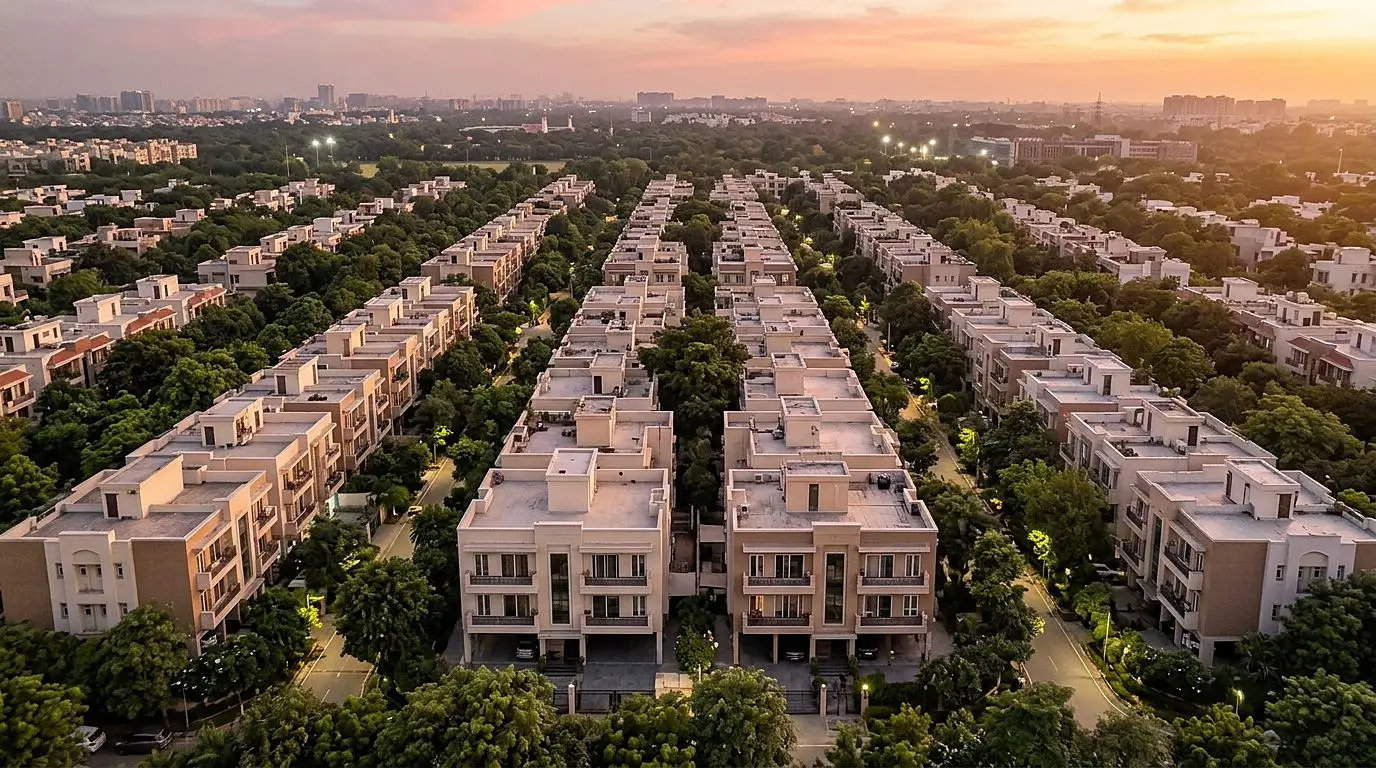
Img Src : South Delhi Floors
ARHCs are a form of Affordable Rental Housing intended to provide formal accommodation for urban migrants and EWS/LIG households.
Under the proposed framework, they can be developed as standalone projects or as part of new developments. Industrial plots and industrial parks can also accommodate rental housing for workers, including dormitories and small-format homes. Rental housing may also be included in some unauthorised-colony regeneration schemes.
An ARHC project needs a minimum plot of 2,000 square metres and a minimum right of way of 12 metres. Dwelling units can range from 30 to 60 square metres. Dormitories can have four to six beds, with up to 10 square metres of carpet area per bed.
A project must have at least 40 dwelling units or equivalent dormitory beds. Proposed rental tenure ranges from three months to three years. Residents would receive licence rights rather than ownership.
There is another question worth asking:
Does Delhi only need more homes?
The plan cites Census 2011 data showing that 11% of Census houses in Delhi were vacant. It therefore proposes that DDA and other agencies explore bringing vacant or unsold public housing into the rental market.
This is where Affordable Housing in Delhi needs a broader definition.
A home is not truly affordable if the commute consumes a large share of a worker's income.
The plan also encourages smaller homes, with NDTV reporting a proposed range of around 25 to 60 square metres. Smaller units could help young workers, smaller families and first-time buyers use limited land more efficiently.
But smaller does not automatically mean cheaper.
Land prices, construction costs, location and financing will still shape the final price.
So, Affordable Housing in Delhi cannot be judged by carpet area alone. The real question is whether households can realistically pay for the home.
The DDA Master Plan uses several routes to expand supply.
The DDA Master Plan uses land pooling as one route. The revised framework also introduces Town Planning Schemes as an alternative mechanism intended to make land assembly more workable. The Indian Express has reported that the DDA sees land pooling as having the potential to unlock up to 20 lakh homes.
Transit-Oriented Development is another piece. Areas within around 500 metres of Metro corridors and RRTS and railway stations could see higher-density development.
The plan also looks at redevelopment of older DDA housing, cooperative societies, resettlement colonies and employer-provided housing. That could modernise homes within established neighbourhoods instead of pushing every project to the outskirts.
This is where the 40-lakh figure meets reality.
More homes can increase supply. But supply alone does not guarantee affordability.
The real questions are simple: How many homes will be affordable? How many will be available for rent? Will migrants be able to access them? Will they be close to jobs and public transport? And will land-pooling projects move from policy to construction?
Implementation will decide the outcome.
For the Delhi Master Plan 2047, the location question matters just as much. A lower rent on the edge of the city can become expensive once daily travel, time and lost income are added.
Not by themselves.
Most importantly, the plan needs to remember the people behind the numbers.
A migrant worker may not arrive dreaming of a property deed. A student may need a room for two years. A young employee may need a home close to a first job.
The bigger test for the Delhi Master Plan 2047 will be whether its housing ideas work on the ground. The success of the plan will not be measured only by how many units are approved or proposed.
The DDA Master Plan must turn projected capacity into homes that people can actually access.
For Affordable Housing in Delhi, access and affordability must go together.
Delhi does not just need more roofs. It needs a housing system that lets people come to the capital for opportunity without spending their lives searching for somewhere they can afford to stay.
Everything you need to know
The Delhi Master Plan 2047 is a long-term urban planning framework focused on Delhi’s future housing, infrastructure, land use, transport and development needs. The DDA has approved the plan, which is to proceed for final approval and notification by the Ministry of Housing and Urban Affairs.
The Delhi Master Plan 2047 estimates that Delhi could need around 40 lakh additional housing units by 2047 due to population growth, migration, existing housing shortages, replacement of ageing housing and other housing needs.
The plan proposes Affordable Rental Housing Complexes (ARHCs), dormitories, hostels, studio apartments and smaller homes aimed at migrants, seasonal workers, students, single working people and lower-income households.
ARHCs are planned rental housing projects designed primarily for urban migrants and EWS/LIG households. Proposed units can include smaller dwelling units and dormitories, with rental tenures ranging from three months to three years.
Not necessarily. Increasing supply can help, but affordability will depend on housing prices, rents, location, transport connectivity and household incomes. The success of the Delhi Master Plan 2047 will ultimately depend on whether the homes reach people who actually need affordable housing.





Sep 23, 2026
TUI Staff
Sep 23, 2026
TUI Staff
Sep 19, 2026
TUI Staff
Sep 18, 2026
TUI Staff
Oct 01, 2026
TUI Staff
Oct 01, 2026
TUI Staff
Oct 01, 2026
TUI Staff
Oct 01, 2026
TUI Staff

Stay informed with independent, fact-checked journalism on technology, environment, government, economy and more. India’s most trusted digital news platform.





Comments (0)
Be the first to comment!