
Is Modern Life Hurting Your Spine? 6 Habits That Could Be Making Back Pain & Neck Pain Worse
Your Daily Habits Could Be Hurting Your Spine
 IN
Fri, Sep 18, 2026 | 06:03 PM IST
IN
Fri, Sep 18, 2026 | 06:03 PM IST

Your chair. Your phone. Your commute. Even your favourite sleeping position. What if some of the most ordinary parts of your day are quietly adding to your pain?
You don't need a dramatic injury to start feeling uncomfortable. Sometimes, it's the eight hours at your desk, the endless phone scrolling, the long commute or the way you bend to pick something up.
And the numbers make this worth paying attention to. According to the World Health Organization (WHO), 619 million people experienced low back pain globally in 2020, making it the world's leading cause of disability. WHO estimates that the number could reach 843 million by 2050.
That doesn't mean your chair or smartphone is automatically responsible. Back and neck problems have many possible causes. But repeated everyday habits can contribute to discomfort or aggravate existing spine problems.
So, before blaming age, your mattress or "just a bad day," take a closer look at these six habits.
The modern workday can turn a chair into a second home. Meetings, lunch, laptop hours and evening TV can keep you sitting all day.
This is where a sedentary lifestyle can quietly creep in. Sitting itself isn't the problem. Staying in one position for too long with little movement can contribute to stiffness and back problems.
WHO recommends reducing sedentary time and replacing it with physical activity whenever possible.
Try this instead: Get up regularly, walk around, stretch gently and change your sitting position. Even short movement breaks can help.
Your body doesn't need perfect posture all day. It needs regular movement.
Look around the next time you're in a lift, waiting room or coffee shop. How many people are looking down at their phones?
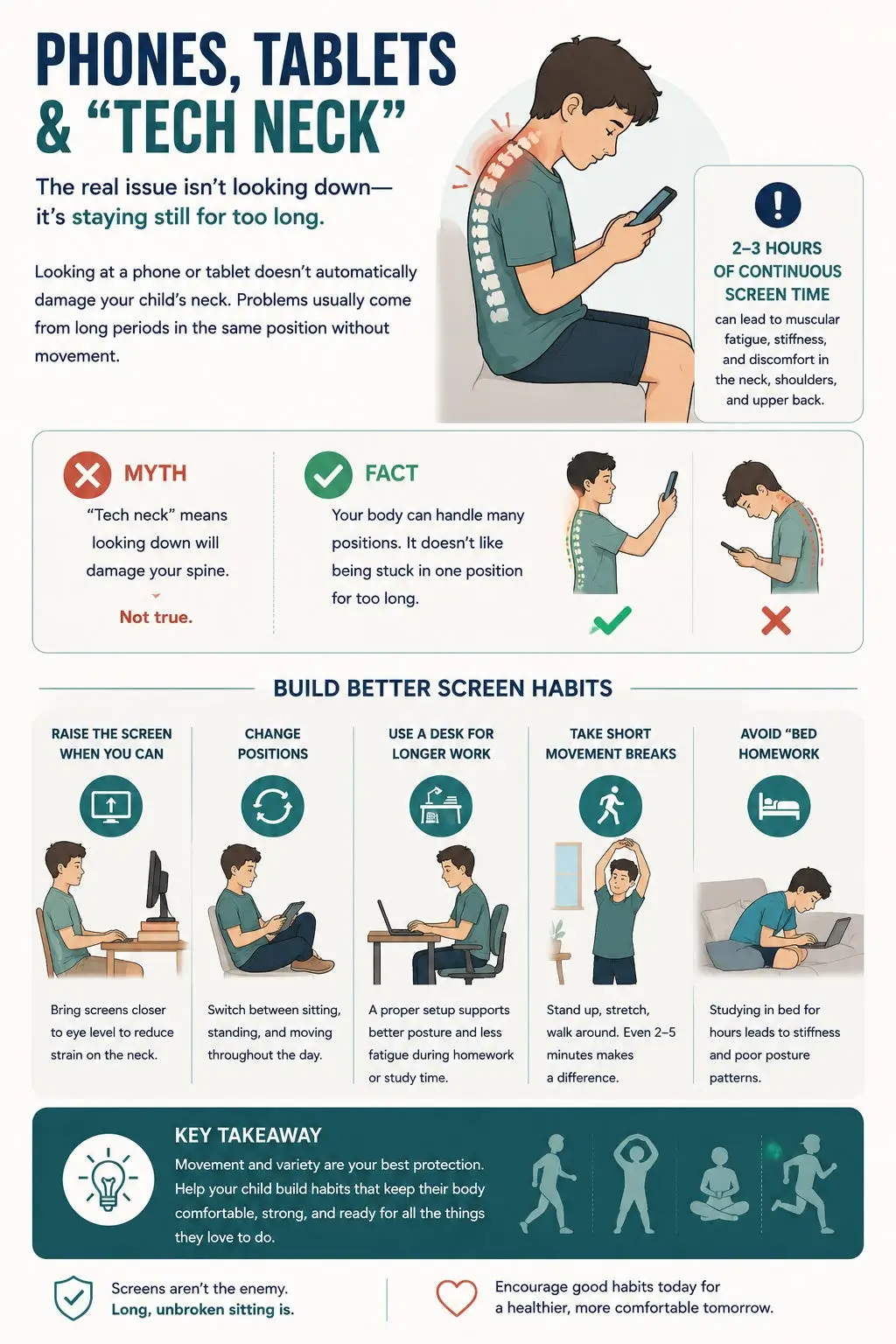
Holding your head forward while using a smartphone for long periods can strain the muscles around your neck. This is often called “tech neck.”
The problem isn't checking one message. It's spending long stretches in the same forward-leaning position.
Try this instead: Bring your phone closer to eye level, take regular screen breaks, change positions frequently and avoid keeping your neck fixed for too long.
Your phone isn't going anywhere. Your neck just needs more freedom to move.
Img Src : Muscle & Joint
A desk job doesn't have to mean a sore neck and aching back. But your workstation can make a difference.
A low monitor may push your neck forward. Poor lower-back support can make long periods of sitting uncomfortable, while a keyboard that's too far away may pull your shoulders forward.
Mayo Clinic recommends keeping your monitor around eye level, supporting your body comfortably and changing positions frequently.
Give your workstation a quick check:
Remember, good ergonomics don't replace movement.
That grocery bag. The laundry basket. A heavy box sitting on the floor.
Everyday lifting is unavoidable. But the way you lift matters.
Repeated heavy lifting or sudden awkward movements can strain the muscles and ligaments around the back. Mayo Clinic recommends using your legs when lifting, keeping the load close to your body and avoiding twisting while carrying it.
Try this instead:
Get close to the object. Bend your knees. Keep the load close to your body. Lift in a controlled manner.
And if something is too heavy or awkward, ask for help.
Your spine doesn't award bonus points for doing the job alone.
When your back hurts, lying down can feel like the obvious solution. But prolonged bed rest isn't generally recommended for ordinary back pain.
WHO recommends appropriate physical activity and rehabilitation for nonspecific low back pain. Mayo Clinic also advises continuing normal activities as much as possible and trying light movement, such as walking, while avoiding activities that increase pain.
That doesn't mean exercising through severe pain or managing every type of pain at home.
Try this instead: If your symptoms allow it, stay gently active and keep moving. If movement worsens your pain significantly or your pain follows an injury, seek professional advice.
Regular movement supports better spinal health.
Your spine still needs care after the laptop closes.
The way you sleep can affect how your neck feels in the morning. NHS guidance recommends keeping your head aligned with the rest of your body and avoiding sleeping on your front when dealing with neck pain. Awkward sleeping positions can also contribute to discomfort.
Then there's stress. When you're stressed, your neck and shoulder muscles can become tense, which may contribute to neck pain.
Try this instead: Choose a comfortable, supported sleeping position, avoid keeping your neck twisted and give your body enough time to recover. Walking, gentle stretching and relaxation can also help.
Good sleep and regular movement support better spine health.
There's another modern habit worth noticing: long drives.
Driving can keep your neck and back in one position for extended periods, which may worsen discomfort. Mayo Clinic notes that holding your head in the same position for too long, including while driving, can contribute to neck pain.
For longer journeys, adjust your seat for comfortable support and take regular breaks to move around.
If your destination is close enough, consider walking instead of driving when practical. Adding more movement to your day can help break up long periods of sitting and support better spine health.
This is where you should stop blaming your chair, phone or pillow for everything.
Pay attention if your pain:
Mayo Clinic recommends medical evaluation for persistent or severe pain, especially when it spreads to the limbs or causes neurological symptoms.
If your symptoms are changing rather than improving, don't assume a better chair will fix the problem. Persistent or recurring spine problems deserve proper assessment because everyday habits are only one possible cause.
Most everyday aches aren't emergencies. But certain symptoms shouldn't be brushed aside.
Seek urgent medical attention if back pain:
Specialists identify trauma, fever and new bowel or bladder-control problems as reasons for emergency medical care in cases of back pain.
For neck pain, severe pain following an injury or symptoms such as weakness, numbness or tingling also warrant prompt medical attention.
The key message isn't to panic over every ache. It's to recognise when the pattern has changed.
Modern life isn't going to slow down for us.
There will still be laptops to work on, phones to scroll through, cars to drive and deadlines to meet.
The goal isn't perfect posture every minute of every day.
It's moving more, avoiding unnecessarily long periods in one position, setting up your workspace sensibly and paying attention when your body signals that something has changed.
So, take that screen break. Get up from your chair. Raise your phone. Lift carefully. Sleep comfortably.
And if your pain keeps getting worse instead of better, don't simply blame your lifestyle.
Sometimes, the smartest thing you can do for your spinal health is know when to ask for professional help.
Everything you need to know
Long periods of sitting can contribute to stiffness and discomfort, especially when combined with poor posture and limited movement. Changing position regularly and staying physically active can help reduce prolonged sedentary time.
Prolonged forward-head positioning while using a smartphone can strain the muscles and structures around the neck. Holding the phone closer to eye level and taking regular breaks can help reduce prolonged strain.
For most ordinary low back pain, prolonged bed rest isn't recommended. Mayo Clinic advises continuing activity as much as possible, including light activity such as walking, provided it doesn't increase pain.
Pain that is persistent, progressively worsening, severe, follows an injury, spreads into the limbs or comes with numbness, weakness, fever or bowel/bladder changes should be medically assessed.






Sep 18, 2026
TUI Staff
Sep 18, 2026
TUI Staff
Sep 17, 2026
TUI Staff
Sep 16, 2026
TUI Staff
Sep 17, 2026
TUI Staff
Sep 17, 2026
TUI Staff
Sep 17, 2026
TUI Staff

Stay informed with independent, fact-checked journalism on technology, environment, government, economy and more. India’s most trusted digital news platform.








Comments (0)
Be the first to comment!