
Ravidas & Ravidassia Community: From Begampura to the Fight for Recognition in 2026
From Begampura's vision of equality to a modern fight for identity, recognition and dignity.
 IN
Fri, Sep 25, 2026 | 02:55 PM IST
IN
Fri, Sep 25, 2026 | 02:55 PM IST


In July 2026, thousands of members of the Ravidassia community gathered in Phagwara, Punjab, to renew a long-standing demand: a separate Ravidassia religion category in the Census. The demand may sound administrative. In reality, it carries decades of history around faith, caste, identity and social dignity.
To understand why the community wants recognition today, we need to go back to the saint at the heart of its story - Guru Ravidas.
Guru Ravidas was a mystic poet-saint associated with the Bhakti movement, generally placed in the 15th and 16th centuries. His teachings emphasised devotion, equality and human dignity, while challenging social hierarchies based on birth. His influence continues across religious and social traditions.
His compositions also have an important place in Sikh history. The SGPC's account of the Guru Granth Sahib lists Ravidas among the 15 Bhagats whose compositions are included in the scripture. This historical connection is one reason the relationship between Ravidas-following communities and Sikhism cannot be reduced to a simple separation between the two.
Among Ravidas's most enduring ideas is Begampura, often translated as the "city without sorrow."
It describes a society without fear, discrimination and exploitation - a place where social status is not determined by caste and people can live with dignity. The idea has remained central to how many followers understand Ravidas's vision of an egalitarian society.
That makes Begampura more than a historical concept. It helps explain why Ravidas continues to matter today, especially to communities whose history has been shaped by caste-based exclusion.
The idea also gives context to the present Ravidassia identity debate. At its heart is a question of dignity: how should a community rooted in this legacy define and represent itself?
Over generations, devotion to Ravidas developed into community institutions, places of worship and shared cultural practices.
But the terminology needs care. Ravidas followers, Ravidassias, Ad-Dharmis and people who revere Ravidas while identifying as Sikh are not necessarily one identical group. Their histories overlap, but their religious and social identities can differ.
The story is also closely linked to Punjab's wider history of caste and Dalit assertion. For readers wanting broader context, The United Indian's explainer on the Dalit movement in India provides a useful background to the larger struggle for equality and representation.
The Ad-Dharm movement emerged in Punjab in the early 20th century and sought a distinct identity for communities facing caste-based exclusion.
One of its prominent leaders was Mangoo Ram. The movement placed figures such as Ravidas, Kabir and Namdev at the centre of a new social and religious imagination. Its demand for separate recognition was not merely symbolic. In the 1931 Census, around 4.19 lakh people identified themselves as Ad Dharmis, mainly in areas including Jalandhar and Hoshiarpur, according to research published by Cambridge University Press.
This history matters because the current demand for recognition did not begin in 2010 - or in 2026. Questions about identity, classification and social dignity have been part of this story for nearly a century.
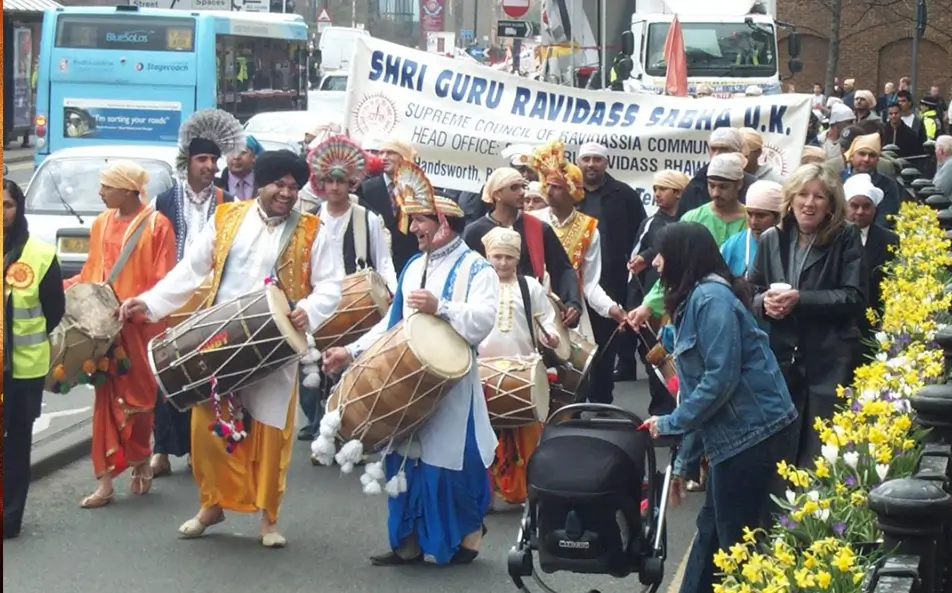
Img Src : Encyclopedia
In modern Ravidassia history, Dera Sachkhand Ballan, near Jalandhar, occupies an important place. Founded in the early 20th century by Baba Sant Pipal Das, it gradually became a major spiritual and institutional centre for followers of Ravidas.
The Dera's connection with Seer Goverdhanpur in Varanasi, regarded by followers as Guru Ravidas's birthplace, also became significant. A memorial temple was developed there, and the site evolved into an important pilgrimage destination for Ravidassia devotees. The Dera has organised pilgrimages from Punjab to Varanasi around Guru Ravidas Jayanti for years.
Then came a tragic turning point.
In May 2009, an attack at a Ravidassia congregation in Vienna killed Sant Ramanand, a senior spiritual leader associated with Dera Sachkhand Ballan, and injured Sant Niranjan Das and other devotees. The incident triggered protests across Punjab and became a watershed moment in the community's modern mobilisation.
In 2010, Dera Sachkhand Ballan formally asserted Ravidassia as a distinct religious identity. The move gave institutional shape to an identity that had been evolving for much longer.
The Dera subsequently began using Amritbani Guru Ravidass Ji, containing 200 hymns attributed to Guru Ravidas, in institutions following this tradition. Distinct places of worship, symbols and religious practices also became part of the community's expression of identity.
It is important not to say that "Ravidassia religion was created in 2010." Ravidas's teachings and communities devoted to him are centuries older. 2010 marked a formal assertion of an independent religious identity by the Dera Ballan tradition.
The wider community has also not been completely uniform on this question. Some Ravidassia and Ad-Dharmi organisations have continued to follow the Guru Granth Sahib, while the Dera Ballan tradition follows Amritbani.
Punjab remains the major centre of Ravidassia identity, particularly the Doaba region, which includes Jalandhar, Hoshiarpur, Kapurthala and Nawanshahr.
Indian Express has cited an estimate of nearly 12 lakh Ravidassias in Doaba. This should be understood as an estimate, not an official Census count.
The community also has a significant diaspora presence. In England and Wales, the 2021 Census recorded 9,700 people identifying as Ravidassia, compared with 11,200 in 2011. The UK Census separately tracks Ravidassia identity through religion and ethnic-group classifications, offering an example of how such an identity can be captured statistically.
This brings us to the issue making headlines in 2026.
The community argues that Ravidassia has evolved into a distinct religious identity, with its own places of worship, scripture, symbols, practices and institutions. Supporters therefore want a dedicated category through which followers can record that identity in the Census.
In July 2026, the Phagwara gathering renewed the demand. The organisers sent a representation to the President, Prime Minister and Union Home Minister, asking for separate recognition.
The argument is essentially about visibility and recognition: if a community understands itself as religiously distinct, its members should have a way to record that identity accurately.
It is also worth separating Census recognition from political benefits. A separate religious category would not automatically create new political reservations, constituencies or constitutional privileges.
For readers wanting more background on why Census categories matter in questions of representation and social policy, TUI's Caste Census in India explainer offers useful context.
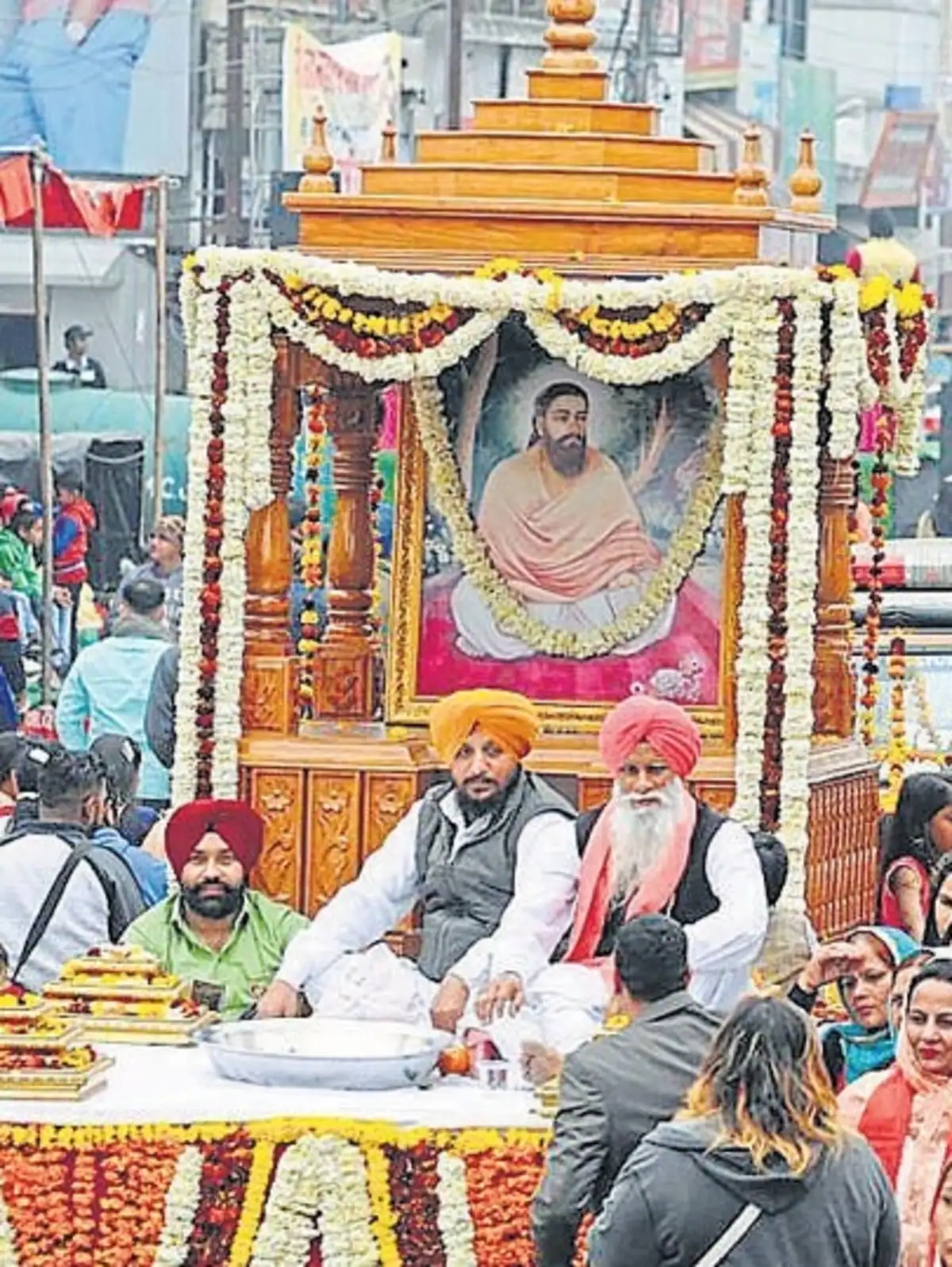
Img Src : Hindustan Times
The Ravidassia question now sits at the intersection of religion, caste, identity, representation and social dignity.
It is also attracting political attention because Punjab is scheduled to hold Assembly elections in 2027. But reducing the current demand to electoral politics would miss the larger story. The question of recognition has roots that go back much further.
Guru Ravidas imagined Begampura as a society without fear, exclusion or inequality. Centuries later, the Ravidassia community is asking a different but related question: how should a community shaped by that legacy be seen, counted and understood?
The answer may begin with a Census category. But the larger story is about something more enduring - the right of a community to remember its history, define its identity and seek recognition on its own terms.
The story of Ravidas and the Ravidassia community is ultimately about more than religion or a Census category. It is about dignity, identity and the right to be recognised on one’s own terms. From Ravidas’s vision of Begampura to the community’s present-day call for recognition, the journey reflects a centuries-old search for equality and belonging. As India records its changing social landscape, this conversation deserves to be understood with history, context and sensitivity.
Everything you need to know
Guru Ravidas was a prominent Bhakti-era saint and poet whose teachings emphasised devotion, equality and human dignity. His compositions are also included in the Guru Granth Sahib.
The Ravidassia community broadly refers to communities whose spiritual and cultural identity is rooted in the teachings and legacy of Guru Ravidas. However, Ravidassia, Ad-Dharmi and Ravidas-following Sikh identities should not automatically be treated as identical.
Begampura, meaning the “city without sorrow,” represents Ravidas's vision of an egalitarian society free from caste-based discrimination, fear and exploitation.
The community seeks a separate Census category to formally recognise its distinct religious identity and improve demographic visibility and representation in official records.
While devotion to Guru Ravidas dates back centuries, 2010 marked a formal assertion of an independent Ravidassia religious identity by Dera Sachkhand Ballan following developments in the community's modern history.




Sep 24, 2026
TUI Staff
Sep 24, 2026
TUI Staff
Sep 21, 2026
TUI Staff
Sep 21, 2026
TUI Staff
Sep 24, 2026
TUI Staff
Sep 23, 2026
TUI Staff
Sep 22, 2026
TUI Staff
Sep 21, 2026
TUI Staff

Stay informed with independent, fact-checked journalism on technology, environment, government, economy and more. India’s most trusted digital news platform.

Comments (0)
Be the first to comment!