
Paryushan Parva 2026: Dates, Rituals, Fasting and the Meaning of Samvatsari
Eight sacred days of reflection, restraint and forgiveness
 IN
Fri, Oct 23, 2026 | 05:40 PM IST
IN
Fri, Oct 23, 2026 | 05:40 PM IST


What if one of India's most important religious observances asks you to do something harder than celebrate - to look honestly at your own mistakes and ask for forgiveness?
That is the spirit behind Paryushan - a sacred period of fasting, self-reflection, restraint, prayer and repentance in Jainism. For Shwetambar Jains, the eight-day observance in 2026 culminates in Samvatsari, when forgiveness becomes the central theme.
There is also an important distinction to know: Shwetambar Jains observe the eight-day Paryushan Parva, while Digambar Jains observe the ten-day Das Lakshan Parva. Understanding this difference makes the dates, rituals and traditions much easier to follow.
According to the 2026 Jain calendar, the Shwetambar observance begins on Tuesday, September 8, 2026, with the final day falling on Tuesday, September 15. The Jain calendar lists September 15 as Samvatsari Parva.
| Tradition | Observance | 2026 dates |
| Shwetambar | Eight-day Paryushan | September 8–15 |
| Shwetambar | Samvatsari | September 15 |
| Digambar | Das Lakshan Parva | September 16–25 |
| Digambar | Anant Chaturdashi | September 25 |
| Digambar | Kshamavani | September 26/27, depending on community calendar |
The difference in the last date is worth noting. Current Jain sources show variations in the date followed for the Digambar forgiveness observance, so readers should check their local Jain sangh or panchang for the applicable date.
At its heart, this is a period of turning inward. Rather than focusing mainly on outward celebration, devotees use these days to examine their conduct, practise restraint, study Jain teachings and work towards spiritual purification.
The observance is closely connected with Ahimsa, the Jain principle of non-violence and minimising harm to living beings. Its timing also falls within the monsoon period traditionally associated with Chaturmas, when Jain ascetics remain settled in one place.
Jain educational material describes the period as one involving fasting, spiritual retreats, Pratikraman and the study of sacred texts. It also identifies the long Samvatsari Pratikraman as the peak of the observance.
The practices can differ between communities and individuals, but several are central to the eight-day period.
Pratikraman involves looking back at one's actions, recognising mistakes and expressing repentance. Samayika encourages a period of equanimity and spiritual concentration, while Swadhyay involves the study and reflection of religious teachings.
Religious discourses, meditation, prayer and acts of compassion are also part of the observance in many communities.
The important point is that there is no single ritual checklist that every Jain follows in exactly the same way. Personal vows, health, family tradition and sect can influence how an individual observes the period.
Fasting is among the most visible practices associated with these sacred days, but its purpose goes beyond simply giving up food.
Depending on their capacity and tradition, devotees may observe different forms of restraint, including Upvas, Ekasana, Ayambil and longer fasts such as Atthai.
The underlying idea is Tapasya, or austerity and self-discipline. Voluntarily reducing physical wants can create greater space for prayer, reflection and control over attachment.
An important distinction for readers: not every Jain undertakes an eight-day fast. The duration and form of fasting can vary considerably.
For Shwetambar Jains, the Kalpa Sutra has a particularly important place during the observance.
Jainpedia identifies it as a major Shwetambar Jain text that is traditionally read and recited during the festival. Its first section discusses the lives of the Jinas, particularly Mahavir Swami, Parshva Nath, Nemi Nath and Rishabha Dev ji.
Readings also bring the story of Mahavir Swami's birth and the account of Queen Trishala's fourteen auspicious dreams into focus.
This adds a historical and cultural dimension to the period: it is not only about fasting, but also about reconnecting with Jain teachings, stories and spiritual traditions.
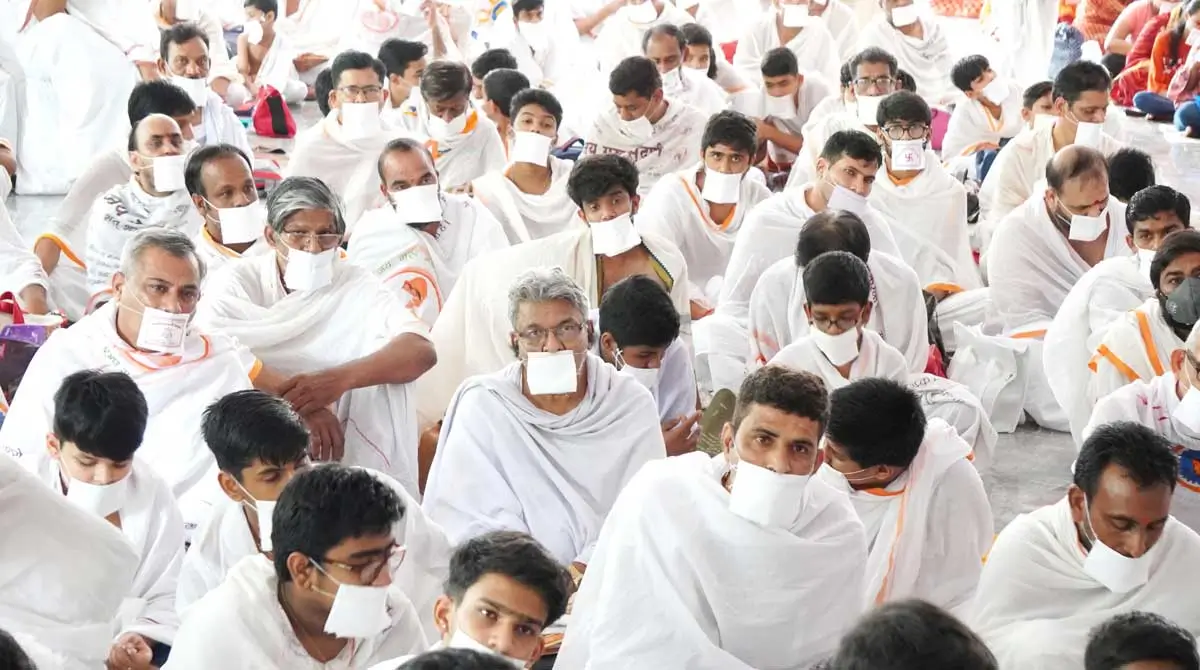
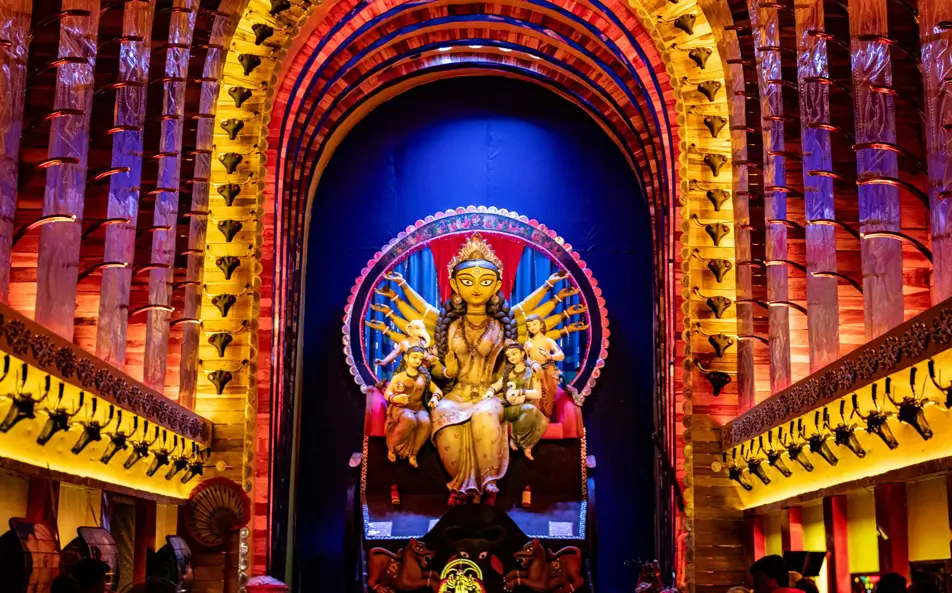
Img Src : Telangana Today
Tuesday, September 15, 2026, marks the culmination of the Shwetambar eight-day observance.
On this day, devotees traditionally undertake Samvatsari Pratikraman, reflecting on their actions and seeking forgiveness for harm caused knowingly or unknowingly.
The emphasis is on accountability. It asks a person to look beyond the easy apology and consider what needs to change.
That is what gives the final day its emotional weight: forgiveness is not treated merely as a phrase to exchange, but as the result of reflection and repentance.
Michhami Dukkadam is a Prakrit expression associated with seeking forgiveness. It is broadly understood as a wish that one's wrongful actions become fruitless or are forgiven. Jain sources describe it in connection with acknowledging harm caused through thought, word or deed.
Its meaning is therefore deeper than simply saying “sorry”.
The traditional sentiment extends forgiveness to all living beings and asks that forgiveness be granted in return. The emphasis is on sincerity, recognition of wrongdoing and a resolve to avoid repeating it.
The philosophy behind the observance connects forgiveness with Ahimsa. Harm is not understood only as physical violence; words, intentions and actions can also cause hurt.
That makes the practice surprisingly relevant to everyday life. It encourages people to ask:
The traditional forgiveness prayer expresses friendship towards all living beings and the rejection of enmity.
In that sense, the message is simple but demanding: look within, acknowledge, seek forgiveness, forgive and change.
This distinction is essential when discussing Jain observances in 2026.
Shwetambar Jains observe the eight-day period from September 8 to September 15. Digambar Jains observe Das Lakshan Parva from September 16 to September 25, focusing on ten supreme virtues, including forgiveness, humility, straightforwardness, truth, self-restraint, austerity, renunciation, non-attachment and celibacy. The September 25 date also coincides with Anant Chaturdashi.
The Digambar tradition then observes Kshamavani, its forgiveness-focused observance. Current 2026 sources differ between September 26 and September 27, which is why readers should follow the calendar of their own community.
In an age of instant messages and quick apologies, the deeper idea behind these days offers a useful reminder: saying sorry is only the beginning.
A meaningful apology requires recognising what happened, accepting responsibility and making a genuine effort not to repeat the harm.
That is perhaps why this Jain festival has a message that can resonate far beyond its religious setting. It turns forgiveness from a polite social gesture into an exercise in accountability, humility and better relationships.
And maybe that is the most powerful takeaway of all: before asking the world to forgive us, we first have to be honest with ourselves.
Everything you need to know
Shwetambar Jains will observe Paryushan Parva from September 8 to September 15, 2026, with Samvatsari falling on September 15.
Michhami Dukkadam is a traditional Jain expression of seeking forgiveness for harm caused knowingly or unknowingly through one's thoughts, words or actions.
Fasting is practised as a form of self-discipline, austerity and spiritual reflection. The type and duration of fasting can vary between individuals and Jain communities.
Samvatsari is the concluding day of the eight-day Shwetambar Paryushan observance. It is marked by Pratikraman, repentance and seeking forgiveness.
Shwetambar Jains conclude their eight-day Paryushan with Samvatsari, while Digambar Jains observe Das Lakshan Parva and subsequently observe Kshamavani, their forgiveness-focused observance.


Oct 23, 2026
TUI Staff
Oct 23, 2026
TUI Staff
Oct 23, 2026
TUI Staff
Oct 23, 2026
TUI Staff
Oct 23, 2026
TUI Staff
Oct 23, 2026
TUI Staff
Oct 23, 2026
TUI Staff
Oct 23, 2026
TUI Staff

Stay informed with independent, fact-checked journalism on technology, environment, government, economy and more. India’s most trusted digital news platform.



Comments (0)
Be the first to comment!