
Eiffel Tower Shut After BAPS Visit Sparks Row Over Female Staff
Paris's most-visited monument went dark on a Monday evening after staff said female colleagues were told to make way for men during a BAPS delegation's visit.
 IN
Fri, Oct 23, 2026 | 10:10 PM IST
IN
Fri, Oct 23, 2026 | 10:10 PM IST


A private religious visit to one of Paris's most famous landmarks has triggered an unexpected workplace equality row.
The Eiffel Tower was temporarily closed on Monday, September 7, after employees walked out over claims that female staff were asked to step away from their workstations during a visit by a Hindu delegation linked to BAPS, the Bochasanwasi Akshar Purushottam Swaminarayan Sanstha. Paris authorities have launched an investigation into the incident.
The landmark reopened on Tuesday, September 8, but the controversy has raised wider questions about religious accommodation, workplace equality and women's rights.
Employees protested claims that female staff were sidelined during a private Hindu delegation visit at Eiffel Tower.
Around 100 people linked to BAPS, a global Hindu organisation.
Female employees were asked to leave some workstations while male colleagues took their places.
The organisation said the visit was coordinated with management and denied knowledge of anyone being prevented from entering.
Paris authorities are investigating the circumstances surrounding the visit.
The dispute centres on a private visit to Eiffel Tower on Saturday, September 5, involving around 100 people connected to BAPS.
According to union representatives, female employees were asked to leave their workstations as the Hindu group moved through the monument. Male colleagues allegedly took their places in some areas.
Diane Davoine, a union representative cited by Reuters, said women were asked to step away so men could replace them. Employees later gathered to discuss the incident, leading to a walkout on Monday.
The protest disrupted operations and forced the landmark to close temporarily.
However, one distinction is important. The available reporting does not establish that BAPS personally instructed individual female employees to leave their posts. The exact instructions, who issued them and how they were implemented remain part of the investigation.
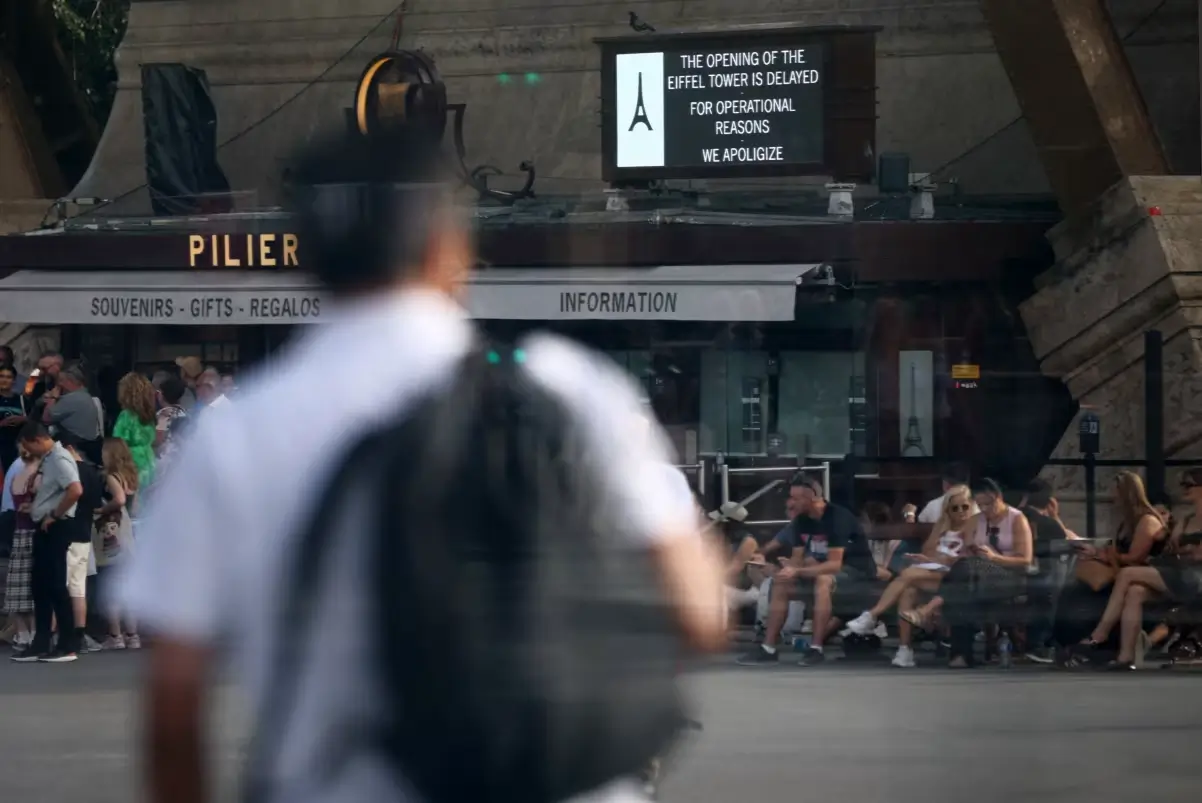
Img Src : CNN
Later reporting put the spotlight on the monument's management as well.
The operator, SETE, acknowledged that arrangements had been made to limit interactions between the visiting delegation and women. Management subsequently indicated that such conditions should not have been accepted.
That detail matters because responsibility may not rest solely with the visiting group. It also raises questions about the decisions made by the venue while organising a private visit.
A public workplace must balance visitor requirements with its responsibilities towards employees. The dispute has therefore become a question of where religious accommodation ends and unequal treatment at work begins.
BAPS said the visit was arranged at the beginning of opening hours because of the size of the delegation and to minimise disruption to other visitors.
The organisation said it was not aware of anyone being prevented from entering the monument. It also apologised for any “pain or inconvenience caused”.
That response does not confirm the employees' account. It does, however, acknowledge the concerns surrounding the visit.
The delegation was in France during events linked to the inauguration of a major BAPS Hindu temple in Bussy-Saint-Georges, near Paris. The inauguration formed part of a wider cultural programme organised by the movement.
The timing explains why a large BAPS delegation was in the French capital, but it does not establish any connection between the temple inauguration and the workplace dispute.
At its heart, the dispute concerns an allegation that female employees were treated differently because they were women.
That is why the controversy has quickly moved beyond a disagreement about visitor arrangements and into the wider debate over women's rights and equality at work.
French officials have responded strongly to the allegations. Paris authorities opened an investigation, while senior political figures criticised any arrangement that could result in women being sidelined because of their gender.
The issue also touches on France's approach to religious accommodation. Visitors may have religious or cultural practices that venues try to respect. But employers also have duties towards their staff.
The investigation will therefore need to establish what was requested, what management agreed to and whether employees were actually removed or replaced because they were women.
BAPS is a global Hindu organisation with temples and community activities in several countries. Its Paris-area temple was inaugurated during a major cultural programme that brought together devotees and visitors from different parts of the world.
The organisation describes its temples and activities as spaces for worship, culture, education and community engagement.
The current controversy should therefore be assessed on the facts of this specific incident rather than used to draw conclusions about Hinduism or Indian communities more broadly.
For Indian readers, the episode also highlights a broader challenge faced by large religious and cultural organisations operating overseas: how to respect local laws and workplace norms while maintaining their own traditions and practices.
That question becomes especially important when private events take place inside public-facing institutions.
TUI's related coverage of [India-France cultural and community ties] can offer useful background on the growing cultural engagement between the two countries.
The immediate disruption has ended. The landmark reopened on Tuesday, September 8, after the staff protest.
The investigation remains the key next step.
Authorities will need to determine:
Those answers will determine whether the incident was an isolated failure in handling a private visit or whether the venue needs clearer rules for future delegations.
For BAPS, the episode comes at a highly visible moment following the opening of its new temple near Paris. For French institutions, it raises a different challenge: how to accommodate religious and cultural visitors without compromising workplace equality.
The central issue is not whether religious visitors can have particular preferences. It is whether those preferences can shape how employees are treated.
That is what the investigation now needs to clarify.
Everything you need to know
Staff walked out and the tower closed late on Monday, 7 September 2026, after employees alleged that female colleagues were asked to leave their workstations so men could take their places during a private visit by a Hindu delegation linked to BAPS, according to Reuters.
The delegation was linked to BAPS, the Bochasanwasi Akshar Purushottam Swaminarayan Sanstha, and included around 100 people in France for events tied to the inauguration of a Hindu temple in the Paris suburbs, per Reuters.
BAPS said the visit was arranged at the start of opening hours to avoid disrupting other visitors due to the size of its delegation, denied that anyone was blocked from entering, and apologised for any pain or inconvenience caused, according to a statement quoted by Reuters.





Oct 23, 2026
TUI Staff
Oct 23, 2026
TUI Staff
Oct 23, 2026
TUI Staff
Oct 23, 2026
TUI Staff
Oct 23, 2026
TUI Staff
Oct 23, 2026
TUI Staff
Oct 23, 2026
TUI Staff
Oct 23, 2026
TUI Staff

Stay informed with independent, fact-checked journalism on technology, environment, government, economy and more. India’s most trusted digital news platform.



Comments (0)
Be the first to comment!