
Delhi's Cleanest Air of 2026 Is a Monsoon Gift, Not a Pollution Fix
Delhi's AQI hit its best reading in nearly ten months this July, but landfills, traffic and dust that cause winter smog are all still there.
 IN
Thu, Oct 08, 2026 | 03:06 PM IST
IN
Thu, Oct 08, 2026 | 03:06 PM IST


Delhi breathed its cleanest air of 2026 in early July, with the city’s 24-hour average Delhi AQI dropping to 59. That puts it in the “Satisfactory” category and makes it the capital’s best reading in more than ten months.
The catch: it's the monsoon doing the work, not any fix to what actually pollutes Delhi's air. Landfills, vehicle exhaust and construction dust haven't gone anywhere. They're just being washed and blown away for a few months, the way they are every year before autumn brings them back.
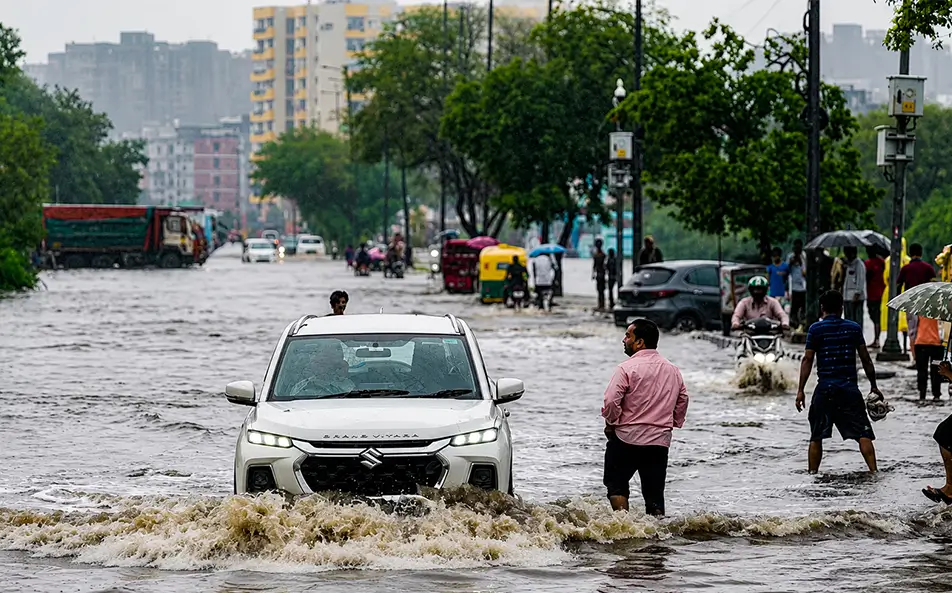
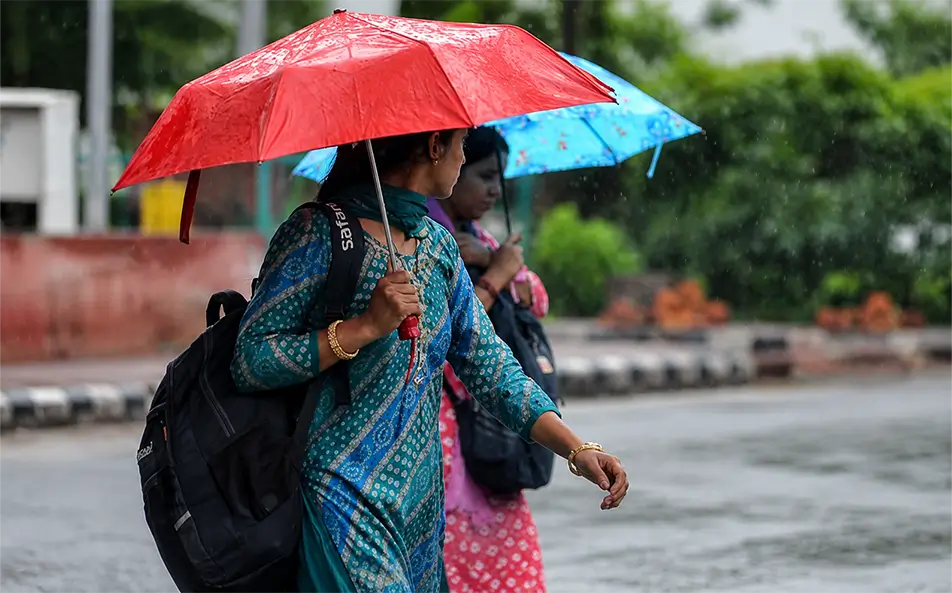
Widespread showers across the city pulled the air quality index down sharply, and cooler weather helped. The maximum temperature at IMD's Safdarjung observatory settled at 30.8°C, four to five degrees below the seasonal average, with light rain and cloudy skies expected to continue, per The Logical Indian.
But zoom into a single day and the picture looks far shakier. Real-time monitoring on July 9 showed Delhi's AQI swinging from a 'Good' 43 at 4:31 AM to a 'Poor' 127 by 9:31 PM in New Delhi, according to the World Air Quality Index Project. The Anand Vihar station registered 'Unhealthy' levels at 7 AM the same morning. A city can't call itself clean when its air quality changes category twice before lunch.
Just weeks before the monsoon relief, CPCB's official bulletin showed Delhi's daily average AQI breaching 200 to hit 266, a 'Poor' reading, per Business Standard, prompting the Commission for Air Quality Management (CAQM) to weigh Graded Response Action Plan curbs. Days later, with AQI at 179, the CAQM's GRAP Sub-Committee unanimously revoked Stage-I restrictions across the entire NCR, citing strong surface winds, thunderstorms and light rain, according to a PIB press release. Weather, not enforcement, made the call.
Zoom out further and the trend is thinner than the headline suggests. AQI in delhiI (US) for 2026 stands at 166, only about 1.1% better than 2025's 179, per AQI.in's historical analysis. That same tracker notes zero percent of the 182 days recorded in 2026 have met WHO's safe air quality limit. Not one day.
This is Delhi’s real pollution problem.
Delhi's three legacy landfills, at Okhla, Bhalswa and Ghazipur, still held roughly 9.9 million tonnes of waste as of June, according to The Patriot: 1.23 million tonnes at Okhla, 1.84 million tonnes at Bhalswa and 6.9 million tonnes at Ghazipur. Only about 73 acres have been reclaimed across all three sites so far.
The Municipal Corporation of Delhi plans to plant trees on more than 20 acres of reclaimed Okhla land as biomining nears completion, with a December 2026 deadline to clear the site fully, though officials warned monsoon rain could slow the biomining work itself. That December target sits awkwardly next to an earlier report citing a July 2026 clearance deadline for the same landfill, a discrepancy worth watching as the year plays out.
Delhi Chief Minister Rekha Gupta has staked her word on the bigger promise: "I want to tell people of Delhi that by the end of 2026, we will end the legacy waste of two garbage mountains in Okhla and Bhalaswa," she said, per The News Mill. She has also flagged the transport gap directly: "Vehicular emission is said to be a major cause of pollution, but public transport was never taken to the extent it should have been."
On that front, Delhi's public bus fleet is meant to grow from around 3,600 buses today to 7,700 by December 2026, on the way to a full requirement of 11,000 buses by 2028. It's a real target, but it's also still 18 months from being met even in its first phase, exactly the kind of gap the city's ₹1.03 lakh crore budget was meant to close ahead of this year's monsoon and smog seasons.
None of this cancels the good news. A daily Delhi AQI of 59 is genuinely better air than most Delhiites have breathed in months, and it's worth enjoying while it lasts. But the mechanics are unchanged: dust, traffic and rotting landfill waste are still being generated every single day, monsoon or not.
The real test comes once the rain stops. Delhi's air has followed the same script for years: clean in the monsoon, choking by Diwali. Whether the landfill clearances, the bus expansion and the GRAP framework hold up once the wind dies down in October will decide whether 2026's smog season looks any different from the last one.
Whether the government can turn that break into lasting Delhi air quality improvement is the question that matters most.
Everything you need to know
Widespread monsoon showers and cooler weather pulled Delhi's daily average AQI down to 59, its cleanest reading in nearly ten months, according to The Logical Indian. Rain and stronger winds disperse pollutants, but the underlying sources of pollution are unchanged.
No. Real-time monitors showed AQI swinging from 'Good' (43) to 'Poor' (127) within a single day in July 2026, and the city's annual average AQI of 166 is only about 1.1% better than 2025. Zero percent of days in 2026 have met WHO's safe air quality limit, per AQI.in.
The MCD is biomining legacy waste at Okhla, Bhalswa and Ghazipur landfills, which held roughly 9.9 million tonnes as of June 2026, with a stated December 2026 target to clear them. Delhi is also expanding its public bus fleet from about 3,600 to 7,700 by December 2026, en route to 11,000 by 2028.




Sep 28, 2026
TUI Staff
Sep 22, 2026
TUI Staff
Sep 16, 2026
TUI Staff
Sep 15, 2026
TUI Staff
Oct 07, 2026
TUI Staff
Oct 06, 2026
TUI Staff
Oct 05, 2026
TUI Staff
Oct 05, 2026
TUI Staff

Stay informed with independent, fact-checked journalism on technology, environment, government, economy and more. India’s most trusted digital news platform.





Comments (0)
Be the first to comment!