
Tukaram Mundhe: From 25 Transfers to Leading Maharashtra’s Food Safety Revolution
The IAS officer redefining food safety
 IN
Sat, Sep 26, 2026 | 10:37 PM IST
IN
Sat, Sep 26, 2026 | 10:37 PM IST

Can One IAS Officer Change What Ends Up on Your Plate?
Imagine walking into your favourite restaurant without wondering whether the kitchen is hygienic, the ingredients are fresh, or the food you’re about to eat is safe. That’s the kind of confidence every consumer deserves - and it’s exactly the conversation Tukaram Mundhe has brought to the forefront in Maharashtra.
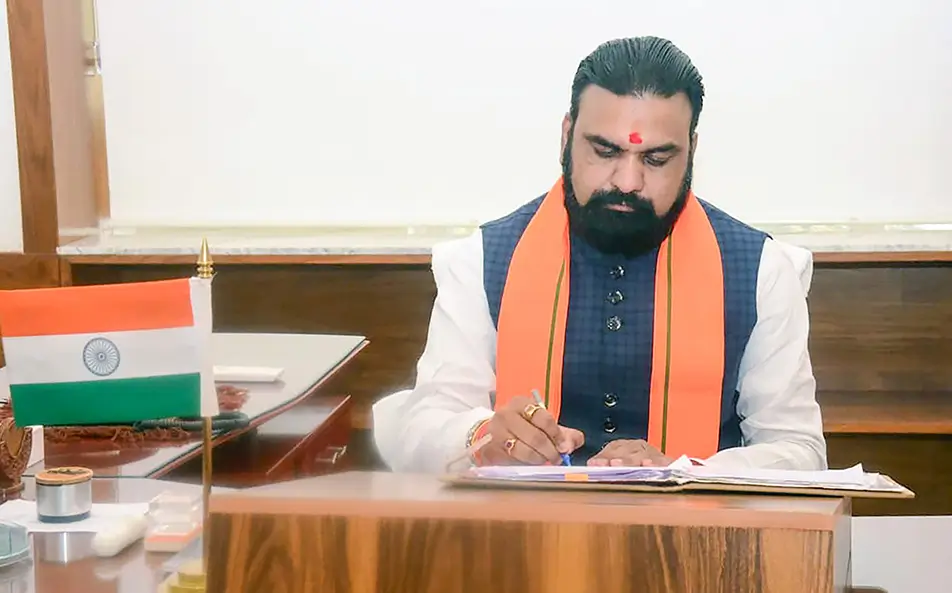
Known for his uncompromising administrative style, the 2005-batch IAS officer has spent over two decades earning a reputation as one of the state’s strictest bureaucrats. Today, as the Commissioner of the Maharashtra Food and Drug Administration (FDA), his large-scale inspections, restaurant crackdowns, and food safety initiatives have made headlines across the country.
But his journey isn’t just about raids and regulations. It’s about a career marked by 25 transfers in 21 years, a commitment to public accountability, and the challenge of balancing consumer safety with the livelihoods of thousands of food businesses.
Here’s a closer look at his remarkable administrative journey, the food safety revolution he’s leading, and why his work has sparked both admiration and debate.
Tukaram Mundhe is a 2005 batch IAS officer of the Maharashtra cadre who has built a reputation for integrity, discipline, and strict governance. Throughout his administrative career, he has served in several important positions across Maharashtra, including Nagpur, Nashik, Navi Mumbai, and multiple state government departments.
What truly sets him apart, however, is his uncompromising approach to enforcing rules. His tenure in different departments has often been marked by bold administrative decisions and anti-corruption measures, earning him both widespread public support and frequent transfers.
According to multiple media reports, Mundhe has been transferred 25 times in 21 years, making him one of Maharashtra’s most frequently transferred IAS officers. For many, these repeated transfers reflect his unwillingness to bend under pressure, while others see them as evidence of the complex realities of public administration.
In 2026, Tukaram Mundhe was appointed Commissioner of the Maharashtra Food and Drug Administration (FDA), an organisation responsible for protecting public health by regulating food safety and drug quality across the state.
The FDA oversees:
Soon after taking charge, Mundhe introduced a clear public health vision often summarised as:
“Safe Food, Safe Drugs, Safe Maharashtra.”
Rather than treating inspections as routine administrative work, his focus has been on building a stronger culture of compliance across Maharashtra’s food industry.
Within just a few months of taking office, Tukaram Mundhe launched one of Maharashtra’s largest food safety enforcement drives.
According to reports by The Better India, the FDA has carried out:
The inspections covered restaurants, hotels, dairies, food manufacturers, wholesalers, retailers, and eateries across the state.
The objective wasn’t simply to penalise businesses—it was to reduce food adulteration, improve hygiene standards, and strengthen consumer confidence.
Perhaps the strongest message of Tukaram Mundhe’s leadership came when FDA officials inspected food facilities inside the Bombay HC premises.
During the inspection, reports revealed that two kitchens were operating without valid licences, while another received a compliance notice.
The action drew widespread attention because it demonstrated that the same food safety standards apply to everyone - whether it’s a roadside eatery, a five-star restaurant, or the Bombay HC canteens.
For many observers, this reinforced Mundhe’s reputation for applying rules uniformly, without making exceptions based on status or institution.
Numbers alone don’t tell the entire story.
Industry reports suggest that restaurants across Maharashtra have started taking food safety more seriously by:
While inspections may initially seem punitive, they can also encourage long-term behavioural changes that benefit both businesses and consumers.
For customers, improved hygiene translates into greater confidence in the food they consume.
Supporters believe Tukaram Mundhe represents a style of governance that places public welfare above convenience.
He is often recognised for:
In a state where food safety concerns frequently make headlines, many citizens see his proactive approach as a necessary step towards protecting public health.
Despite receiving praise for his enforcement drive, Mundhe also found himself at the centre of a political controversy.
During a public event, he remarked that if he ate Saoji mutton, the famous spicy cuisine from Maharashtra’s Vidarbha region, he would “fall sick for a month.”
The comment quickly went viral and drew criticism from restaurant owners, food entrepreneurs, and members of the public who believed it unfairly portrayed an entire culinary tradition.
Revenue Minister Chandrashekhar Bawankule later stated that while authorities should take strict action against businesses violating food safety norms, they should avoid making generalised remarks that could negatively impact an industry supporting thousands of families.
Mundhe subsequently clarified that his statement reflected his personal inability to consume very spicy food and was not intended as criticism of Saoji cuisine or the businesses associated with it.
The episode highlighted how communication can become just as significant as policy implementation.
The Saoji controversy also raised an important public policy question.
How should governments ensure strict food safety while also protecting traditional businesses and regional food cultures?
Consumers deserve hygienic, safe, and properly regulated food.
At the same time, thousands of family-run restaurants and local businesses depend on traditional cuisines for their livelihood.
The consensus is clear: action should be taken wherever food safety standards are violated. However, enforcement should remain focused on non-compliance rather than creating negative perceptions about an entire cuisine or community.
Finding that balance remains one of the biggest governance challenges in food regulation.
The recent FDA inspections also offer valuable lessons for businesses.
Restaurants can strengthen compliance by:
Strong compliance isn’t just about avoiding penalties - it also builds consumer trust.
Few bureaucrats have generated as much public attention in recent years as Tukaram Mundhe.
For supporters, he represents fearless governance and a renewed focus on consumer safety. For critics, his tenure also underscores the importance of balanced communication and procedural fairness.
Regardless of differing opinions, one outcome is undeniable: food safety has become a mainstream public conversation under his leadership.
As Maharashtra continues strengthening its regulatory framework, his tenure will likely be remembered as a defining chapter in the state’s efforts to improve food safety, promote accountability, and encourage better compliance across the food industry.
Editorial Note: This article is intended to provide an informative overview based on publicly available reports. Where viewpoints differ, efforts have been made to present them in a balanced and factual manner.
Everything you need to know
Tukaram Mundhe is a 2005-batch IAS officer of the Maharashtra cadre and the current Commissioner of the Maharashtra Food and Drug Administration (FDA). He is widely known for his strict administrative style, anti-corruption image, and large-scale food safety enforcement initiatives.
Tukaram Mundhe is known for his uncompromising approach to governance and for being transferred 25 times during his administrative career. As FDA Commissioner, he has led one of Maharashtra's biggest food safety crackdowns, targeting food adulteration and hygiene violations.
Under Tukaram Mundhe's leadership, the Maharashtra FDA has conducted over 1,100 inspections, cancelled dozens of restaurant licences, sealed hundreds of establishments, and seized unsafe food worth approximately ₹50 crore to strengthen food safety standards.
Tukaram Mundhe made a personal remark about Saoji mutton at a public event, which many interpreted as criticism of the traditional Vidarbha cuisine. After the controversy, he clarified that he was referring only to his own inability to eat very spicy food, not the cuisine itself.
According to multiple reports, Tukaram Mundhe has been transferred 25 times in 21 years. His frequent transfers are often linked to his strict enforcement of rules and uncompromising administrative decisions, though opinions differ on the reasons behind these transfers.






Sep 23, 2026
TUI Staff
Sep 23, 2026
TUI Staff
Sep 19, 2026
TUI Staff
Sep 18, 2026
TUI Staff
Sep 25, 2026
TUI Staff
Sep 25, 2026
TUI Staff
Sep 25, 2026
TUI Staff
Sep 24, 2026
TUI Staff

Stay informed with independent, fact-checked journalism on technology, environment, government, economy and more. India’s most trusted digital news platform.






Comments (0)
Be the first to comment!