
Jeetendra Mishra Becomes Ram Temple CEO: 6 Reasons Why Was a Former Air Marshal Chosen?
From Air Command to leading Ram Temple administration
 IN
Sun, Oct 18, 2026 | 04:37 PM IST
IN
Sun, Oct 18, 2026 | 04:37 PM IST


From leading India's Western Air Command during Operation Sindoor to taking charge of the administration of the Ram Temple in Ayodhya - Jeetendra Mishra's second innings could hardly be more different from his first.
The Shri Ram Janmabhoomi Teerth Kshetra Trust has appointed Air Marshal (Retd.) Jeetendra Mishra as its first full-time CEO. The decision, taken on September 2, 2026, comes at an important moment for the temple. The focus is gradually shifting from construction to the long-term management of a major religious and pilgrimage institution.
That makes this appointment more than a change of personnel. For anyone following Ayodhya news, the bigger question is: why did the Trust choose a former Air Marshal for a job that has no conventional military connection?
The answer lies in six factors - from Mishra's leadership experience and role during Operation Sindoor to the Trust's growing administrative needs.
He spent about four decades in the Indian Air Force. He was commissioned as a fighter pilot on December 6, 1986, and later held several senior command and staff positions, including Deputy Chief of Integrated Defence Staff and Air Officer Commanding-in-Chief of the Western Air Command.
Reports on his career state that he logged more than 3,000 flying hours and flew more than 18 types of aircraft. He also received the Ati Vishisht Seva Medal and Vishisht Seva Medal.
Mishra was heading the Western Air Command during Operation Sindoor. The Ministry of Defence later recorded his participation in discussions on the operation and its lessons. He was also among the senior military officers awarded the Sarvottam Yudh Seva Medal for their roles during the operation.
His military record, therefore, provides the background to understand why his organisational experience may have appealed to the Trust.
The first reason is simple: Mishra knows what it means to lead a large and complex organisation.
Senior military command involves much more than operational duties. It requires managing people, resources, planning, coordination and systems while working under pressure.
Those skills can be useful in the administration of the Ram Mandir, even though the two environments are very different.
The temple's administration now involves security, staffing, devotee facilities, crowd management, technology and coordination with government agencies. Mishra's experience in handling complex organisations could help bring greater structure to these responsibilities.
Mishra has identified discipline, integrity and teamwork as qualities that shaped his military career.
In an interview with Hindustan Times, he said his strategy could not be made independently. It would need to be developed under the Trust's guidance and with his team.
That approach matters because the CEO will not be operating alone. The role involves working with trustees, employees, religious authorities, government departments and other stakeholders.
Mishra has also repeatedly stressed teamwork when speaking about his military career. Discussing Operation Sindoor, he credited his team, the Indian Air Force, citizens and others rather than presenting the achievement as an individual accomplishment.
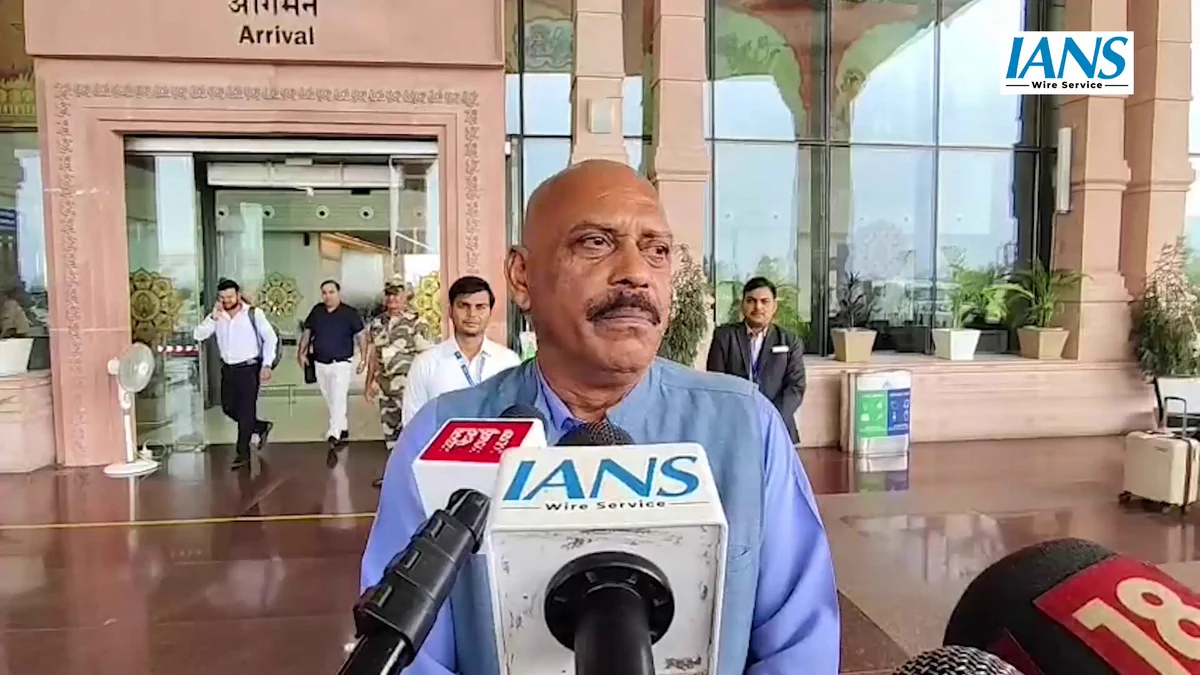
Img Src : Twitter
Mishra's role during Operation Sindoor is another important part of the picture.
He was the Air Officer Commanding-in-Chief of the Western Air Command when the operation was conducted. That placed him in a demanding operational environment involving planning, coordination and decision-making.
The Ministry of Defence has also documented his engagement on lessons from Operation Sindoor, including discussions around air power and joint operations.
Selection committee member Suresh Haware also highlighted Mishra's Operation Sindoor experience while discussing why he was suitable for the CEO role. Reports quoted Haware as saying Mishra could bring discipline and management to the Trust.
However, there is an important distinction. Mishra should not be described as the sole "commander of Operation Sindoor". He was the Western Air Command chief during the operation.
This may be the most important factor of all.
The Shri Ram Janmabhoomi project has moved beyond simply constructing a temple. The institution now has to manage the realities of a major pilgrimage destination.
That includes:
This is where a dedicated CEO can potentially add value.
The role reflects a larger transition: from building the temple to managing the institution that the temple has become.
For readers tracking Ayodhya news, this administrative shift is arguably as important as the appointment itself.
The appointment also comes amid controversy over alleged theft of temple donations.
Reports have highlighted a case involving the alleged theft of donations, with eight people arrested. The issue has also triggered political criticism of the Trust's administration.
These remain allegations and should not be treated as proof of wrongdoing beyond what has been established in the case.
Mishra's response has been measured. Speaking about the issue, he said the organisation needs to learn from the past without allowing the past to become a burden.
His long military career also gives him a public profile associated with discipline and institutional service. That could help the Trust strengthen public confidence, although there is no official statement that the donation controversy was the reason for his selection.
6. His Professional Identity Offers a Different Leadership Profile
There is also a political interpretation surrounding the appointment.
Some political observers have pointed to Mishra's roots in eastern Uttar Pradesh and his Brahmin background. They believe his appointment could have significance amid criticism from sections of the Brahmin community in the state.
However, the Trust has not said that his caste or regional background played any role in the selection.
What is established is his professional record. Mishra rose through the Indian Air Force to become an Air Marshal and held senior operational positions. His appointment therefore allows the Trust to present its first CEO as someone chosen largely for professional and organisational experience.
Mishra's appointment followed a multi-stage selection process.
According to Times of India, the Trust received 5,585 applications for the CEO position. After scrutiny, 1,580 candidates were considered eligible and suitable. The process then moved to online interactions involving 108 candidates, followed by face-to-face interviews with 16 finalists in Ayodhya.
Three names were eventually recommended:
Mishra was ultimately selected by the Trust. The search committee was headed by Justice (Retd.) Permod Kohli and included retired Lieutenant General V.K. Chaturvedi and scientist Suresh Haware.
The numbers show the scale of the search and add context to Mishra's eventual selection.
The CEO is expected to oversee the Trust's expanding administrative and operational responsibilities.
These could include day-to-day administration, staffing, devotee facilities, security coordination, financial systems, technical operations and coordination with government agencies.
However, there is an important caveat. The Trust's detailed standard operating procedure, powers and reporting structure for the CEO were still being finalised in the latest reporting.
Mishra himself told Hindustan Times that he would work under the guidance of the Trust and with his team.
This may ultimately determine whether the appointment succeeds.
The armed forces operate through a clear chain of command. Temple administration is more layered.
Mishra will have to work with trustees, religious authorities, government officials, bureaucrats, devotees and local stakeholders.
He therefore cannot simply transfer a military command structure to Ayodhya.
Instead, his challenge will be to adapt the strengths of his previous career - discipline, organisation, teamwork and accountability - to an institution shaped by faith, tradition and public expectations.
That is where his management experience will face its most important test.
Mishra's appointment is part of a broader change within the Trust.
Mahesh Bhagchandka has been appointed treasurer, while Swami Govind Dev Giri will continue as general secretary.
The Trust has also appointed Mahesh Bhagchandka, Madan Mohan Pandey and Nirmala Yadav as trustees. The Hindu reported that Yadav's appointment makes her the Trust's first woman trustee.
Together, these changes suggest that the Trust is strengthening its governance and administrative structure as the temple enters its next phase.
For Mishra, this is a remarkable second innings.
He spent decades leading military organisations. Now, he has to help manage a major religious institution serving devotees from across the country and beyond.
His military credentials may explain why he was considered suitable. But they will not determine his success on their own.
The real test will be whether the new administration can deliver efficient services, transparent systems, stronger accountability and a smoother experience for devotees.
The appointment, therefore, is about more than one former Air Marshal taking up a new post. It signals that the Ram Temple Trust is entering a new stage - one where managing the institution may prove just as important as building it.
Everything you need to know
Jeetendra Mishra is a retired Indian Air Force Air Marshal and former head of the Western Air Command. He has been appointed the first full-time CEO of the Shri Ram Janmabhoomi Teerth Kshetra Trust.
His decades of leadership experience, organisational management, discipline, integrity, teamwork and experience handling complex operations appear to have been important factors in his selection.
He was the Air Officer Commanding-in-Chief of the Western Air Command during Operation Sindoor. Official Ministry of Defence material also records his subsequent engagement on lessons from the operation.
The Trust received 5,585 applications. The selection process eventually narrowed the field to 16 finalists and then a final panel of three candidates.
The CEO is expected to oversee the Trust's expanding administrative and operational responsibilities. The exact powers, reporting structure and operating procedure for the newly created position were still being finalised in the latest reports.


Oct 17, 2026
TUI Staff
Oct 17, 2026
TUI Staff
Oct 15, 2026
TUI Staff
Oct 17, 2026
TUI Staff
Oct 17, 2026
TUI Staff
Oct 15, 2026
TUI Staff
Oct 15, 2026
TUI Staff

Stay informed with independent, fact-checked journalism on technology, environment, government, economy and more. India’s most trusted digital news platform.




Comments (0)
Be the first to comment!